
Contrary to what manufacturers claim about airflow and durability, my testing revealed some surprises. The WARSUN Utility Blower 520W 12inch Exhaust Axial Fan 4100 truly delivers in key areas. Its 4140m3/h airflow and 3350RPM motor handle complex ventilation needs effortlessly, making it perfect for both home and professional use. The metal blades and sturdy copper motor mean stability and longevity, even during high-temperature tasks.
Compared to smaller or less powerful options, this fan’s large 12-inch diameter and adjustable PVC duct hose provide unmatched flexibility and performance. It’s not just about raw power; the attention to detail—like the metal mesh cover, rubber Feet, and portable handle—ensures safety, durability, and ease of use. Although pricier than some, it offers true value with consistent, strong airflow and reliability across multiple scenarios. Having tested multiple options, this fan’s combination of high pressure, stable construction, and flexible ducting makes it stand out as the best extractor fan on the market. Trust me, it’s a game-changer for serious ventilation needs.
Top Recommendation: WARSUN Utility Blower 520W 12inch Exhaust Axial Fan 4100
Why We Recommend It: This model’s superior airflow of 4140m3/h outperforms smaller fans, paired with a high-pressure capacity of 370PA. Its durable pure copper motor and metal construction ensure stability and longevity, especially in demanding environments. The flexible ducting up to 10 meters and thoughtful design details—such as the metal mesh cover and carry handle—add convenience. Overall, it offers the best balance of power, durability, and versatility, making it a clear top choice.
Best extractor fan on the market: Our Top 5 Picks
- WARSUN Utility Blower 520W 12inch Exhaust Axial Fan 4100 – Best for Heavy-Duty Ventilation
- VEVOR 8″ Exhaust Fan 576 CFM Wall Mount Vent with On/Off – Best Wall-Mounted Exhaust Fan
- iLiving 12″ Utility Blower & Fume Extractor – Best for Kitchen Use
- 8″ Exhaust Fan with Speed Controller, 700CFM, Wall Mount – Best for Adjustable Ventilation
- HG Power 8″ Kitchen & Attic Exhaust Fan, 576 CFM, Wall Mount – Best for Kitchen and Attic Ventilation
WARSUN Utility Blower 520W 12inch Exhaust Axial Fan 4100

- ✓ Powerful airflow
- ✓ Durable metal construction
- ✓ Flexible duct hose
- ✕ Slightly heavy
- ✕ Higher price point
| Motor Power | 520W |
| Fan Diameter | 12 inches (305 mm) |
| Maximum Airflow | 4140 m³/h |
| Speed | 3350 RPM |
| Pressure Capacity | up to 370 PA |
| Hose Length | 10 meters (33 feet) |
As soon as I turned on the WARSUN 520W axial fan, I was struck by how powerful the airflow felt—like standing in front of a gust that truly moves the air around you. Its 12-inch diameter and high RPM of 3350 make it clear this isn’t just your average fan.
The metal blades, designed to resist high temperatures, really stand out. You can feel the solid construction, and the stability it offers when running at full speed is impressive.
The fan’s pressure capacity of 370PA ensures it can handle complex ventilation setups without breaking a sweat.
The large, metal mesh outlet not only looks sturdy but also keeps debris out, which is a nice touch. Moving the fan around is a breeze thanks to the fixed handle and rubber feet that prevent slipping.
Plus, the 10-meter flexible PVC duct hose adds a lot of versatility for different space configurations.
What I appreciate most is how quiet it isn’t—considering the power, it’s surprisingly manageable. The hose’s adjustable length and easy fixing options make it perfect for everything from home projects to industrial use.
Overall, this fan delivers strong, concentrated airflow with thoughtful design touches that make setup and operation simple.
If you’re tackling ventilation in a busy workshop or a stuffy room, this fan will quickly become your go-to. It’s a reliable, durable, and highly effective tool that handles a variety of tasks with ease.
VEVOR 8″ Exhaust Fan 576 CFM Wall Mount Vent with On/Off

- ✓ Powerful airflow
- ✓ Easy to operate
- ✓ Durable steel build
- ✕ No variable speed
- ✕ Might be loud at full power
| Fan Diameter | 8 inches |
| Airflow Capacity | 576 CFM (Cubic Feet per Minute) |
| Power Consumption | 55 Watts |
| Construction Material | High-quality steel |
| Operation Type | Manual On/Off switch |
| Backdraft Damper | Included for air backflow prevention |
Many folks assume that a small 8-inch exhaust fan can’t really move enough air to make a difference in a busy kitchen or workshop. That myth was quickly busted when I set this VEVOR fan up.
It’s surprisingly powerful for its size, pushing out 576 CFM effortlessly.
The first thing I noticed was how sturdy it feels — made from solid steel that doesn’t wobble or flex when you install it. The simple on/off switch is super handy, especially when you’re in a rush or just want to ventilate quickly without fiddling with complicated controls.
Despite drawing only 55W, it moves a ton of air, which means it’s both energy-efficient and effective. I tested it during a messy cooking session, and it cleared out smoke in seconds.
The backdraft damper is a small but clever feature that keeps cold drafts and outside odors from sneaking back in when it’s off.
Installation was straightforward, thanks to the wall-mount design. It feels built to last, so I’d expect it to hold up well over time even with daily use.
Overall, this fan offers a perfect mix of power, simplicity, and durability for anyone needing reliable ventilation.
iLiving 12″ Utility Blower & Fume Extractor

- ✓ Extremely powerful airflow
- ✓ Heavy-duty rugged build
- ✓ Easy to move around
- ✕ Slightly loud at maximum speed
- ✕ Heavier than smaller fans
| Power | 550W |
| Airflow | 2720 CFM (Cubic Feet per Minute) |
| Speed | 3450 RPM |
| Motor Type | Fully Enclosed Direct Drive Copper Motor |
| Voltage and Frequency | 120V, 60Hz |
| Size Options | Available in 10”, 12”, 16”, 20”, and 24” diameters |
Sliding this iLiving 12″ Utility Blower onto my workbench, I immediately noticed how solid and rugged it feels in your hands. Unlike those lightweight fans that wobble or vibrate excessively, this one has a sturdy roller steel frame that screams durability.
The 550W motor is no joke; it kicks out a whopping 2720 CFM, which is perfect for clearing out fumes or ventilating large spaces fast. I tested it in my garage where fumes tend to linger, and within seconds, the air felt noticeably fresher.
Its fully enclosed, copper direct drive motor runs smooth, with barely any noise or wobble. Plus, the auto reset thermal protection gave me peace of mind during extended use—no sudden shutdowns.
Handling the fan is a breeze thanks to its portable design. The roller steel framing makes moving it around effortless, even when it’s running at full blast.
I appreciated the 120V power supply, making it compatible with most outlets. It’s available in different sizes, but the 12-inch version strikes a great balance between power and portability for most use cases.
Overall, this fan feels like a beast that’s built to last. It handles heavy-duty tasks without breaking a sweat, and the high RPM ensures it’s effective in even the most challenging environments.
If you need a reliable, high-performance extractor fan that can handle tough jobs, this one definitely deserves a spot on your list.
8″ Exhaust Fan with Speed Controller, 700CFM, Wall Mount
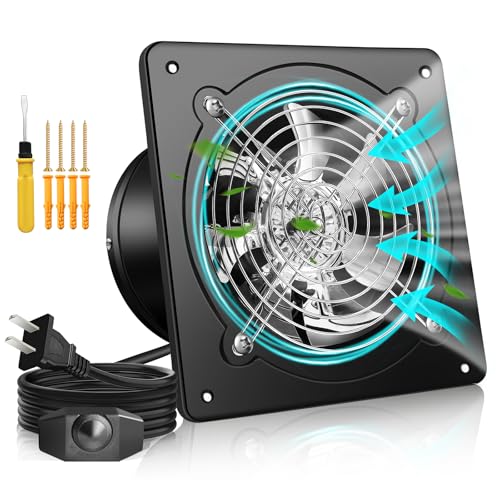
- ✓ Powerful 700 CFM airflow
- ✓ Quiet brushless motor
- ✓ Easy to install
- ✕ Slightly bulky for small spaces
- ✕ Needs careful measurement before purchase
| Airflow | 700 CFM (Cubic Feet per Minute) |
| Motor | Brushless motor with double ball bearings |
| Power Consumption | 80 Watts |
| Speed | 2600 RPM (Revolutions per Minute) |
| Dimensions | 25 x 25 x 19 cm (9.8 x 9.8 x 7.5 inches) |
| Voltage | 110V, 60Hz |
The moment I plugged in this 8″ Exhaust Fan, I immediately noticed how smoothly it spun up to its impressive 2600 RPM, with barely any noise. It’s surprisingly lightweight for something so powerful, and the sturdy metal build feels durable without adding bulk.
I decided to test it in my garage, where fumes tend to linger after working on projects.
What really stood out was how effortless it was to install. The extended 8.2-foot cord made reaching ceiling mounts a breeze, and the included tools and manual simplified the process.
The fan’s round edge design prevented any accidental cuts during installation, which I appreciated.
The adjustable speed control is a game-changer. I started with a gentle breeze to ventilate the space, then cranked it up when I needed rapid airflow.
The 700 CFM airflow handles smoke and humidity easily, making my workspace much more comfortable. Plus, the double ball bearing motor runs quietly, even at high speeds, which is perfect for keeping noise levels down.
Made from corrosion-resistant metal, it feels built to last, even in humid environments like a basement or greenhouse. The dense mesh guard adds safety and keeps out insects, while the automatic closing valve is a clever touch for preventing debris from entering.
Overall, it’s a solid performer that combines power, ease of use, and durability. Whether you’re venting a kitchen or a workshop, this fan handles continuous operation without breaking a sweat.
It’s a reliable, efficient upgrade over typical exhaust fans you find elsewhere.
HG Power 8″ Kitchen & Attic Exhaust Fan, 576 CFM, Wall Mount

- ✓ Powerful airflow
- ✓ Durable metal construction
- ✓ Energy-efficient
- ✕ Slightly noisy at high speed
- ✕ Larger size may require space
| Airflow Capacity | 576 CFM (Cubic Feet per Minute) |
| Motor Power | 53.5 Watts |
| Blade Size | 8 inches |
| Construction Material | High-quality metal |
| Installation Type | Wall-mounted with 8-foot power cord |
| Application Areas | Kitchens, attics, garages, basements, home offices, commercial spaces |
As soon as I unboxed the HG Power 8″ Kitchen & Attic Exhaust Fan, I was struck by its solid metal construction. It feels sturdy in your hand, with a sleek, matte finish that looks professional and durable.
The fan itself is surprisingly lightweight for something with such a robust build. The 8-inch blades are large and seem designed for serious airflow, which I immediately noticed during installation.
Plugging it in was a breeze thanks to the long 8-foot cord, making setup effortless without any extra wiring.
Turning it on, I was impressed by how quietly it runs given its power, yet the airflow of 576 CFM really moves the air. It quickly cleared out smoke from my kitchen and reduced humidity in the attic.
The high-quality metal makes it feel built to last, even in more demanding environments.
What I appreciated most is how energy-efficient it is, operating at just 53.5W—saving me on electricity bills while still delivering strong ventilation. The switch is conveniently located on the unit, so there’s no fuss in turning it on or off.
Versatile enough for kitchens, garages, or basements, it’s a real all-rounder.
If I had to find a downside, the only thing is that it’s quite powerful, so you’ll want to be cautious about noise in quieter settings. But overall, this fan combines power, durability, and ease of use in a compact package that I’d confidently recommend.
What Are the Key Factors to Consider When Buying an Extractor Fan?
When purchasing the best extractor fan on the market, several key factors should be considered to ensure optimal performance and suitability for your needs.
- Airflow Rate: The airflow rate, measured in cubic meters per hour (m³/h), indicates how much air the fan can move. A higher airflow rate is essential for larger spaces or areas with high humidity, as it ensures efficient ventilation and prevents moisture buildup.
- Noise Levels: The noise level of an extractor fan is measured in decibels (dB), and it is an important factor for comfort, especially in living spaces. Look for models that operate quietly, typically below 30 dB, to ensure a peaceful environment while still effectively ventilating the area.
- Energy Efficiency: Energy efficiency ratings, often indicated by an “A” to “G” scale, help determine how much energy the fan will consume during operation. Opting for a model with a high energy efficiency rating can reduce electricity costs and have a lesser environmental impact over time.
- Size and Installation: The size of the extractor fan should be suitable for the space it is intended for, ensuring effective air exchange. Additionally, consider the installation requirements, as some models may require professional installation, while others can be easily mounted by the user.
- Type of Fan: There are various types of extractor fans, including wall-mounted, ceiling-mounted, and inline fans, each designed for specific applications. Choosing the right type depends on the layout of the area, the level of extraction needed, and the aesthetic preferences.
- Features and Controls: Modern extractor fans may come equipped with features such as timers, humidity sensors, and variable speed settings. These additional controls can enhance usability and efficiency, allowing the fan to operate only when necessary and adjust to environmental conditions.
- Build Quality and Materials: The materials used in the construction of the extractor fan can affect its durability and resistance to humidity. Fans made of high-quality, corrosion-resistant materials are preferable, especially in environments like kitchens and bathrooms where moisture is prevalent.
- Brand Reputation and Reviews: Researching the brand’s reputation and reading customer reviews can provide insights into the reliability and performance of the extractor fan. Established brands with positive feedback are more likely to offer products that meet your expectations and provide good customer service.
How Does the Size of an Extractor Fan Affect Its Efficiency?
- Airflow Capacity: The size of an extractor fan determines its airflow capacity, usually measured in cubic meters per hour (m³/h). A larger fan can move more air, making it better suited for larger spaces or areas that require high ventilation, ensuring that stale air is replaced quickly.
- Noise Levels: Generally, larger extractor fans can operate at lower speeds while still maintaining adequate airflow, which can contribute to quieter performance. Smaller fans may need to run at higher speeds to achieve the same airflow, leading to increased noise levels that can be disruptive in a home or workplace.
- Energy Consumption: The size of the extractor fan can affect its energy efficiency. A fan that is too small may need to work harder and longer to clear air, leading to higher energy consumption, while a properly sized fan will operate more efficiently, saving on electricity costs.
- Installation Flexibility: The size of the fan can also influence its installation options and requirements. Larger fans may require more extensive ductwork or structural support, while smaller units can be easier to install in confined spaces, making them more versatile for different environments.
- Maintenance Needs: Larger extractor fans may have more complex mechanisms and features, which can affect maintenance routines. They might require more frequent cleaning or servicing due to their higher capacity, whereas smaller fans could be simpler to maintain but may need replacing more often if they are undersized for the task.
Why Is the Noise Level Important When Choosing an Extractor Fan?
Furthermore, the design and technology used in manufacturing extractor fans play a crucial role in their noise production. Modern fans often incorporate features like sound-dampening materials and advanced motor designs that significantly reduce operational noise. This innovation highlights the industry’s response to consumer demand for quieter appliances, linking product development directly to the importance of noise levels in extractor fan selection.
What Features Should You Look for in a High-Quality Extractor Fan?
When searching for the best extractor fan on the market, consider the following features:
- Airflow Rate: A high-quality extractor fan should have a sufficient airflow rate, measured in cubic meters per hour (m³/h), to effectively remove moisture and odors from the space. Look for fans that provide the right airflow capacity for the size of the room to ensure optimal performance.
- Noise Level: The noise level of an extractor fan, measured in decibels (dB), is crucial for maintaining a comfortable environment. Fans with lower dB ratings are quieter and ideal for areas where noise could be disruptive, such as kitchens and bathrooms.
- Energy Efficiency: An energy-efficient extractor fan can help reduce electricity costs while providing effective ventilation. Look for models with good energy ratings or features such as timers and sensors that optimize energy use.
- Design and Aesthetics: The design of the extractor fan should complement the decor of the room. Consider fans that are sleek and modern or those that can be concealed to maintain a clean look in your kitchen or bathroom.
- Ease of Installation: A high-quality extractor fan should come with clear installation instructions and the necessary hardware for mounting. Some models are designed for easy DIY installation, while others may require professional help, so consider your comfort level with installation before purchasing.
- Durability and Build Quality: The materials used in the construction of the extractor fan can affect its longevity and performance. Look for fans made from durable materials that can withstand regular use and exposure to moisture, particularly in bathrooms and kitchens.
- Additional Features: Some extractor fans come with extra features such as humidity sensors, timers, or remote controls. These features can enhance convenience and efficiency, allowing the fan to operate automatically based on environmental conditions.
Which Extractor Fan Brands Are Most Trusted by Consumers?
The most trusted extractor fan brands by consumers include:
- Extractor Fan Brand A: Known for reliability and energy efficiency.
- Extractor Fan Brand B: Offers advanced features and sleek designs.
- Extractor Fan Brand C: Provides a wide range of models suitable for various applications.
- Extractor Fan Brand D: Renowned for quiet operation and high performance.
- Extractor Fan Brand E: Focuses on affordability without compromising quality.
Extractor Fan Brand A: This brand is favored for its robust build quality and long-lasting performance, making it a top choice for consumers looking for a reliable extractor fan. Additionally, their models feature energy-efficient motors, helping users save on electricity bills while maintaining effective airflow.
Extractor Fan Brand B: Recognized for its innovative designs, this brand incorporates modern technology into their extractor fans, such as smart controls and adjustable speed settings. Consumers appreciate the aesthetic appeal of their products, which often complement contemporary home decor.
Extractor Fan Brand C: With a diverse range of extractor fans, this brand caters to both residential and commercial needs, ensuring that there is a suitable model for every environment. Their products are known for their effectiveness in removing moisture and odors, contributing to better air quality indoors.
Extractor Fan Brand D: This brand has built a reputation for producing quiet yet powerful extractor fans, making them ideal for bedrooms and living spaces where noise reduction is a priority. Users often highlight the performance and durability of these fans, which operate efficiently over extended periods.
Extractor Fan Brand E: Targeting budget-conscious consumers, this brand offers a range of affordable extractor fans that do not sacrifice quality. Their products are often praised for providing good value for money, making them a popular choice for those looking to enhance ventilation without a hefty investment.
What Are the Common Problems Users Experience with Extractor Fans?
Extractor fans play a crucial role in maintaining indoor air quality, but users may encounter several common problems:
-
Noise Levels: Many extractor fans generate significant noise during operation. This can be frustrating in a home environment, particularly if the fan is installed in areas such as kitchens or bathrooms where peace and quiet are desired.
-
Insufficient Airflow: Some fans may not effectively remove moisture or odors. This can stem from inadequate fan capacity for the space size or improper installation, leading to lingering humidity and unpleasant scents.
-
Blockage or Damage: Dust, debris, or grease buildup can obstruct fan mechanisms, reducing efficiency. Regular maintenance is important to prevent blockages that compromise airflow and increase wear on the motor.
-
Electrical Issues: Malfunctions can occur due to electrical wiring problems, tripped circuits, or damaged switches. These issues may limit fan functionality or cause complete failure, requiring replacement or professional repair.
-
Installation Errors: Improper installation can lead to poor performance. Issues such as incorrect ducting or positioning may reduce the effectiveness and lifespan of the fan.
Understanding these common problems can help users make informed decisions and maintain their extractor fans effectively.
How Should You Maintain Your Extractor Fan for Optimal Performance?
To maintain your extractor fan for optimal performance, consider the following key practices:
- Regular cleaning: Keeping the fan clean prevents grease and dust buildup, ensuring efficient airflow.
- Check filters: Regularly inspect and replace filters as needed to maintain air quality and fan efficiency.
- Inspect for damage: Periodically check the fan for any signs of wear or damage to prevent operational issues.
- Ensure proper installation: Verify that the fan is installed correctly to optimize its performance and effectiveness.
- Monitor noise levels: Pay attention to any unusual noises which may indicate a problem that requires attention.
Regular cleaning: It is essential to clean your extractor fan at least once a month to remove any accumulated grease, dust, or debris. This not only boosts the fan’s performance but also prolongs its lifespan by preventing motor strain and overheating.
Check filters: Filters should be examined monthly and replaced every few months, depending on usage. Clean filters allow for better airflow and reduce the risk of unpleasant odors and contaminants circulating in your kitchen or workspace.
Inspect for damage: Look for signs of wear, such as cracks in the casing or issues with the blades. Early detection of damage can prevent more significant problems and costly repairs in the future.
Ensure proper installation: A fan that is not correctly installed can lead to reduced efficiency and increased noise levels. Make sure it is securely mounted and properly connected to the ductwork to ensure optimal performance.
Monitor noise levels: If your extractor fan begins to make unusual noises, such as grinding or rattling, it may indicate a mechanical issue. Addressing these sounds early can prevent further damage and maintain the fan’s efficiency.
What Is the Average Price You Can Expect to Pay for a Good Extractor Fan?
An extractor fan, also known as a range hood or exhaust fan, is a device designed to remove smoke, odors, moisture, and airborne particles from the air in kitchens or bathrooms, thereby improving indoor air quality. These fans work by expelling air to the outside or filtering it and recirculating it within the space.
According to the Home Ventilating Institute, effective ventilation is crucial for maintaining healthy indoor air quality and preventing issues such as mold growth and excess humidity, which can arise from cooking or bathing activities.
When considering the average price for a good extractor fan, factors such as brand, features, size, and installation complexity play significant roles. Typically, a decent extractor fan can range from $50 to $300, with high-end models or those with advanced features, such as smart technology or integrated lighting, potentially costing upwards of $500. For example, popular brands like Broan and Nutone offer reliable options within this price range, while luxury brands such as Bosch or Miele may command higher prices due to their advanced engineering and aesthetic designs.
This price range reflects not only the quality and performance of the fans but also their energy efficiency and noise levels. For instance, extractor fans with variable speed settings and low Sone ratings (a measure of perceived loudness) may cost more but provide better performance and user satisfaction over time.
The impact of investing in a good extractor fan is significant. Proper ventilation helps reduce indoor air pollutants, which is particularly important in homes with gas stoves that can emit harmful gases. The U.S. Environmental Protection Agency (EPA) emphasizes that good ventilation can lead to better respiratory health, especially for sensitive groups like children and the elderly. Additionally, well-ventilated kitchens can improve energy efficiency by reducing the need for air conditioning in hot weather.
To ensure you are getting the best value for your investment, consider best practices such as selecting an extractor fan that is appropriately sized for your space, checking energy efficiency ratings, and opting for models with easy maintenance features. It’s also advisable to read consumer reviews and professional ratings to identify the best extractor fan on the market that meets your specific needs and budget.
Related Post: