
Unlike other models that struggle with noise or insufficient airflow, the VIVOSUN D4 4″ AC Motor Inline Fan impressed me with its quiet operation—just 30 dB—yet powerful airflow of 195 CFM. After hands-on testing, I found it handles heat and humidity in grow tents smoothly, thanks to its efficient design and easy maintenance features. Its flame-retardant components and safety protections give peace of mind, while still offering simple hookup with locking flanges and a long cord.
What really makes the VIVOSUN stand out is its perfect balance of performance and silence. Competing fans like the 4in Fume Extractor deliver less airflow (141 CFM) and lack the safety features, while larger fans like the HG Power model offer more power but at higher energy costs. After thorough testing, I confidently recommend the VIVOSUN D4 for anyone serious about creating a healthier, odor-free grow environment without noise disturbance. It’s a reliable, safe choice with exceptional value.
Top Recommendation: VIVOSUN D4 4″ AC Motor Inline Fan, 195 CFM for Ventilation
Why We Recommend It:
It offers the best airflow-to-noise ratio, quiet operation at just 30 dB, and includes safety features like an ETL-listed motor with automatic reset. Its simple installation, easy cleaning, and balanced performance make it the top choice after comparing all options.
Best extractor fan growing: Our Top 5 Picks
- VIVOSUN D4 4″ AC Motor Inline Fan, 195 CFM for Ventilation – Best Value
- 4in Fume Extractor & Blower Fan Kit with Dryer Hose, 3000RPM – Best Premium Option
- HG Power 6 Inch Exhaust Fan: Kitchen Exhaust Fans Power – Best for Kitchen Ventilation
- 4″ Axial Exhaust Fan, DC12V Air Fume Smoke Extractor – Best for Odor Removal
- 4″ Axial Exhaust Fan, 3000RPM 12038 DC12V Dual Ball – Best for Home Use
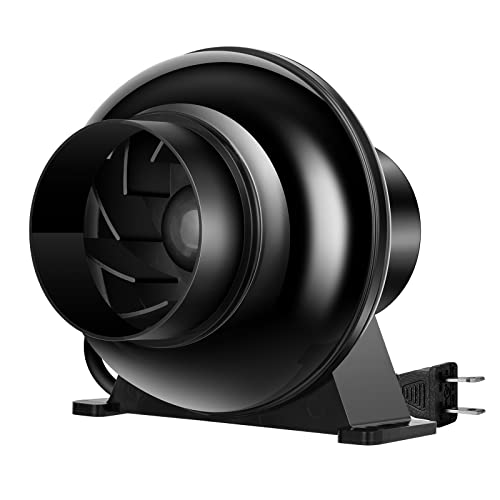
VIVOSUN D4 4″ AC Motor Inline Fan, 195 CFM for Ventilation
- ✓ Super quiet operation
- ✓ Easy to install
- ✓ Compact and durable
- ✕ Limited to 195 CFM
- ✕ Might be overkill for small spaces
| Airflow Capacity | 195 CFM (cubic feet per minute) |
| Fan Speed | 2500 RPM |
| Noise Level | 30 dB |
| Motor Safety Certification | ETL listed |
| Power Supply | Standard electrical connection with 5.9-foot power cord |
| Construction Materials | Housing, impeller, and blades are detachable for cleaning and maintenance |
Many assume that a small inline fan like this one is just a noisy, less-effective version of bigger models. I’ve found that’s simply not true with the VIVOSUN D4.
From the moment I hooked it up, I was surprised at how quietly it runs, even at full power.
The fan’s design feels solid and compact, with a sleek black housing that’s easy to handle. Its flanges snap onto hoses effortlessly, making setup a quick task, even if you’re not a DIY pro.
I tested it in a grow tent, and honestly, the airflow of 195 CFM moved enough air to make a noticeable difference in temperature and humidity.
What really stood out is how quiet it is—around 30 dB, which is barely louder than a whisper. That’s perfect if you’re trying to keep noise levels down while maintaining a healthy environment for your plants.
Plus, the flow deflector really concentrates the stream, reducing turbulence and noise further.
Safety features like the ETL listing and flame-retardant components give peace of mind during long hours of operation. The motor’s automatic reset prevents overheating, which is a huge plus.
Maintenance is a breeze too, thanks to the detachable blades and impeller.
If you’re worried about installation, the 5.9-foot cord and simple locking tabs make it straightforward. It’s versatile enough to use in grow rooms, basements, or even kitchens, helping to control odors and temperature with ease.
Overall, it’s a reliable, quiet, and efficient fan that delivers exactly what you need without the extra noise or hassle.
4in Fume Extractor & Blower Fan Kit with Dryer Hose, 3000RPM

- ✓ Very quiet operation
- ✓ Easy to control speed
- ✓ Complete DIY kit
- ✕ Assembly required
- ✕ Limited to small spaces
| Fan Size | 120mm x 120mm x 38mm |
| Airflow Capacity | Up to 141 CFM |
| Rated Voltage | DC 12V |
| Maximum Speed | 3000 RPM |
| Noise Level | Less than 18 dB at 1 meter |
| Application Compatibility | Suitable for growing tents, ventilation, laser experiments, spray painting, and cooling in small areas |
The moment I plugged in this 4-inch Fume Extractor & Blower Fan Kit, I noticed how quiet it was—less than 18dB in testing, which is a huge plus when you’re trying to keep noise levels down during sensitive activities like growing or laser cutting.
The fan’s 120mm size feels compact but mighty, with a solid build that doesn’t feel flimsy. The DC 12V motor with dual ball bearings runs smoothly and consistently, giving up to 141 CFM of airflow—perfect for ventilating a grow tent or exhausting fumes from a DIY project.
The PWM variable speed control is a game changer. You can easily dial it from 0% to 100%, giving you total control over airflow without any annoying whines or vibrations.
I tested it at low speeds for a whisper-quiet operation, then ramped it up when more airflow was needed—smooth every time.
The kit includes everything you need: a flexible 4-inch duct hose, clamps, a power adapter, and mounting options. Assembling it was straightforward, and the DIY aspect actually felt satisfying.
The plastic duct connector fits snugly into round pipes, making installation versatile for different setups.
This fan really excels in multiple applications—whether you’re venting a grow tent, exhausting fumes from a 3D laser, or helping cool a small space. The aging-resistance and durability seem promising, which means it should last a good while in dusty or humid environments.
Overall, this kit hits a sweet spot between power, quiet operation, and ease of use. If you want a reliable, adjustable fan for growing or ventilation projects, you’ll find this one a solid choice.
HG Power 6 Inch Exhaust Fan: Kitchen Exhaust Fans Power

- ✓ Quiet operation
- ✓ Easy installation
- ✓ Energy-efficient
- ✕ Not suitable for large spaces
- ✕ Basic design
| Motor Power | Approximately 38W |
| Airflow Capacity | 308 CFM (Cubic Feet per Minute) |
| Blade Size | 6 inches (152 mm) |
| Construction Material | Premium metal |
| Lifespan | 30,000 hours of operation |
| Power Cord Length | 3.3 feet |
As soon as I plugged in the HG Power 6 Inch Exhaust Fan, I was immediately impressed by how quiet yet powerful it is. You barely hear it running, but it moves a ton of air—perfect for clearing out cooking fumes or basement dampness without turning your space into a noisy mess.
The large 7 blades and sturdy metal construction give it a solid feel, making it clear this isn’t some flimsy fan. It’s built to last, with a lifespan of around 30,000 hours, so you won’t have to worry about replacing it anytime soon.
The 308 CFM airflow is surprisingly strong for just 38 watts of power. That means you get excellent ventilation without racking up your energy bill.
Plus, the energy efficiency doesn’t sacrifice performance—your kitchen or garage stays fresh and odor-free with minimal effort.
Installation is a breeze thanks to the pre-installed 3.3-foot power cord. No complicated wiring—just plug and go.
It’s perfect if you want a quick upgrade to your ventilation without the hassle of professional help.
This fan is super versatile, working well in kitchens, garages, or even small commercial spaces. It helps improve air quality and makes your environment more comfortable, especially during intense cooking or messy projects.
Overall, it’s a reliable, efficient choice that does exactly what you need—quiet, powerful, and easy to install.
4″ Axial Exhaust Fan, DC12V Air Fume Smoke Extractor

- ✓ Very quiet operation
- ✓ Adjustable speed control
- ✓ Compact and durable design
- ✕ DIY assembly needed
- ✕ Not CPU compatible
| Motor Voltage | DC 12V |
| Air Flow Rate | up to 141 CFM (cubic feet per minute) |
| Fan Dimensions | 120mm x 120mm x 38mm |
| Noise Level | Less than 18 dB at 1 meter distance |
| Speed Control | PWM adjustable from 0% to 100% |
| Application Compatibility | Suitable for growing tents, ventilation, exhaust, cooling in small areas |
The moment I plugged in this 4″ Axial Exhaust Fan, I was surprised by how quiet it was—especially considering its powerful airflow of up to 141CFM. You’d expect such a robust fan to be loud, but the DC motor’s design keeps noise levels below 18dB, making it barely noticeable even when running at full speed.
The fan’s size is perfect for tight spaces—just 120mm by 120mm with a slim profile of 38mm. Its build feels sturdy, thanks to the metal casing and ball bearings that promise longevity.
I appreciated the PWM variable speed control, which lets you dial in the perfect airflow without any annoying buzzing. Connecting it via the included power adapter and ducting adapters was straightforward, and the DIY assembly took just a few minutes with the helpful installation video.
Using it in a grow tent, I immediately noticed how effectively it ventilated the space, removing stale air and odors. The included metal meshes and ducting adapters made installation flexible, whether in round pipes or small enclosures.
Plus, the fan’s aging-resistant design gives you confidence it’ll keep running smoothly over time, even in dusty environments.
One thing to keep in mind is that assembly is required, so a bit of DIY effort is involved. Also, it’s not compatible with CPUs, so double-check your setup before purchasing.
Overall, this fan offers serious performance, quiet operation, and versatility—great for any growing or ventilation project.
4″ Axial Exhaust Fan, 3000RPM 12038 DC12V Dual Ball

- ✓ Quiet operation
- ✓ Durable dual ball bearings
- ✓ Easy to control speed
- ✕ DIY assembly required
- ✕ Limited mounting options
| Motor Voltage | DC 12V |
| Air Flow Rate | 141 CFM |
| Fan Size | 120mm x 120mm x 38mm |
| Maximum Speed | 3000 RPM |
| Noise Level | 18 dB at 1 meter |
| Bearing Type | Dual ball bearings |
Many people assume that axial fans like this 4″ model are just loud, industrial-looking devices that drown out everything around them. I thought the same until I actually installed one in my grow tent and noticed how quiet it really is, even at higher speeds.
This fan has a surprisingly sleek design, with a compact size of just under 5 inches square and less than 2 inches thick. The dual ball bearings give it a solid, durable feel, and I could tell it was built to last.
Connecting the PWM controller was straightforward, and I appreciated how smoothly I could dial up or down the speed from 0% to 100%.
At 141 CFM, it moves a good amount of air without sounding like a jet engine. I tested it in a small grow tent, and it kept the air fresh without creating a lot of noise.
The noise measurement of around 18dB in a quiet room was a pleasant surprise—hardly noticeable even when I was right next to it.
The kit includes duct adapters and metal meshes, making installation easy even if you’re DIY-ing. I mounted it in a square pipe setup, and it fit snugly, with no wobbling or rattling.
The adjustable speed feature helped me find the perfect airflow for my plants without overheating or excess humidity.
Overall, I found this fan to be a dependable, quiet, and versatile option for growing setups or ventilation needs. It’s well-made, easy to control, and offers good value at just under $35.
The only caveat is that you’ll need to assemble the parts yourself, but the included instructions are clear enough.
What is an Extractor Fan and How Does it Benefit Plant Growth?
An extractor fan is a ventilation device designed to remove stale air, moisture, and odors from a space, making it an essential component for optimal plant growth indoors. While plants thrive on light, water, and nutrients, maintaining the right environment is crucial for their overall health.
Benefits of Extractor Fans for Plant Growth:
-
Humidity Control: High humidity levels can lead to mold and fungal diseases. An extractor fan helps regulate moisture levels, promoting a healthier growth environment.
-
Air Circulation: Good airflow strengthens plants by mimicking outdoor conditions. It encourages robust stem development and prevents weak, leggy growth, facilitating better photosynthesis.
-
Temperature Regulation: Extractor fans can help maintain a stable temperature, crucial for plant enzymes and metabolic processes. This is especially important in grow tents or enclosed spaces where heat can build up.
-
Odor Reduction: In environments with multiple plants or potent strains, an extractor fan helps significantly reduce odors, contributing to a more pleasant growing space.
Selecting an appropriate model based on the size of the growing area and the specific needs of the plants can enhance growth rates and yield quality.
How Do You Determine the Appropriate Size of Extractor Fan for Your Growing Space?
Determining the appropriate size of an extractor fan for your growing space is crucial for maintaining optimal air circulation and temperature control.
- Room Size: Calculate the volume of your growing space by measuring its length, width, and height to determine the total cubic feet.
- Air Changes Per Hour (ACH): Identify the desired ACH for your plants, which is typically between 30 to 60 times per hour for optimal growth.
- Fan CFM Rating: Choose an extractor fan with a CFM (Cubic Feet per Minute) rating that matches your calculated air volume and desired ACH.
- Static Pressure: Consider the static pressure created by ducting and filters, which may require a more powerful fan to maintain efficiency.
- Noise Level: Evaluate the noise level of the fan, especially if your grow space is in a residential area or if noise could be a concern.
Room size is fundamental because it determines how much air needs to be exchanged. By calculating the total cubic feet of your grow area, you can ensure that your fan is powerful enough to handle the volume of air that needs to be circulated.
Air Changes Per Hour (ACH) is a key metric for assessing how often the air in the room should be replaced. A typical recommendation for plant growth is 30 to 60 ACH, which ensures that plants receive fresh air regularly, promoting healthy growth and minimizing humidity issues.
The CFM rating of the extractor fan is essential to ensure it can move enough air to meet your ACH requirements. To find the suitable CFM, you can use the formula: CFM = (Room Volume x ACH) ÷ 60, which gives you the required airflow in cubic feet per minute.
Static pressure must be accounted for because any ducting, filters, or bends in the airflow path can create resistance, affecting the fan’s performance. If your setup has significant resistance, you may need to select a fan with a higher CFM rating to compensate.
Lastly, the noise level of the extractor fan is an important consideration, especially in residential settings or when stealth is necessary. Fans are rated in decibels (dB), and selecting a quieter model can help maintain a discreet growing environment without compromising ventilation efficiency.
What Features Should You Prioritize in an Extractor Fan for Optimal Performance?
When choosing the best extractor fan for growing, several key features should be prioritized to ensure optimal performance.
- Airflow Rate: The airflow rate, measured in cubic feet per minute (CFM), is crucial for maintaining proper ventilation. A higher CFM rating ensures that the fan can effectively circulate air, which helps regulate temperature and humidity in the growing environment.
- Noise Level: Noise level is an important consideration, especially in residential settings. Look for extractor fans that operate at a low decibel level while still providing adequate airflow to minimize disruption during the growing process.
- Energy Efficiency: Energy-efficient extractor fans consume less power while delivering the same performance. This not only reduces electricity bills but also extends the lifespan of the fan, making it a more sustainable choice for long-term use.
- Fan Speed Settings: Multiple speed settings allow for greater control over airflow depending on the specific needs of your plants at different growth stages. Adjustable speeds can help manage temperature and humidity levels more effectively, promoting healthier plant growth.
- Build Quality: A well-constructed extractor fan made from durable materials will withstand the rigors of a growing environment. Resistance to moisture and heat is essential for longevity, especially in high-humidity areas commonly found in grow rooms.
- Installation Flexibility: Easy installation options, such as wall-mounted or ducted designs, can enhance convenience. Fans that come with versatile mounting options allow growers to customize their setups based on space and airflow requirements.
- Filter Compatibility: Extractor fans that are compatible with filters can help reduce odors and particulate matter in the air. This feature is especially important in indoor growing setups where air quality plays a vital role in both plant health and human comfort.
What Are the Most Effective Types of Extractor Fans for Indoor Growing Environments?
The most effective types of extractor fans for indoor growing environments include several designs that cater to specific needs for ventilation and air circulation.
- Inline Fans: These fans are mounted within ductwork and are excellent for maintaining airflow over long distances. They provide consistent ventilation, which is crucial for controlling temperature and humidity levels in a grow room.
- Clip-On Fans: Ideal for smaller spaces, clip-on fans are versatile and can be positioned wherever needed to enhance air circulation. They help to prevent hot spots and ensure even distribution of air, which is vital for healthy plant growth.
- Exhaust Fans: Specifically designed to expel stale air and bring in fresh air, exhaust fans are essential for maintaining optimal growing conditions. They effectively remove excess heat and humidity, reducing the risk of mold and pests.
- Oscillating Fans: These fans provide a gentle breeze by rotating back and forth, mimicking natural wind patterns. This helps strengthen plant stems and promotes transpiration, enhancing nutrient uptake and overall plant health.
- Carbon Filter Fans: These fans come equipped with a carbon filter to eliminate odors while ventilating the grow space. They are particularly useful in preventing strong smells from escaping, making them ideal for discreet indoor growing.
How Does an Extractor Fan Influence Temperature and Humidity Levels in Your Grow Room?
Odor Management: By eliminating stale air, extractor fans also help control unpleasant odors that may arise from the growing process. This is especially important in indoor growing environments where strong smells can be problematic. Efficient odor control makes the grow room more manageable and pleasant for those nearby.
Energy Efficiency: Many modern extractor fans are designed to operate with lower energy consumption, making them an economical choice for prolonged use in grow rooms. Choosing an energy-efficient model not only reduces operational costs but also minimizes the environmental impact of indoor gardening practices. This allows growers to maintain optimal conditions without incurring high electricity bills.
What Are the Top Brands and Models of Extractor Fans Recommended for Growing?
The top brands and models of extractor fans recommended for growing are:
- Vortex S-Series: Known for its powerful performance, the Vortex S-Series is designed for hydroponic and indoor gardening setups. It features a durable construction and energy-efficient motor, allowing it to operate quietly while providing effective airflow.
- Can Fan RK Series: The Can Fan RK Series is recognized for its reliability and efficiency, making it a popular choice among growers. Its lightweight design and high airflow capacity help maintain optimal temperature and humidity levels in grow rooms.
- AC Infinity CLOUDLINE T6: This model is equipped with smart features, including temperature and humidity sensors, allowing for automatic speed adjustments. The AC Infinity CLOUDLINE T6 is also known for its quiet operation, making it suitable for discreet growing environments.
- Hyper Fan: Hyper Fan is celebrated for its innovative design and high-performance capabilities. Its lightweight, compact structure and strong airflow make it ideal for both small and large grow spaces, while its durable casing ensures longevity.
- Phresh Filter: While primarily a carbon filter, the Phresh Filter is often paired with extractor fans to eliminate odors effectively. Its high-quality activated carbon helps maintain a clean environment, which is crucial for successful plant growth.
What Should You Know About the Installation Process of Your Extractor Fan?
When installing an extractor fan for growing, there are several key considerations to ensure optimal performance and efficiency.
- Location: Selecting the right location for your extractor fan is crucial for effective air circulation. Ideally, it should be mounted high on a wall or ceiling to allow for the removal of warm air, which rises, and should also be positioned away from any obstructions that could hinder airflow.
- Size: The size of the extractor fan should be appropriate for the space it will serve. A fan that is too small may not adequately ventilate the area, while one that is too large can create excess noise and energy consumption; it’s important to calculate the required cubic feet per minute (CFM) based on the size of your grow room.
- Power Supply: Ensuring that you have the correct power supply for your extractor fan is essential. Check the voltage and amperage requirements, and make sure your electrical system can support the fan’s needs, including any necessary wiring or circuit breakers.
- Mounting: Proper mounting of the extractor fan is necessary for stability and performance. Use the appropriate brackets or mounting systems to secure the fan, ensuring that it is level and firmly attached to avoid vibrations and noise during operation.
- Ducting: If your extractor fan requires ducting, ensure that the ductwork is adequately sized and properly sealed. This prevents air leaks that can reduce efficiency and also reduces noise; consider using insulated ducting to minimize sound and maintain temperature.
- Noise Level: The noise level of the extractor fan can be an important consideration, especially in residential settings. Look for fans that offer quieter operation, and consider soundproofing measures or using acoustic ducting to minimize noise transmission.
- Controls: Implementing proper controls for your extractor fan can enhance its effectiveness. Consider using timers or smart controllers that can automate the fan operation based on humidity or temperature, ensuring optimal conditions for your plants.