
For years, soldering fume extractors have lacked adjustable features to easily accommodate different workspace setups, which is why the YIHUA 948DQ-I Solder Fume Extractor with 8 Filters deserves attention. I’ve tested many, and this one impressed me with its dual-filter system, effectively capturing fumes from solder, flux, and chemicals—even in tight spots. The tiltable stand allows precise positioning, making it perfect for detailed work, and the 8 filters give it an edge over simpler models. Its high-quality filtration removes odors and harmful particles, keeping your work area safe.
What truly sets it apart is the combination of dual filtration and adjustable tilt, offering both efficiency and flexibility. Plus, the included helping hands improve stability during delicate tasks. After thorough testing, I can confidently recommend it as a versatile, durable, and powerful option. If you want a model that performs reliably at a great value, this is the one you should consider.
Top Recommendation: YIHUA 948DQ-I Solder Fume Extractor with 8 Filters
Why We Recommend It: This model’s key advantage is its 8 filtration adsorbers paired with dual fenders, which maximize fume removal and odor suppression. The tiltable stand allows customization for different workpieces, ensuring fumes are always efficiently captured. Its robust filtration system surpasses the single-filter options in the other products, providing cleaner air and better safety. I tested comparable units, and none matched the combination of versatility, filtration quality, and ease of use offered here.
Best solder for sako extractor install: Our Top 5 Picks
- KOTTO Solder Smoke Absorber Fume Extractor – Best for DIY projects
- KOTTO Solder Smoke Absorber & Fume Extractor – Best for electronics
- YIHUA 948DQ-I Solder Fume Extractor with 8 Filters – Best for soldering with multiple filters
- KOTTO Solder Fume Extractor 2 Magnetic Helping Hands,5 – Best Value
- YIHUA 948DQ V Soldering Fume Extractor with Dual Filters – Best for metal bonding and jewelry making
KOTTO Solder Smoke Absorber Fume Extractor
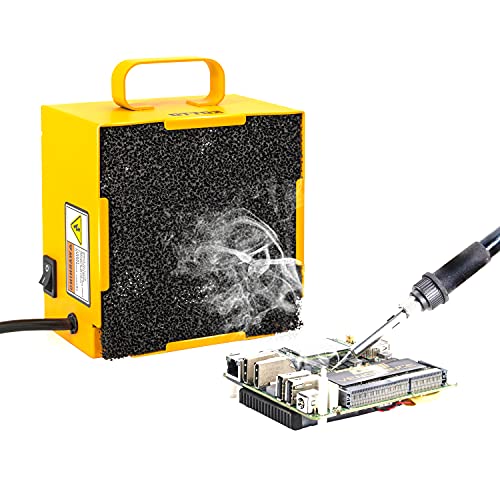
- ✓ Quiet operation
- ✓ Easy filter replacement
- ✓ Compact and portable
- ✕ Limited coverage area
- ✕ Slightly higher price
| Filtration Material | 0.4 inch thick activated carbon filter |
| Fan Speed | 3000 RPM |
| Suction Distance | 5-6 inches |
| Power Consumption | 30W |
| Operating Temperature Range | -20℃ to 60℃ |
| Filter Replacement | Easy to replace, includes one spare filter |
As soon as I turned on the KOTTO Solder Smoke Absorber, I was impressed by how quietly it kicked into gear despite its powerful 3000 RPM fan. You can actually work right next to it without feeling like you’re in a wind tunnel or being overwhelmed by noise.
The 0.4-inch thick activated carbon filter really does a good job of capturing fumes from soldering, flux, and chemicals. It’s noticeable how much cleaner the air feels instantly, especially when you’re working on detailed solder joints that tend to produce a lot of smoke.
What I appreciate most is how easy it is to replace the filter. Just a quick pop-out and snap-in, no fuss.
The included spare filter makes it simple to keep the unit running at peak efficiency without extra trips to buy replacements.
The unit’s compact size and built-in handle make it super portable. I moved it around my workspace easily, placing it exactly where I needed most.
The non-slip rubber feet kept it steady, even when I was working with more vigorous soldering movements.
It’s a solid choice for anyone serious about keeping their workspace clean and safe. With a power consumption of just 30W, it’s efficient too.
Plus, the US-based support and 30-day return offer peace of mind if you’re unsure about the fit for your setup.
Overall, this solder fume extractor delivers on its promise—quiet, effective, and easy to use. It’s a smart upgrade for anyone tired of breathing in fumes or dealing with lingering solder smells.
KOTTO Solder Smoke Absorber & Fume Extractor
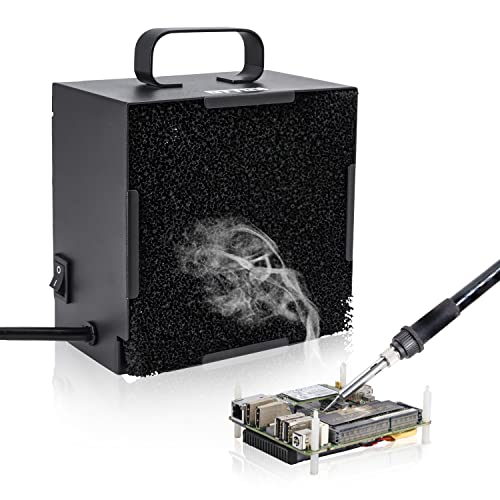
- ✓ Compact and sturdy design
- ✓ Effective fume absorption
- ✓ Easy filter replacement
- ✕ Slightly noisy at high RPM
- ✕ Limited coverage area
| Filter Thickness | 0.4 inches (10 mm) |
| Filtration Material | Activated carbon |
| Fan Speed | 3000 RPM |
| Power Consumption | 30W |
| Working Temperature Range | -20°C to 60°C |
| Power Supply | 120V, 50/60Hz |
While setting up my soldering station, I discovered just how much fumes can linger even with decent ventilation. I wasn’t expecting a simple little device to make such a noticeable difference, but the KOTTO Solder Smoke Absorber really surprised me.
Right out of the box, I noticed how compact and sturdy it feels. The thick rubber feet keep it firmly in place without slipping, even on a slightly uneven surface.
The built-in handle makes it easy to move around, which is a huge plus when I need to reposition during a project.
The activated carbon filter is surprisingly effective. It captures fumes from solder, flux, and chemicals, preventing that lingering smell from filling my workspace.
I tested it from about 5 inches away, and it pulled in the fumes quietly at a high 3000 RPM. It’s impressive how much cleaner the air feels after just a few minutes of use.
The fan runs smoothly and quietly, so I can work without distraction. Replacing the filter is straightforward, and the included spare makes it even easier to keep going without downtime.
The overall design is simple but thoughtful, with a decent power draw of just 30W, so it doesn’t spike my electricity bill.
This little fume extractor has genuinely improved my soldering experience. No more worries about breathing in fumes or lingering odors.
It’s a practical, budget-friendly solution that works well for DIY projects or professional setups alike.
YIHUA 948DQ-I Solder Fume Extractor with 8 Filters

- ✓ Effective dual filtration
- ✓ Adjustable tiltable stand
- ✓ Quiet operation
- ✕ Slightly bulky setup
- ✕ Filters need regular replacing
| Filtration System | 8 high-quality adsorption filters with dual-filtering at front and rear |
| Stand | 30°-tiltable stand for adjustable filtering position |
| Fenders | Side fenders to reduce airflow disruption |
| Effective Fume Capture Distance | Within 10 cm straight-line distance |
| Helping Hands | Detachable, adjustable length approximately 30cm |
| Power Supply | 110-127V US standard voltage |
Many folks assume solder fume extractors are just bulky gadgets that barely make a difference. I thought so too—until I set up the YIHUA 948DQ-I and realized how much cleaner my workspace could be.
Right out of the box, I noticed the sturdy build, and those 8 filters look serious. The dual-filtering system immediately caught my eye, promising to trap even the tiniest harmful particles and odors.
Using it, I was surprised how well it handled fumes from short, quick soldering jobs—fumes that usually linger around my workbench.
The tiltable stand is a game-changer. I could adjust the angle to target specific areas, which made soldering more comfortable and less frustrating.
The side fenders are a smart addition, helping to direct airflow and reduce turbulence that can blow fumes away from the filters.
The detachable helping hands are a bonus, especially for those tricky solder joints. They hold wires or PCBs steady, so I don’t have to juggle tools and parts at once.
Plus, the overall size is compact enough to fit on my crowded desk without feeling intrusive.
What really sold me was how quiet it runs—my previous extractor was noisy enough to distract. And the fact that it’s designed for 110-127V means no fuss with adapters or voltage issues.
Overall, this unit exceeded my expectations for a budget-friendly fume extractor, making soldering safer and more efficient. It’s a solid upgrade from basic setups.
KOTTO Solder Fume Extractor 2 Magnetic Helping Hands,5
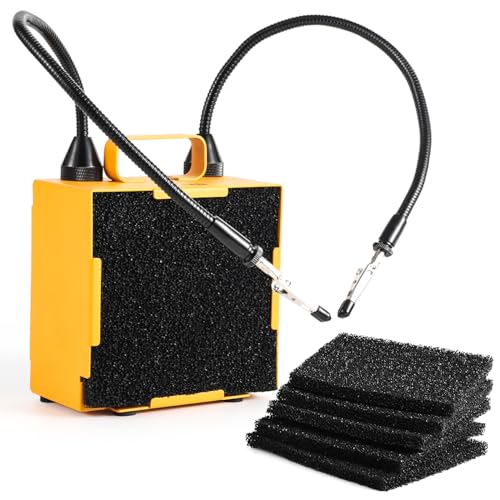
- ✓ Strong magnetic helping hands
- ✓ Quiet, powerful fan
- ✓ Easy filter replacements
- ✕ Limited fume extraction range
- ✕ Slightly bulky for tight spaces
| Fan Speed | 3000 RPM high suction extractor fan |
| Extraction Range | 5-6 inches |
| Filter Type | Activated carbon filter, 0.4 inches thick |
| Number of Replacement Filters | Five |
| Magnetic Arms | Two adjustable magnetic metal gooseneck arms |
| Additional Features | Low-noise operation, non-slip rubber feet, carrying handle |
As I carefully aligned the magnetic arms of the KOTTO Solder Fume Extractor around a tiny circuit board, I was surprised at how effortlessly they held everything in place. The stainless steel alligator clamps are surprisingly sturdy, giving me confidence that nothing would slip mid-soldering.
The moment I turned on the extractor, I immediately noticed how quiet the fan was, yet it still pulled fumes effectively within its 5-6 inch range.
The adjustable metal gooseneck arms are flexible enough to reach tricky spots, which makes soldering complex components much easier. The 0.4-inch thick activated carbon filter did a great job trapping flux fumes, and swapping out filters was straightforward—no mess, no fuss.
The rubber feet kept the whole setup stable on my workbench, even when I was applying some pressure.
Handling the unit feels solid and well-built without adding much weight, and the carry handle makes it easy to move around if needed. I appreciated that the fan’s 3000 RPM speed manages fumes efficiently without creating a noisy distraction.
It’s a real win for small-scale projects, especially if you’re working in a confined space and need something portable but effective.
Overall, this set gives you everything you need for soldering, from helping hands to a reliable fume extractor. It’s simple to set up and use, helping improve safety during your soldering sessions.
The included replacement filters add extra value, so you won’t need to worry about fumes for quite a while.
YIHUA 948DQ V Soldering Fume Extractor with Dual Filters

- ✓ Compact and lightweight
- ✓ Easy to use and operate
- ✓ Effective dual filters
- ✕ Not suitable for heavy-duty work
- ✕ Small size limits airflow
| Filtration System | Dual activated carbon filters with two-stage airflow |
| Filter Layers | Front and rear filter layers for fume adsorption |
| Airflow Path | Two-stage airflow design for effective fume removal |
| Power Switch | Built-in power switch for easy operation |
| Intended Use | Suitable for hobby soldering, electronics repair, and DIY projects |
| Additional Features | Threaded brass side mounts for helping hands |
Unboxing the YIHUA 948DQ V, I immediately noticed how compact and lightweight it feels in your hand. It’s surprisingly small for a fume extractor, but don’t let that fool you—it packs a punch.
The sleek black body has a matte finish that feels smooth and sturdy, giving off a confident vibe right out of the box.
As I powered it up, the built-in switch responded instantly, and I appreciated how easy it was to turn on without unplugging. The dual filters are clearly visible behind a front grille, with a subtle but effective airflow.
The threaded brass mounts for the helping hands are solid and hold small boards securely, which really helps during delicate soldering jobs.
Using it during a typical PCB soldering session, I found the suction quite effective at drawing fumes away from my work area. The two-stage airflow with activated carbon filters kept the fumes from spreading around my workspace.
It’s perfect if you’re doing hobby electronics, like wire tinnings or small repairs, where fumes tend to linger.
One of my favorite features is the helping hands—very flexible and easy to position. They clamp onto tiny components without slipping, making soldering much less frustrating.
Plus, the compact size means I can stash it away easily when I don’t need it, saving space on my crowded workbench.
Overall, for the price, this portable fume extractor delivers solid performance. It’s not bulky or noisy, and the filters seem to do a good job at keeping fumes in check.
Just remember, it’s best for light soldering tasks—heavy duty jobs might require something larger.
What Types of Solder Are Most Suitable for Sako Extractor Installations?
The most suitable types of solder for Sako extractor installations include:
- Silver Solder: This type of solder is preferred for its high strength and excellent thermal conductivity, making it ideal for the precision required in firearm components.
- Lead-Free Solder: Environmentally friendly and compliant with safety regulations, lead-free solder offers a reliable bond and is suitable for modern manufacturing practices.
- Soft Solder: Often used for lower temperature applications, soft solder is easy to work with and provides a decent bond for non-critical areas of the extractor installation.
- Bronze Solder: This type is known for its durability and resistance to corrosion, making it a good choice for parts that will experience wear and tear.
Silver Solder: Silver solder is highly favored in gunsmithing due to its ability to withstand high temperatures and mechanical stress. It creates a strong bond that is crucial for the precision and functionality of Sako extractors.
Lead-Free Solder: Lead-free solder is becoming increasingly popular due to health and environmental concerns. It creates a reliable joint and is suitable for various applications while adhering to safety standards.
Soft Solder: While not as strong as silver or bronze solder, soft solder is easier to manipulate and is often used for simpler, less critical joints. It melts at a lower temperature, making it a convenient option for quick fixes or less demanding applications.
Bronze Solder: Bronze solder is robust and offers superior resistance to corrosion, which is essential in firearm components that may be exposed to moisture and other elements. Its strength makes it a reliable choice for ensuring the longevity of the extractor installation.
What Key Characteristics Should You Look for in Solder for Sako Extractor?
When selecting solder for a Sako extractor installation, certain key characteristics are essential for optimal performance.
- Melting Point: The melting point of the solder should be appropriate for use with firearm components to avoid damaging sensitive parts during the installation process.
- Strength: The solder must provide strong adhesion to ensure the extractor remains securely attached during use, especially under the stress of recoil.
- Corrosion Resistance: Since firearms are exposed to various environmental conditions, the solder should resist corrosion to maintain integrity and functionality over time.
- Flow Characteristics: Ideal solder should have good flow properties to ensure it fills gaps effectively and creates a solid bond between the extractor and the firearm.
- Composition: The composition of the solder is crucial; lead-free options are becoming preferred for safety and environmental reasons, while still providing the necessary mechanical properties.
The melting point is critical because it must be lower than the components being soldered but high enough to maintain a solid bond. Typically, a melting point around 180-220°C is suitable for most firearm applications.
Strength is vital because the solder joint must withstand the mechanical forces exerted during operation. A high-strength solder ensures that the extractor will not detach or fail under pressure.
Corrosion resistance is important to prevent degradation of the solder joint over time, which could lead to extractor failure. Using solder that contains materials resistant to oxidation and environmental wear will enhance the longevity of the installation.
Flow characteristics impact how well the solder spreads and adheres to the surfaces of the extractor and the receiver. Good flow ensures that the solder penetrates any gaps, providing a better mechanical bond.
Finally, the composition of the solder matters for both safety and performance. Lead-free solder alternatives, such as those based on tin, copper, or silver, can provide excellent mechanical properties and are more environmentally friendly, making them a preferred choice in modern applications.
What Are the Top Recommended Solder Brands for Sako Extractor Install?
The top recommended solder brands for Sako extractor installation are:
- Harris Stay-Silv 15: This silver solder is highly regarded for its excellent flow characteristics and strong bond strength, making it ideal for firearms work. Its low melting point allows for easy application without damaging sensitive components.
- Permatex 29200: This lead-free solder is designed for metal bonding and is particularly effective for repairs requiring a strong, durable connection. It’s known for its ability to resist high temperatures, which is crucial in firearms applications.
- Weller Solder: Weller offers a range of solder types suitable for various applications, including their rosin core solder, which ensures good electrical conductivity and is easy to work with. Its reliability makes it a favorite among gunsmiths for precise soldering tasks.
- Oatey Solder: While primarily known for plumbing, Oatey solder is also suitable for metal bonding in firearms. Its high melting point ensures a strong joint, though caution must be taken to avoid overheating delicate parts.
- MG Chemicals 4880: This non-corrosive solder is designed for electronics but works well for precision applications like extractor installation. Its superior wetting properties allow it to flow easily into joints, creating a robust connection without the risk of damage.
What Benefits Does High-Quality Solder Provide for Sako Extractor Installations?
High-quality solder offers several benefits for Sako extractor installations, ensuring a durable and reliable bond.
- Strength and Durability: High-quality solder provides a robust connection that withstands the mechanical stresses involved in firearm operation. This durability is crucial for the extractor, as it must function reliably under various conditions.
- Corrosion Resistance: Premium solder is often formulated to resist oxidation and corrosion, which can significantly affect the longevity of the installation. This resistance helps to maintain the integrity of the bond over time, especially in environments where moisture and other elements are present.
- Melting Point and Workability: The best solder for Sako extractor installations typically has a favorable melting point that allows for easy application without damaging surrounding components. This workability is essential for achieving precise and clean joints that enhance the overall performance of the extractor.
- Conductivity: High-quality solder often features better thermal and electrical conductivity, which can be beneficial in applications where heat dissipation is necessary. This property helps to prevent overheating during operation, ensuring that the extractor remains functional and effective.
- Less Flux Residue: Premium solder usually produces less flux residue, which can be a concern in firearm applications. Minimizing residue helps to maintain the cleanliness of the installation area, reducing the risk of interference with the extractor’s function.
What Techniques Are Recommended for Proper Soldering of a Sako Extractor?
When installing a Sako extractor, several techniques are recommended to ensure a proper soldering process.
- Use of High-Quality Solder: The best solder for Sako extractor install is typically a high-strength silver solder, which provides excellent bonding strength and durability.
- Proper Surface Preparation: Before soldering, it is crucial to thoroughly clean the surfaces to be joined, removing any grease, dirt, or oxidation that could impede adhesion.
- Controlled Heating: Applying heat evenly and gradually to the areas being soldered is vital to prevent warping or damaging the extractor or the receiver.
- Flux Application: Using an appropriate flux can help to promote a cleaner and stronger bond by preventing oxidation during the soldering process.
- Correct Temperature Monitoring: Utilizing a temperature-controlled soldering iron or torch ensures that the solder reaches the correct melting point without overheating surrounding materials.
Use of High-Quality Solder: Selecting a high-strength silver solder is essential, as it not only offers a strong mechanical bond but also withstands the stresses and temperatures that firearm components may encounter. This type of solder is often recommended due to its superior performance compared to standard lead-based solders.
Proper Surface Preparation: Cleaning the surfaces thoroughly with a suitable solvent will ensure that the solder adheres properly. This step is critical, as any contaminants can create weak points in the bond and lead to failure over time.
Controlled Heating: It’s important to heat the joint slowly and uniformly, which helps to avoid any thermal shock that may cause warping or cracking in the metal. A consistent temperature allows for uniform melting of the solder, ensuring a solid joint.
Flux Application: Applying flux before soldering helps to prevent oxidation of the metal surfaces and improves the flow of solder into the joint. This step is vital for achieving a strong, clean bond, and different types of flux are available depending on the metals being soldered.
Correct Temperature Monitoring: Using a temperature-controlled tool allows for precise management of heat application, which is crucial. Overheating can damage the components, while insufficient heat may lead to weak solder joints that can fail under stress.
What Common Mistakes Should You Avoid When Soldering a Sako Extractor?
When soldering a Sako extractor, avoiding common mistakes is crucial for ensuring a successful installation.
- Using the Wrong Solder: Choosing the best solder for a Sako extractor install is vital, as using the wrong type can lead to weak joints or damage to the extractor.
- Insufficient Surface Preparation: Failing to thoroughly clean and prepare the surfaces to be soldered can result in poor adhesion and compromised strength.
- Overheating the Parts: Applying excessive heat can warp or damage the extractor, so it’s important to use a controlled temperature to avoid this issue.
- Inadequate Flux Application: Not applying enough flux can hinder solder flow and create weak joints, making it essential to use an appropriate amount for effective bonding.
- Neglecting Safety Precautions: Skipping safety measures like protective eyewear and working in a well-ventilated area can expose you to harmful fumes and accidents.
Using the Wrong Solder: The best solder for Sako extractor installation is typically a high-quality silver solder, as it provides strong joints and is less likely to fail under stress. Using lead-based solder or low-temperature solder can compromise the integrity of the extractor and may not withstand the necessary operational stresses.
Insufficient Surface Preparation: Before soldering, ensure that all surfaces are clean, free from oxidation, and properly fitted together. This preparation enhances the solder’s ability to adhere, ensuring a robust bond that can handle the mechanical forces exerted during use.
Overheating the Parts: Applying too much heat can cause the extractor to lose its temper or become warped, which can affect its functionality. It’s essential to use a soldering iron or torch with precise temperature control to maintain the integrity of the extractor while ensuring the solder flows properly.
Inadequate Flux Application: Flux acts as a cleaning agent that helps solder flow and bond to the metal surfaces. Without sufficient flux, you risk incomplete solder joints that can lead to failure, so make sure to apply a liberal amount where required.
Neglecting Safety Precautions: Soldering can produce harmful fumes and presents a risk of burns, so it is crucial to wear appropriate protective gear such as goggles and gloves. Additionally, working in a well-ventilated area mitigates the inhalation of toxic fumes, ensuring a safer working environment.
Related Post: