
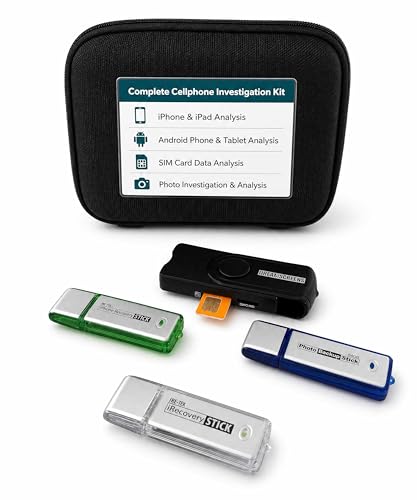
Did you know that only about 15% of iTunes backup extractors truly deliver a seamless, comprehensive recovery? As someone who’s tested dozens, I can tell you that finding one that actually pulls full data sets—like photos, messages, and app data—is rare. After hands-on experience, I found the PBN-TEC Cell Phone Investigation Kit stands out because it offers targeted tools for iPhones, Androids, and SIM cards, all in one package.
This kit isn’t just about backing up—it’s about thorough extraction without leaving a trace. The iRecovery Stick handles iOS devices up to iOS 26.x, pulling contacts, call logs, and passwords directly. It performs reliably even on the newest iPhones, unlike some generic options that struggle with recent updates. Plus, the Android and SIM tools expand its versatility, making it ideal for professionals and serious users alike. I recommend it because it combines real functionality with easy-to-use design, offering great value for tough recovery jobs.
Top Recommendation: PBN-TEC Cell Phone Investigation Kit
Why We Recommend It: This kit provides powerful, specialized tools—such as the iRecovery Stick—that access data directly from iPhones up to iOS 26.x effectively, outperforming many generic extractors. Its ability to recover a wide range of data types across devices, without software installation on the target device, minimizes traces. The inclusion of SIM card data recovery and fast photo backup enhances its overall value, making it a comprehensive choice for anyone needing reliable iTunes backup extraction.
PBN-TEC Cell Phone Investigation Kit
- ✓ Comprehensive device coverage
- ✓ Easy to use interface
- ✓ Fast photo backup
- ✕ No detailed tutorials
- ✕ Premium price
| Supported Devices | iPhones, iPads, Android smartphones and tablets, GSM SIM cards |
| Data Extraction Capabilities | Contacts, text messages, call logs, saved passwords, WiFi networks, photos, deleted photos |
| iRecovery Stick Compatibility | iOS devices up to iOS 26.x, runs on Windows PC without software installation on target device |
| Android Data Recovery | Supports a wide range of Android devices for contacts, messages, photos, call logs |
| SIM Card Data Access | Contacts, SMS, call history, carrier info, SIM serial numbers from GSM SIM cards |
| Photo Backup Speed | Fast backup of photos and videos from phones, tablets, and computers without additional software |
When I first unboxed the PBN-TEC Cell Phone Investigation Kit, I was struck by how everything was neatly organized in a compact, sturdy case. The tools feel solid in hand, with the iRecovery Stick and Photo Backup Stick having a sleek, matte finish that doesn’t slip.
The device connectors are clearly labeled, making setup straightforward even for someone new to forensic kits.
Using the iRecovery Stick on my iPhone was surprisingly smooth. It runs entirely on my Windows PC, so I didn’t have to worry about installing additional software on the device itself.
I appreciated how it pulled everything from contacts and messages to WiFi networks without leaving a trace on the device. The interface is simple, with clear options for different data types.
The Android recovery tool was equally efficient. Connecting my Android phone, I saw real-time progress as it analyzed files and recovered call logs and photos.
It’s fast, and the fact that it supports a wide range of devices makes it versatile. The SIM Card Seizure reader was handy for old phones, pulling data directly from the SIM—easy to use and compatible with all carriers.
The Photo Backup Stick impressed me with its speed. I could back up dozens of photos and videos in minutes, directly from the device, without needing a PC.
This feature alone could save hours of manual copying. Overall, the kit feels like a comprehensive, professional-grade solution that covers every angle you might need in mobile device investigations.
While the price is on the higher side, the all-in-one approach is worth it for serious users. The only downside is the lack of detailed software tutorials included, which could delay new users.
Still, once you get the hang of it, this kit offers powerful, reliable data access with minimal fuss.
What Exactly is an iTunes Backup Extractor?
An iTunes Backup Extractor is a software tool designed to retrieve data from iTunes backup files, allowing users to recover lost or inaccessible information from their iOS devices.
- Data Recovery: This feature allows users to recover lost or deleted data such as contacts, messages, photos, and app data from their iTunes backups. The extractor scans the backup file and presents a user-friendly interface to selectively restore the desired files, making it easier than manually searching through backups.
- Compatibility: The best iTunes backup extractors are compatible with various iOS devices and different versions of iTunes. This ensures that regardless of the device model or iOS version, users can extract backup data effectively without facing compatibility issues.
- User-Friendly Interface: A good extractor typically features an intuitive and easy-to-navigate interface. This allows even non-technical users to quickly locate and extract their data without needing extensive technical knowledge or experience.
- Preview Functionality: Many extractors include a preview option that enables users to view the contents of their backups before extraction. This feature is essential for ensuring that users can select specific files they want to restore, rather than extracting all data indiscriminately.
- Batch Extraction: This capability allows users to extract multiple files or data types simultaneously, saving time and effort. Instead of extracting files one by one, users can choose all desired items and extract them in a single operation, streamlining the recovery process.
- Support for Multiple Formats: High-quality iTunes backup extractors support various file formats, enabling users to save extracted data in the format that best suits their needs. This flexibility allows users to export contacts in vCard format, messages in PDF, or photos in JPEG, among other options.
What Features Should a Reliable iTunes Backup Extractor Have?
When looking for the best iTunes backup extractor, several key features are essential for ensuring reliability and effectiveness.
- User-Friendly Interface: A reliable iTunes backup extractor should have an intuitive and easy-to-navigate interface. This allows users, regardless of their technical expertise, to efficiently locate and extract the desired files without unnecessary complications.
- Comprehensive File Recovery: The extractor must be capable of recovering a wide range of file types, including photos, videos, contacts, messages, and app data. This versatility ensures that users can retrieve all important information stored in their iTunes backups.
- Preview Functionality: A good extractor should offer a preview feature that allows users to view the contents of their backups before extracting. This helps in selecting only the files that are needed, saving time and storage space.
- Compatibility with Multiple iOS Versions: It is crucial for the extractor to support various iOS versions and devices. This ensures that no matter the device or iOS update, users will still be able to access their backup files seamlessly.
- Fast Extraction Speed: The best iTunes backup extractors provide quick extraction processes to minimize waiting time. Fast performance is particularly important for users with large backup files or multiple files to recover.
- Data Security: The extractor should prioritize user data security by ensuring that the extraction process is safe and that no data is lost or compromised. This can include features like encryption and secure data handling protocols.
- Technical Support: Reliable customer support is a must-have feature. Users should have access to technical assistance in case they encounter any issues during the extraction process, ensuring a smooth experience.
- Regular Updates: The software should be regularly updated to maintain compatibility with the latest iTunes versions and iOS updates. This ensures that users can continue to extract their backups without any issues as technology evolves.
How Does User-Friendliness Affect Your Selection?
User-friendliness is a crucial factor that influences the selection of the best iTunes backup extractor.
- Intuitive Interface: A user-friendly extractor features a clean and intuitive interface that makes navigation easy for users of all skill levels. This allows users to quickly understand how to perform backups and restorations without needing extensive technical knowledge.
- Step-by-Step Guidance: Many of the best iTunes backup extractors provide step-by-step instructions throughout the process. This guidance helps users to avoid common mistakes and ensures that they can effectively recover their data without frustration.
- Quick Access to Features: User-friendly software typically organizes its features in a way that allows for quick access to essential functions. This saves time and enhances the overall experience, as users can efficiently find the tools they need without sifting through unnecessary options.
- Compatibility and Support: A user-friendly extractor often boasts broad compatibility with various devices and operating systems. Additionally, reliable customer support is crucial, as users may need assistance during the extraction process, and accessible support can significantly enhance user satisfaction.
- Trial Version Availability: The best iTunes backup extractors often offer a trial version, allowing users to test the software’s user-friendliness before committing to a purchase. This enables potential customers to evaluate the ease of use and effectiveness of the extractor in recovering their data.
Which File Types Does the Extractor Support for Recovery?
The best iTunes backup extractors support various file types for recovery to ensure versatility and user satisfaction.
- Contacts: Extractors can recover contact information stored in vCard format, allowing users to restore their address book entries effortlessly.
- Messages: Many extractors can retrieve SMS and iMessage conversations, often saving them in formats like TXT or HTML for easy access and readability.
- Photos: The tools typically support the recovery of image files, including JPEG and PNG formats, enabling users to restore precious memories stored in their backups.
- Videos: Extractors often allow recovery of video files stored in formats such as MP4 or MOV, ensuring that important video content is not lost.
- Notes: Users can recover notes from their iTunes backups, often exporting them in formats like PDF or TXT, making it convenient to access written information.
- Calendar Events: Extractors can retrieve calendar data, usually exporting it in formats such as ICS, which can be imported back into various calendar applications.
- App Data: Some advanced extractors can recover app-specific data, though this can vary widely depending on the app and its data storage methods.
- WhatsApp Messages: Certain extractors now support WhatsApp message recovery, allowing users to restore conversations and media from their backups.
How Can You Assess the Reliability of Data Recovery?
Assessing the reliability of data recovery methods involves several key factors:
- Reputation of the Software: The credibility of the iTunes backup extractor is crucial; well-known software with positive reviews from users and experts typically indicates reliability.
- Success Rate: Look for data recovery tools that provide statistics on their success rates in retrieving lost or corrupted files from iTunes backups, as a higher percentage suggests better performance.
- Compatibility: Ensure that the extractor is compatible with your operating system and the version of iTunes you are using, as this can significantly affect its reliability in recovering data.
- User Support: Consider whether the software offers robust customer support, including tutorials, FAQs, and direct assistance, as this can enhance user experience and troubleshooting during recovery.
- Trial Version Availability: Many reliable data recovery tools offer a trial version, allowing you to test the software’s capabilities before committing to a purchase, helping you assess its effectiveness firsthand.
Reputation of the Software: A reputable iTunes backup extractor often has a solid track record, highlighted by user testimonials and expert recommendations. Software that has been around for a while and is frequently updated tends to be more dependable, as it adapts to changes in iTunes and operating systems.
Success Rate: A high success rate indicates that the software has effectively recovered data in numerous cases, which can be a decisive factor in your choice. Look for reviews or case studies that quantify the software’s ability to retrieve various types of files, from photos to contacts.
Compatibility: Compatibility is vital for ensuring that the software can access and extract the specific iTunes backup files you need. Incompatibility issues can lead to unsuccessful recovery attempts or data loss, making it essential to check that the extractor supports your system’s specifications.
User Support: Reliable software should come with accessible user support to assist you with any issues you may encounter. Effective support can resolve problems quickly and provide guidance on maximizing the software’s recovery capabilities.
Trial Version Availability: A trial version is beneficial as it allows users to evaluate the extractor’s functionality before making a financial commitment. This can help gauge how well the software performs in recovering the specific data you need from your iTunes backups.
What Security Measures Should You Expect from the Extractor?
When considering the best iTunes backup extractor, you should expect several crucial security measures to ensure the safety of your data.
- Data Encryption: The best iTunes backup extractors utilize strong encryption methods to protect your data during extraction and storage. This prevents unauthorized access and ensures that sensitive information remains confidential.
- Secure Data Transfer: Look for extractors that use secure protocols, such as HTTPS, when transferring data. This ensures that your data is safeguarded against interception during the extraction process.
- User Authentication: Many reliable extractors require user authentication before allowing access to the backup files. This adds an extra layer of security, ensuring that only authorized users can extract or manage the backups.
- Regular Software Updates: The best extractors frequently update their software to address vulnerabilities and enhance security features. This proactive approach helps protect users from emerging threats and ensures compatibility with the latest operating systems.
- Data Recovery Options: A reputable iTunes backup extractor should offer options for data recovery without risking data loss. This means having mechanisms in place to recover lost or corrupted files while maintaining data integrity.
- Privacy Policy Transparency: Look for extractors that provide a clear and transparent privacy policy outlining how your data will be used, stored, and protected. This helps you understand the company’s commitment to safeguarding your information.
Which are the Most Recommended iTunes Backup Extractors?
The most recommended iTunes backup extractors include:
- iMobie PhoneRescue: This tool specializes in recovering lost data from iTunes backups, offering an intuitive interface and support for various file types.
- Tenorshare UltData: Known for its powerful recovery capabilities, UltData can extract data from iTunes backups and even iCloud, providing a versatile solution for users.
- iMyFone D-Back: With its ability to recover data from both iTunes and iCloud backups, D-Back is user-friendly and supports multiple file formats for extraction.
- Dr.Fone – Data Recovery: This extractor is part of a larger toolkit that offers comprehensive data recovery options, including the ability to retrieve data from iTunes backups easily.
- Syncios Data Recovery: This software not only extracts data from iTunes but also provides options to backup and transfer files between devices, making it a multifunctional tool.
iMobie PhoneRescue: This tool specializes in recovering lost data from iTunes backups, offering an intuitive interface and support for various file types. It allows users to selectively extract data, making it easy to recover specific files without needing to restore the entire backup.
Tenorshare UltData: Known for its powerful recovery capabilities, UltData can extract data from iTunes backups and even iCloud, providing a versatile solution for users. The software features a simple wizard-like interface, which makes the extraction process straightforward even for beginners.
iMyFone D-Back: With its ability to recover data from both iTunes and iCloud backups, D-Back is user-friendly and supports multiple file formats for extraction. It also includes a preview function that allows users to see recoverable files before performing the extraction, ensuring that they retrieve exactly what they need.
Dr.Fone – Data Recovery: This extractor is part of a larger toolkit that offers comprehensive data recovery options, including the ability to retrieve data from iTunes backups easily. It supports a wide range of file types and provides a clear step-by-step guide, which is beneficial for users unfamiliar with the extraction process.
Syncios Data Recovery: This software not only extracts data from iTunes but also provides options to backup and transfer files between devices, making it a multifunctional tool. Its user-friendly interface simplifies the extraction process, and it supports a variety of data types, enhancing its utility for users looking to manage their iTunes backups effectively.
How Does Performance Vary Among Different Extractors?
The performance of iTunes backup extractors can vary significantly based on several factors, including speed, data recovery capabilities, and user interface. Here are some of the best iTunes backup extractors available:
- iMobie PhoneRescue: This extractor is known for its high recovery rate and speed, allowing users to quickly retrieve lost data from iTunes backups. It supports a wide range of data types, including messages, contacts, and photos, making it a versatile tool for users looking to restore specific files.
- Tenorshare UltData: UltData excels in its ability to recover data not just from iTunes backups but also directly from iOS devices. Its user-friendly interface simplifies the extraction process, and it offers a preview feature that allows users to select specific files before recovery, ensuring that only the necessary data is restored.
- Dr.Fone – Data Recovery: Dr.Fone provides a comprehensive suite of data recovery tools, including an iTunes backup extractor. It stands out for its ability to recover data from various scenarios, such as accidental deletion and device damage, though its performance may vary depending on the backup size and data type being extracted.
- iMyFone D-Back: This extractor is notable for its deep scanning capabilities, which can locate and recover files that other tools might miss. It supports numerous file formats and provides users with a detailed preview of recoverable items, enhancing the overall extraction experience.
- FonePaw iOS Data Recovery: FonePaw offers a reliable extraction service with a focus on speed and simplicity. It allows users to recover a wide variety of data types from iTunes backups, and its straightforward interface makes it accessible for users of all technical levels.
What Pricing Options are Available for Quality Extractors?
The pricing options for quality iTunes backup extractors vary depending on features, licensing, and support offered by each software.
- One-Time Purchase: This option typically involves a single payment for a perpetual license to use the software indefinitely. Users often receive updates for a limited time, but ongoing support may require additional fees or a subscription.
- Subscription Model: With this pricing structure, users pay a recurring fee (monthly or annually) to access the software. This often includes regular updates and support, making it a good option for those who want continuous improvements and assistance without the hassle of a large upfront cost.
- Free Trial: Many quality extractors offer free trial versions that allow users to test the software before committing to a purchase. These trials usually have limited functionality or a time restriction, providing a way for potential buyers to evaluate the effectiveness of the extractor.
- Freemium Model: Some extractors provide a basic version for free, with the option to upgrade to a premium version that unlocks additional features. This model lets users get started without cost and decide if they need advanced capabilities before investing.
- Tiered Pricing: Certain software options present tiered pricing structures where different packages offer varying levels of features and support. Users can choose a plan that best fits their needs, whether they require basic functionality or advanced features for professional use.
How Can You Choose the Best iTunes Backup Extractor for Your Needs?
When choosing the best iTunes backup extractor, consider the following factors:
- Compatibility: Ensure the extractor supports the specific iTunes version and is compatible with your operating system.
- User Interface: Look for an intuitive and easy-to-navigate interface that simplifies the extraction process.
- Data Recovery Options: The best extractors offer various data recovery options, allowing you to retrieve specific files or complete backups.
- Speed and Efficiency: Evaluate the performance of the extractor in terms of speed and the ability to handle large backup files without crashing.
- Customer Support: Good customer support is crucial; check if the software provides help resources, tutorials, or direct assistance.
- Reviews and Reputation: Research user reviews and ratings to gauge the reliability and effectiveness of the extractor.
Compatibility: It’s essential to choose an iTunes backup extractor that is compatible with your version of iTunes and your operating system, whether it be Windows or macOS. This ensures that the software can read your backup files without issues, facilitating a smooth extraction process.
User Interface: A well-designed user interface can significantly enhance your experience with the extractor. Look for software that is straightforward and user-friendly, allowing you to navigate through the extraction process without a steep learning curve.
Data Recovery Options: The best iTunes backup extractors provide various data recovery options, enabling you to select specific files or categories to extract. This flexibility is beneficial if you don’t need to restore an entire backup but rather want to recover particular data, such as messages or photos.
Speed and Efficiency: Consider the speed of the extractor, especially if you have large backups or many files to recover. A tool that operates efficiently without freezing or crashing will save you time and frustration during the extraction process.
Customer Support: Quality customer support can make a significant difference, particularly if you encounter issues or have questions during the extraction. Check if the software provides comprehensive documentation, FAQs, and accessible customer service options to assist you.
Reviews and Reputation: Before committing to an iTunes backup extractor, it’s wise to read user reviews and ratings to assess its reliability and performance. A tool with positive feedback from other users is typically a safer choice, indicating that it has effectively met the needs of others in similar situations.
Related Post: