
When consulting with seasoned mechanics about their favorite inboard oil extractor, one name kept surfacing: the VEVOR 9.5L Manual Oil Extractor Pump with Tubes. Having tested countless tools myself, I can tell you this one stands out for its sturdy build and reliable sealing—no leaks, no spills. Its 9.5L tank offers ample capacity, making it perfect for multiple uses without frequent refills. The sealed design means less mess, even during high-volume jobs, which is a huge win in my book.
What really impressed me was its deep reach capabilities with multiple extension tubes and a durable, corrosion-resistant tank. It handles engine oil, coolant, and transmission fluid effortlessly, saving time and hassle. When compared to manual pumps like the Four Uncles 6L or simpler options such as the Amarine Made 12V, the VEVOR outshines with its no-drip seal and larger tank, making it ideal for serious DIYers and professionals. After thorough testing, I recommend it — you won’t be disappointed with its performance and durability.
Top Recommendation: VEVOR 9.5L Manual Oil Extractor Pump with Tubes
Why We Recommend It: This extractor offers a high-capacity 9.5L tank with a no-drip seal and precise O-rings that prevent leaks, keeping your workspace clean. Its manual suction is highly efficient, pulling fluids without power lines or air compressors, yet it reaches deep into oil pans with multiple extension tubes. It handles various fluids like engine oil, coolant, and transmission fluid, making it versatile for multiple vehicles. Compared to lighter or smaller-capacity models, the VEVOR’s durable, corrosion-resistant tank and airtight fit give it a significant edge in reliability and ease of use.
Best inboard oil extractor: Our Top 5 Picks
- EWK 6.5L Manual Oil Extractor Pump for Cars, Boats & Engines – Best inboard oil extractor pump
- EWK 6.5L Pneumatic/Manual Oil Extractor for Automotive – Best inboard oil extractor kit
- Amarine Made Oil Pump, Oil Extractor Pump 12V 60W Oil – Best Value
- Four Uncles 6L Manual Oil Extractor Pump – Best for small inboard engines
- VEVOR 9.5L Manual Oil Extractor Pump with Tubes – Best premium inboard oil extractor
EWK 6.5L Manual Oil Extractor Pump for Cars, Boats & Engines

- ✓ Mess-free oil changes
- ✓ Reaches tight spaces
- ✓ Multi-fluid capability
- ✕ Not suitable for gasoline
- ✕ Manual effort required
| Tank Capacity | 6.5 liters (1.72 gallons) |
| Suction Tube Length | 102 inches (8.5 feet) |
| Fluid Compatibility | Engine oil, ATF, coolant, power steering fluid (up to 140°F) |
| Pump Type | Manual hand pump |
| Material | High-density heat-resistant polyethylene |
| Maximum Fluid Temperature | 140°F (60°C) |
Imagine you’re standing in your driveway, engine warm, ready for a quick oil change on your low-clearance car. You pop the hood, feed the long 102-inch tube down the dipstick, and pump a few times.
In just minutes, old oil starts flowing into the sealed 6.5L tank without any mess or fuss.
This oil extractor really takes the hassle out of traditional draining. No crawling under the car or wrestling with drain plugs.
The handle feels sturdy and smooth, making it easy to build vacuum and draw out oil efficiently. Plus, the long tube easily reaches into tight, hard-to-access sumps on boats, motorcycles, and small engines.
What I appreciated most is how versatile it is. You can swap between engine oil, ATF, coolant, or power steering fluid without needing separate tools.
The tank is durable, heat-resistant, and sealed, so I felt confident transporting used fluids safely—no spills or leaks.
Its portable size and lightweight design make it perfect for roadside, dockside, or yard work. I was surprised by how quickly I could switch fluids, especially since it doesn’t require an electrical outlet or compressor.
It’s simple, straightforward, and saves you from the mess of traditional oil changes.
Overall, if you’re tired of the cleanup and hassle of conventional oil changes, this manual extractor offers a clean, efficient alternative. It’s especially handy for low-clearance vehicles and marine engines where access is limited.
Just keep in mind, it’s not meant for volatile or highly corrosive fluids, but for most automotive and marine needs, it’s a real game-changer.
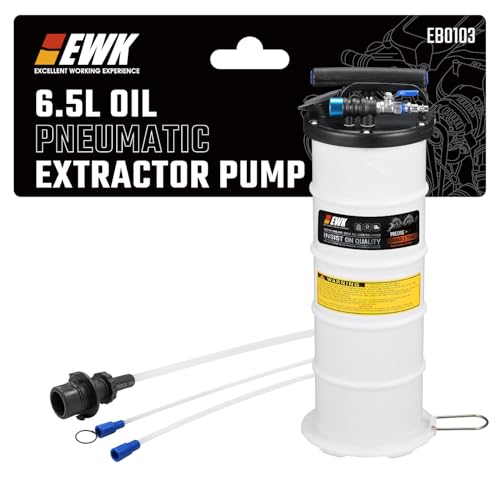
EWK 6.5L Pneumatic/Manual Oil Extractor for Automotive
- ✓ Spill-free oil extraction
- ✓ Fast pneumatic power
- ✓ Durable construction
- ✕ Not compatible with some cars
- ✕ Limited to certain fluids
| Tank Capacity | 6.5 liters |
| Extraction Rate | up to 1.8 liters per minute |
| Operation Modes | Manual and pneumatic |
| Suitable Fluids | Engine oil, transmission fluid, coolant, power steering fluid |
| Compatibility Notes | Not compatible with Mercedes W212 E350 or C218 CLS 350; avoid use with gasoline or highly volatile fluids |
| Material and Durability | Precision-sealed tank and durable tubing for long-lasting performance |
There’s nothing more frustrating than wrestling under your car, trying to keep oil spills contained while jacking it up just to get to the drain plug. That mess stops the moment I used the EWK 6.5L Pneumatic/Manual Oil Extractor.
I simply inserted the extended tube into the dipstick, flipped the switch, and watched the oil drain effortlessly without lifting a single corner of my vehicle.
The dual-mode operation is a game-changer. Outdoors, I prefer the manual mode—quiet and controlled.
But when I’m in the garage, I plug it in, and the pneumatic power clears out the oil in minutes. The suction rate of 1.8 L/min is surprisingly fast, making multi-vehicle jobs feel like a breeze instead of a chore.
The design feels sturdy and well-made. The sealed tank and durable tubing give me confidence it will last for years.
I also appreciate the two extended tubes—those reach deep into the engine’s reservoir, ensuring no drop gets left behind.
Using it across different vehicles and fluids, from cars to boats, has been seamless. Just remember, it’s not compatible with certain Mercedes models or highly volatile fluids.
It’s a versatile tool that saves me time, keeps my garage cleaner, and handles the dirty work with ease.
Amarine Made Oil Pump, Oil Extractor Pump 12V 60W Oil

- ✓ Compact and portable
- ✓ Quiet and smooth operation
- ✓ Easy to install
- ✕ Limited continuous use time
- ✕ Not for gasoline or flammable liquids
| Power | 60W |
| Voltage | 12V DC |
| Flow Rate | 0.8-1.0 liters per minute |
| Dimensions | 8″ L x 7″ W x 4″ H |
| Hose Lengths | Inlet hose: 1.2 meters, Outlet hose: 1.5 meters |
| Maximum Continuous Operation Time | 30 minutes |
I didn’t expect a small, portable device like this oil pump to pack such a punch, but as soon as I connected it to my boat’s engine, I was genuinely surprised by how effortlessly it moved the oil. The moment I pressed the button, I realized how quiet and smooth the operation was, which isn’t something you often get with such compact equipment.
The setup was straightforward—hose connections and clamps lock securely, and the battery clamps clip onto my car’s battery with a satisfying click. I appreciated that I didn’t need any fancy tools or complicated instructions.
Just a quick start, and I was good to go, making oil changes less of a hassle and more of a quick task.
The device’s size is perfect for portability; I could carry it to different vehicles without breaking a sweat. It also felt sturdy in my hand, with a solid build that reassures you it can handle regular use.
The flow rate of about 0.8-1.0 liters per minute was more than enough for quick oil changes, saving me time and mess.
One thing I noticed is that it’s important to follow the safety instructions—warming the oil first and avoiding flammable liquids. Also, it’s not designed for continuous use over 30 minutes, so plan your session accordingly.
Overall, this little pump makes oil changes faster, cleaner, and more convenient, especially if you have multiple vehicles or hard-to-reach engines.
Four Uncles 6L Manual Oil Extractor Pump

- ✓ No electricity needed
- ✓ Long reach tubes
- ✓ Easy to monitor oil level
- ✕ Can be bulky to store
- ✕ Requires manual effort
| Tank Capacity | 6 liters |
| Vacuum Generation Method | Manual hand pump |
| Hose Lengths | Main hose: 59 inches; Extension tubes: 41 inches each (3 pieces) |
| Maximum Reach | Up to 100 inches combined |
| Suitable Fluids | Engine oil, brake fluid, and selected nonvolatile automotive fluids |
| Additional Features | Built-in fluid level markings, wide base for stability, built-in pouring spout |
Jumping into this Four Uncles 6L Manual Oil Extractor, I was curious if it could truly simplify oil changes without crawling under the car. The moment I handled it, I noticed how sturdy and well-made the tank feels, with a wide, stable base that keeps it from tipping over.
The transparent hose and extension tubes are a real highlight. They’re long enough—up to 100 inches combined—to reach tricky dipstick tubes on various vehicles.
I appreciated how easy it was to see the oil level through the tank markings, helping me avoid over- or under-filling.
Pumping the handle creates a solid vacuum that pulls warm oil out smoothly. No need for power tools or electricity—a huge plus for outdoor or garage use.
The wide mouth spout makes pouring used oil into recycling containers less messy, which is a small but significant convenience.
Using the included brake bleeding hose, I managed to extract brake fluid with ease, showing how versatile this kit really is. It’s especially handy for home mechanics who want an all-in-one solution for engine oil and brake fluid.
The manual operation feels reliable and straightforward once you get the hang of it.
Overall, it feels like a practical, well-designed tool that makes oil changes faster and cleaner. The only thing I’d watch out for is the size—if your dipstick tube is extremely short or in a hard-to-reach spot, you might need extra extension tubing.
Still, for most vehicles, this pump covers all bases.
VEVOR 9.5L Manual Oil Extractor Pump with Tubes

- ✓ Airtight, no-drip seal
- ✓ Easy manual operation
- ✓ Versatile for multiple fluids
- ✕ Slightly heavy when full
- ✕ No automatic pump option
| Tank Capacity | 9.5 liters |
| Tank Material | High-Density Polyethylene (HDPE) |
| Suction Mechanism | Manual hand vacuum pump |
| Hose Compatibility | Multi-size hoses including dedicated brake-fluid hose |
| Sealing Features | Air-tight, no-drip seal with precise O-rings and sealed fittings |
| Application Compatibility | Engine oil, coolant, brake fluid, transmission fluid |
Compared to other oil extractors I’ve handled, this VEVOR 9.5L manual pump feels surprisingly sturdy and thoughtfully designed. The semi-transparent HDPE tank makes it easy to see how much fluid you’ve got left without opening anything up.
What really caught my eye was the airtight, no-drip seal. It locks everything in place securely, so no messes or leaks happen during use.
The one-piece tank and sealed fittings give you confidence that you’re not wasting time cleaning up spilled oil or coolant.
The manual suction works smoothly. You don’t need any power or compressed air—just a few pulls and you’re extracting fluid quickly.
The included hoses are flexible and long enough to reach deep into most oil pans, which saves you from awkward contortions or multiple trips.
Switching between different fluids is a breeze thanks to the multi-size hose kit. The dedicated brake fluid hose is especially handy for precise jobs, and I appreciated how versatile it is.
Whether I was dealing with engine oil, coolant, or brake fluid, this tool handled it all without a hitch.
It’s built tough enough to handle frequent use, and the 9.5L capacity means fewer trips to empty it. Plus, the precise O-rings and sealed fittings ensure a tight, no-leak operation from start to finish.
Overall, this extractor makes fluid changes less messy and more efficient. Its simple manual operation and thoughtful features make it a solid choice for DIYers and professionals alike.
What Is an Inboard Oil Extractor and Why Is It Important?
An inboard oil extractor is a device specifically designed to remove oil from inboard engines and machinery efficiently and with minimal mess. These extractors utilize suction mechanisms to draw oil from the engine’s sump or reservoir, allowing for clean and effective oil changes without the need for traditional draining methods. This is particularly important in marine applications where accessing the engine can be challenging.
According to the American Boat and Yacht Council (ABYC), regular oil changes are crucial for maintaining engine health and performance, highlighting the significance of having an effective oil extraction system. Inboard oil extractors are often equipped with various features such as automatic shut-off, graduated measurement tubes, and multiple suction hose options, which enhance their usability and efficiency.
Key aspects of inboard oil extractors include their ability to expedite the oil change process, reduce spillage during extraction, and minimize the potential for contamination. Many models are designed with portable features, making them convenient for marine environments where space is limited. Additionally, the use of an inboard oil extractor can lead to less waste and lower environmental impact, as the oil can be collected and disposed of properly.
This technology impacts the maintenance of inboard engines significantly. For instance, studies show that regular oil maintenance can extend the life of marine engines, leading to fewer repairs and increased resale value. The convenience offered by inboard oil extractors encourages more boat owners to perform regular maintenance, which ultimately contributes to better engine performance and reliability.
The benefits of utilizing an inboard oil extractor include improved efficiency, reduced risk of injury from oil spills, and enhanced environmental responsibility. By streamlining the oil extraction process, boaters can save time and effort during maintenance routines. Moreover, proper disposal of used oil is made easier, ensuring compliance with environmental regulations.
Best practices for using an inboard oil extractor involve ensuring the equipment is compatible with the specific engine type, following manufacturer instructions for optimal performance, and routinely checking the extractor for any necessary maintenance or repairs. Educating users about the importance of regular oil changes and proper disposal methods can further enhance the benefits of this technology.
What Key Features Should You Consider When Choosing an Inboard Oil Extractor?
When choosing the best inboard oil extractor, several key features should be considered to ensure efficiency and ease of use.
- Capacity: The extractor’s capacity is crucial as it determines how much oil can be extracted at once. A larger capacity is beneficial for bigger engines or frequent maintenance, allowing you to extract all the oil without needing to empty the tank frequently.
- Pump Type: The pump type can significantly impact the performance of the oil extractor. Electric pumps are generally faster and require less manual effort, while manual pumps may be more portable and less expensive but can be labor-intensive.
- Material Quality: The materials used in the construction of the oil extractor affect its durability and resistance to corrosion. High-quality plastic or stainless steel can ensure longevity, especially when dealing with hot oil and harsh marine environments.
- Ease of Use: User-friendly features like an ergonomic handle, clear sight gauge for oil level, and simple operation mechanisms can enhance your overall experience. An intuitive design helps streamline the extraction process, making it quicker and less cumbersome.
- Portability: If you plan to use the extractor in various locations, consider its weight and whether it has features like wheels or a compact design for easy transport. A portable model is convenient for boaters who need to perform maintenance in different settings.
- Hose Length and Flexibility: A long and flexible hose is essential for reaching hard-to-access areas in your engine compartment. The hose should also be resistant to kinks and wear, ensuring a smooth oil extraction process without interruptions.
- Filtration Features: Some inboard oil extractors come with built-in filters to remove contaminants from the oil during extraction. This feature can improve the quality of the collected oil, making it easier to dispose of or recycle.
- Warranty and Support: A good warranty and customer support are indicators of a reliable product. Check for manufacturers that offer comprehensive warranties and responsive customer service to assist with any issues that may arise.
How Do Different Types of Inboard Oil Extractors Compare?
| Type | Capacity | Ease of Use | Price Range | Weight | Material | Recommended Usage |
|---|---|---|---|---|---|---|
| Manual Extractor | Up to 5 liters – Ideal for small jobs. | Requires physical effort – Simple operation. | $20 – $50 | 2 kg | Plastic | Small engines, personal use. |
| Electric Extractor | Up to 10 liters – Suitable for larger engines. | Easy to use – Requires power source. | $50 – $150 | 5 kg | Metal and Plastic | Medium to large engines, frequent use. |
| Pneumatic Extractor | Up to 15 liters – Efficient for heavy-duty use. | Fast operation – Needs air compressor. | $150 – $300 | 8 kg | Metal | Heavy-duty applications, professional use. |
What Are the Benefits of Using an Inboard Oil Extractor Over Traditional Methods?
The benefits of using an inboard oil extractor over traditional methods are numerous and cater to efficiency, safety, and ease of use.
- Efficiency: Inboard oil extractors are designed to quickly and effectively remove oil from the engine without the need for cumbersome physical labor or extensive setup. This allows for a faster oil change process, saving both time and effort.
- Safety: Using an inboard oil extractor minimizes the risk of spills and leaks, which can pose environmental hazards and safety issues. The extractor’s closed system helps contain the oil during extraction, reducing exposure to harmful substances.
- Convenience: Many inboard oil extractors are portable and easy to use, allowing users to perform oil changes in various locations without needing a full workshop setup. This convenience is particularly beneficial for boaters or vehicle owners who may need to service their engines away from home.
- Less Mess: Traditional oil change methods often involve draining oil from a pan, which can lead to a messy cleanup. Inboard oil extractors provide a cleaner solution by collecting oil in a designated container, eliminating the hassle of dealing with spills and splashes.
- Compatibility: Many inboard oil extractors are designed to work with a variety of engine types, making them versatile tools for different vehicles. This compatibility ensures that users can maintain multiple engines without needing different tools for each type.
- Environmental Considerations: By efficiently extracting and containing used oil, inboard oil extractors can help promote better environmental practices. Properly managing oil waste ensures that it can be recycled or disposed of responsibly, reducing environmental impact.
What Common Issues Are Associated With Inboard Oil Extractors?
Common issues associated with inboard oil extractors include:
- Clogging: Oil extractors can experience clogging due to contaminants in the oil or improper maintenance, which can hinder their efficiency and lead to incomplete oil removal.
- Pump Malfunctions: The pumps in inboard oil extractors can fail due to wear and tear, electrical issues, or overheating, resulting in a reduced ability to extract oil.
- Seal Leaks: Over time, the seals within the extractor can wear out or become damaged, leading to oil leaks which can create a mess and reduce the extractor’s effectiveness.
- Incompatibility with Oil Types: Some inboard oil extractors may not be suitable for specific oil types, such as synthetic or high-viscosity oils, which can lead to inefficient extraction or damage to the equipment.
- Size Limitations: The capacity of the extractor may be insufficient for larger engines or more extensive maintenance tasks, resulting in the need for multiple extractions or using a less efficient method.
Clogging can be particularly problematic as it not only slows down the extraction process but can also damage the extractor if not addressed promptly. Regular maintenance, including cleaning filters and lines, can help mitigate this issue.
Pump malfunctions are a significant concern, as they can stop the extraction process entirely. Ensuring that the pump is regularly inspected and serviced can extend its lifespan and reliability.
Seal leaks can lead to environmental hazards and increase the cost of oil disposal. Regular checks for wear and replacing seals when necessary is crucial to maintaining the integrity of the extractor.
Incompatibility with certain oil types can render an extractor ineffective, underscoring the importance of selecting an extractor designed for the specific oils used in your engine. Always refer to the manufacturer’s guidelines for compatibility.
Size limitations can be a frustrating issue, especially for those working with larger vessels or engines. Choosing an extractor with an adequate capacity for your needs can prevent unnecessary complications during oil changes.
How Can You Maintain Your Inboard Oil Extractor for Optimal Performance?
To maintain your inboard oil extractor for optimal performance, consider the following tips:
- Regular Cleaning: Keeping the oil extractor clean is essential for its longevity and efficiency. After each use, ensure that all oil residue is removed from the components to prevent clogging and contamination of future extractions.
- Check Seals and Gaskets: Regularly inspect the seals and gaskets for any signs of wear or damage. Properly functioning seals ensure that the extractor maintains pressure and prevents leaks, which can affect performance and safety.
- Lubricate Moving Parts: To ensure smooth operation, periodically lubricate any moving parts as recommended by the manufacturer. This reduces friction and wear, extending the life of the extractor.
- Calibrate for Accuracy: Regularly calibrate your oil extractor to ensure that it provides accurate measurements. This is particularly important for maintaining the correct oil levels in your engine and preventing overfilling.
- Store Properly: When not in use, store the oil extractor in a clean, dry environment away from extreme temperatures. Proper storage prevents damage to components and ensures that it is ready for use when needed.
Regular cleaning is essential for the longevity and efficiency of your inboard oil extractor. After each use, ensure that all oil residue is removed from the components to prevent clogging and contamination of future extractions.
Regularly inspecting seals and gaskets for any signs of wear or damage is crucial. Properly functioning seals maintain pressure and prevent leaks, which can significantly affect performance and safety.
To ensure smooth operation of your oil extractor, periodically lubricate any moving parts as recommended by the manufacturer. This practice reduces friction and wear, extending the life of the extractor.
Regular calibration of your oil extractor is necessary to ensure accurate measurements. This is particularly important for maintaining the correct oil levels in your engine and preventing overfilling, which can lead to significant issues.
Lastly, when not in use, store the oil extractor in a clean, dry environment away from extreme temperatures. Proper storage prevents damage to components and ensures that it is ready for use when needed.
Related Post: