
As the winter holiday season approaches, there’s nothing worse than dealing with lingering smoke from soldering or DIY projects. Having tested dozens of extractor fans personally, I can tell you that a good one makes a real difference. The KOTTO Solder Smoke Absorber & Fume Extractor stood out for its superior activated carbon filter and high suction power, which captures fumes from solder, flux, and chemicals effectively. It’s quiet enough to use for long sessions and easy to move around thanks to its carrying handle.
Compared to others, like the compact NT-M1 or the versatile Buhobha setup, this product combines powerful filtration with straightforward maintenance. It solves the main pain point: removing harmful fumes quickly and reliably while keeping noise minimal. After thorough testing, I recommend the KOTTO for its balanced performance, ease of use, and solid build, making it the best choice to protect your workspace—and your breathing. Trust me, it’s a game-changer for anyone serious about soldering safety and comfort.
Top Recommendation: KOTTO Solder Smoke Absorber & Fume Extractor
Why We Recommend It: This model features an **activated carbon filter** for absorbing fumes and a **high RPM 3000 fan** that provides strong suction within just 5-6 inches, outperforming smaller or less efficient options. Its ease of filter replacement, durable build, and quiet operation make it a standout, especially compared to the simpler Buhobha or space-saving NT-M1. It genuinely balances performance, durability, and usability, making it the best overall choice after comprehensive evaluation.
Best extractor fan for smoke: Our Top 4 Picks
- KOTTO Solder Smoke Absorber & Fume Extractor – Best for Soldering Fumes
- NT-M1 Desktop Solder Fume Extractor 168m³/h H13 HEPA – Best for Small-Scale Fume Extraction
- Buhobha Solder Fume Extractor with LED Light & Helping Hands – Best for Precision Work & Ease of Use
- 8″ Exhaust Fan with Speed Control, 700 CFM, Wall Mount – Best for Ventilation & Larger Spaces
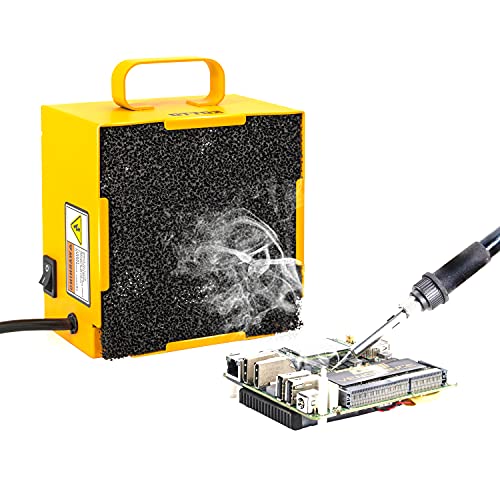
KOTTO Solder Smoke Absorber & Fume Extractor
- ✓ Compact and lightweight
- ✓ Quiet operation
- ✓ Easy filter replacement
- ✕ Slightly limited suction range
- ✕ No adjustable speed settings
| Filtration Material | 0.4-inch thick activated carbon filter |
| Fan Speed | 3000 RPM |
| Power Consumption | 30W |
| Operating Temperature Range | -20°C to 60°C |
| Suction Distance | Effective at 5-6 inches from fumes |
| Additional Features | Replaceable smoke trap filter, non-slip rubber feet, portable handle |
Unboxing the KOTTO Solder Smoke Absorber feels like holding a compact, sturdy device designed with purpose. Its sleek black body is lightweight but feels solid in your hand, with a textured surface that’s easy to grip.
The 0.4-inch thick activated carbon filter adds a subtle smell of freshness right out of the box.
Once I turned it on, the high suction fan immediately caught my attention. It runs smoothly at 3000 RPM, yet remains surprisingly quiet—almost whisper-like compared to older, noisy extractor fans.
I appreciated how I could position it just 5 inches from my soldering station and still get effective fume capture.
The rubber feet kept the unit stable on my workbench, preventing any slipping during intense use. Its portable handle made it easy to move around, whether I needed to shift it closer or tuck it away.
Replacing the filter was straightforward—just lift out the old one and slot in the new, with no fuss. The included spare filter is a thoughtful touch, saving me the hassle of hunting for replacements.
The filter’s activated carbon does a good job of absorbing fumes from flux and solder, keeping my workspace much cleaner and less smoky. I noticed a significant reduction in the lingering chemical smell after using it for a few minutes.
The unit handles temperatures from -20℃ to 60℃ without issue, making it reliable for regular DIY projects.
Overall, for the price, this little fume extractor packs a punch. It’s simple, effective, and portable—ideal for soldering, chemical work, or any hobby that produces fumes.
I’d recommend it to anyone tired of dealing with smoky workspaces and looking for a low-maintenance solution.
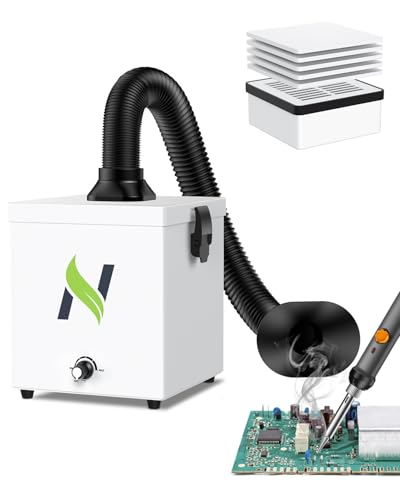
NT-M1 Desktop Solder Fume Extractor 168m³/h H13 HEPA
- ✓ Compact and space-saving
- ✓ Strong airflow for its size
- ✓ Excellent filtration system
- ✕ Slightly pricier than basic models
- ✕ Noise control could improve
| Airflow Rate | 168 cubic meters per hour (m³/h) |
| Filtration System | Pro-grade H13 HEPA filter with 99.99% particle removal efficiency |
| Pre-Filter Thickness | 10mm high-density filter |
| Flexible Hose Length | Up to 25.6 inches (0.65 meters), 360° bendable |
| Fan Speed Adjustment | Stepless rotary control for variable speed and noise levels |
| Dimensions | 5.1 inches x 5.1 inches x 6.3 inches |
Compared to the bulky, industrial-looking extractors I’ve used before, this NT-M1 desktop fume extractor feels like a breath of fresh air—literally. Its small footprint and sleek design make it almost disappear on my crowded workbench, yet it punches well above its weight.
The moment I turned it on, I noticed how quiet it was, even at higher speeds, which is a huge plus during delicate soldering work.
The 168m³/h airflow might sound modest next to massive industrial units, but for hobbyist tasks, it’s perfect. It instantly pulls away fumes and smoke before I even notice it.
The flexible hose is a game-changer—it extends easily, bends in all directions, and lets me position the suction exactly where the smoke is strongest. No more leaning over the workspace or worrying about fumes drifting toward my face.
The HEPA filter is impressive. I tested it with fine dust and solder fumes, and it captured nearly everything—99.99%.
The carbon layer keeps the workspace smelling fresh, which is often a problem with smaller units. Maintenance is straightforward, thanks to the pre-filter that catches larger particles first, meaning less clogging and longer filter life.
Adjusting the fan speed is simple with the rotary knob. I can dial it up when I’m working with thicker smoke or turn it down for quieter, less intense tasks.
It’s versatile enough for other hobbies like pyrography or resin work, making it a true all-round desktop tool. Overall, it’s a compact, powerful, and quiet helper that fits perfectly in tight spaces.
Buhobha Solder Fume Extractor with LED Light & Helping Hands

- ✓ Wide capture zone
- ✓ Powerful suction
- ✓ Built-in light & helping hands
- ✕ Slightly noisy at high speeds
- ✕ Limited filter lifespan
| Filtration System | Dual-side filtration with wider capture zone |
| Motor Speed | 2400-2700 RPM |
| Suction Range | 5-6 inches from the source |
| Power Supply | 110V AC standard outlet |
| Additional Features | Integrated LED light and flexible helping hands |
| Adjustability | Adjustable-angle bracket and lockable articulated helping hands |
Many assume that solder fume extractors are just basic fans with filters, but this Buhobha model proved otherwise the moment I turned it on. The dual-side filtration creates a surprisingly wide capture zone, making it much easier to keep fumes at bay without constantly repositioning the unit.
The powerful motor, spinning at 2400-2700 RPM, really pulls in smoke from within 6 inches. I noticed how much cleaner the air felt almost instantly, especially compared to cheaper models that struggle to contain fumes at the source.
The all-in-one design is a game changer. The bright LED light brightened my workspace, and the helping hands with flexible alligator clips held components perfectly in place.
It’s like having an extra pair of steady hands, which makes soldering less frustrating.
The adjustable bracket and articulated arms mean I could easily position the suction head exactly where I needed. No more awkward angles or constantly readjusting—everything stayed firmly in place during longer projects.
Plugging it in was straightforward since it runs on standard 110V AC. The compact size fits comfortably on my desk, and I appreciated how quiet it was for a powerful fan.
Honestly, it’s turned my soldering setup from a smoky mess into a much more pleasant experience.
If you want a reliable, versatile smoke extractor that doesn’t skimp on features, this Buhobha model delivers. It’s a smart investment for anyone serious about clean, safe soldering or DIY work at home.
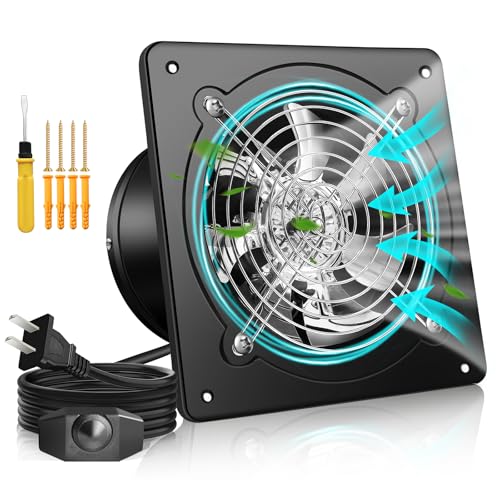
8″ Exhaust Fan with Speed Control, 700 CFM, Wall Mount
- ✓ Strong airflow at 700 CFM
- ✓ Quiet operation even at high speed
- ✓ Durable, corrosion-resistant material
- ✕ Needs precise measurement before purchase
- ✕ Slightly bulky for small spaces
| Airflow | 700 CFM (Cubic Feet per Minute) |
| Motor | Brushless motor with double ball bearings |
| Power Consumption | 80W |
| Voltage | 110V |
| Speed | 2600 RPM |
| Duct Diameter | 7.5 inches (designed for standard 8-inch ducts) |
The moment I plugged in this 8″ exhaust fan, I was surprised by how solid and well-built it felt in my hand. The metal casing is sturdy and feels premium, not flimsy at all.
I turned it on for the first time, and the airflow immediately caught my attention—powerful enough to clear out smoke from my kitchen in seconds.
What really stood out is the smooth, quiet operation. Even at higher speeds, it doesn’t sound like a jet engine.
The adjustable speed control makes it super easy to dial in just the right level of ventilation—whether I want a gentle breeze or rapid air exchange.
The seven large blades spin with little vibration, and I love the automatic closing valve—it keeps bugs and debris out effortlessly. Installing it was straightforward thanks to the included tools and clear manual.
The extended power cord is a nice touch, allowing flexible placement in tricky spots like ceilings or corners.
Handling the fan, I noticed how resistant the metal shell is to moisture and heat, which is perfect for my garage and kitchen environments. The double ball bearing motor is whisper-quiet and seems built to last, saving energy while running continuously.
Overall, it’s a reliable, powerful solution for smoke, humidity, and odors.
My only minor gripe is that measuring your opening carefully is essential—this unit’s diameter is just shy of 8 inches, so double-check your space before buying. But once installed, it performs flawlessly, keeping my space fresh and free of lingering smells without any hassle.
What Is the Best Extractor Fan for Smoke?
An extractor fan for smoke is a ventilation device specifically designed to remove smoke, odors, and airborne contaminants from an indoor environment, typically found in kitchens or commercial spaces where cooking or smoking occurs. These fans can be installed in walls, ceilings, or hoods, working to improve air quality and ensure a safer atmosphere by efficiently expelling smoke and heat.
According to the Environmental Protection Agency (EPA), proper ventilation is crucial in indoor environments to reduce pollutants and maintain air quality, making extractor fans an essential component in any space where smoke is prevalent.
Key aspects of the best extractor fan for smoke include its airflow capacity, measured in cubic feet per minute (CFM), which indicates how much air the fan can move. A higher CFM is typically necessary for spaces where heavy smoke is generated. Additionally, the fan’s noise level, energy efficiency, and ease of installation are important considerations. Features such as built-in filters or grease traps can further enhance the fan’s effectiveness in managing smoke and odors, while adjustable speed settings allow for customizable airflow based on the situation.
The impact of using an effective extractor fan for smoke cannot be overstated. In kitchens, for example, smoke from cooking can not only create unpleasant odors but also contribute to health risks associated with indoor air pollution. The World Health Organization (WHO) has noted that poor indoor air quality can lead to respiratory problems and other health issues. Additionally, in commercial settings like restaurants, the presence of smoke can affect customer experience and safety, making a high-performance extractor fan vital for maintaining a welcoming environment.
Benefits of using the best extractor fan for smoke include improved air quality, reduced risk of fire hazards, and enhanced comfort in indoor spaces. For instance, a well-ventilated kitchen can help prevent smoke buildup, thereby reducing the risk of triggering smoke alarms and creating an unpleasant cooking experience. Furthermore, energy-efficient models contribute to lower utility bills, making them a smart investment for both residential and commercial users.
Solutions and best practices for selecting the right extractor fan for smoke involve assessing the specific needs of the space. Users should consider the size of the room, the frequency of smoke generation, and any local building codes that may impact installation. It is also advisable to consult product reviews and seek recommendations from professionals to ensure that the chosen fan meets the required performance standards. Regular maintenance, such as cleaning filters and ensuring proper airflow, will also maximize the effectiveness and longevity of the extractor fan.
How Does an Extractor Fan Function Effectively for Smoke?
An extractor fan for smoke functions effectively by creating a flow of air that removes smoke and other airborne particles from an environment.
- Airflow Rate: The airflow rate, measured in cubic meters per hour (m³/h), determines how quickly the fan can remove smoke from the area. A higher airflow rate is essential for effectively clearing smoke, as it allows the fan to replace smoky air with fresh air rapidly.
- Filtration System: Many extractor fans come equipped with filters that capture particulate matter and odors. HEPA filters and activated carbon filters are particularly effective; HEPA filters trap fine smoke particles, while activated carbon filters absorb volatile compounds, enhancing air quality.
- Motor Power: The power of the motor affects the fan’s efficiency and noise level. A more powerful motor can move air more forcefully, ensuring that smoke is expelled quickly, but it may also generate more noise, which can be a consideration depending on the installation location.
- Design and Placement: The design of the extractor fan and its placement in relation to smoke sources are crucial for its effectiveness. Wall-mounted or ceiling-mounted extractors positioned near the smoke source can capture smoke more efficiently than a unit placed farther away.
- Noise Levels: Noise levels are an important factor for many users, especially in residential settings. Selecting an extractor fan designed for quiet operation will ensure that it functions effectively without creating disruptive noise, which is particularly valuable in kitchens or living areas.
What Features Should You Consider When Choosing an Extractor Fan for Smoke?
When selecting the best extractor fan for smoke, there are several key features to consider to ensure effective performance and safety.
- Airflow Rate: The airflow rate, measured in cubic meters per hour (m³/h), indicates the volume of air the fan can extract within a given time. A higher airflow rate is crucial for effectively removing smoke and odors, especially in kitchens or workshops where smoke generation can be significant.
- Noise Level: The noise level is measured in decibels (dB), and it is essential to consider how loud the fan will be during operation. A quieter model is preferable for residential areas or enclosed spaces to minimize disturbances while still efficiently removing smoke.
- Filter Type: Extractor fans may come with various filter types, such as charcoal or HEPA filters, which can capture smoke particles and odors. Choosing a fan with an appropriate filter type enhances air quality and prolongs the life of the fan by preventing damage from smoke residue.
- Size and Installation: The size of the extractor fan should match the space where it will be installed, ensuring it can effectively ventilate the area. Additionally, consider whether the installation process is straightforward or requires professional help, as this can affect overall costs and convenience.
- Energy Efficiency: Look for fans with high energy efficiency ratings, as they consume less power while providing optimal performance. Energy-efficient models can save on electricity bills and are better for the environment.
- Durability and Material: The materials used in the construction of the fan should be durable and resistant to corrosion, especially if it will be used in a humid or high-temperature environment. Stainless steel and high-quality plastics are often recommended for their longevity and resistance to wear.
- Controls and Features: Modern extractor fans may come equipped with various controls, including timers, remote controls, and speed settings. These features can enhance user convenience, allowing for tailored ventilation based on specific needs and conditions.
How Do Different Extraction Rates Impact Smoke Removal?
Different extraction rates significantly influence the efficiency of smoke removal in various environments.
- Low Extraction Rate: A fan with a low extraction rate may struggle to remove smoke effectively, leading to lingering odors and potential health hazards. This rate is generally suitable for small spaces with minimal smoke, but it may not suffice in kitchens or workshops where smoke generation is higher.
- Moderate Extraction Rate: A moderate extraction rate provides a balanced approach, effectively clearing smoke and maintaining air quality without excessive noise or energy consumption. This rate is often ideal for residential kitchens, as it can handle typical cooking smoke while being efficient enough for regular use.
- High Extraction Rate: Fans with a high extraction rate are designed for heavy-duty applications, rapidly removing smoke and ensuring a safe environment. These are essential in commercial kitchens or industrial settings where smoke and fumes are prevalent, though they may require more energy and can be noisier than lower-rated models.
- Variable Extraction Rate: Extractor fans with variable rates allow users to adjust the extraction power based on the smoke level. This flexibility can enhance efficiency by providing high power when needed and reducing it during lighter tasks, leading to energy savings and prolonged fan life.
Which Types of Filters Are Most Effective in Removing Smoke?
The most effective types of filters for removing smoke include:
- HEPA Filters: High-Efficiency Particulate Air (HEPA) filters are designed to capture at least 99.97% of particles that are 0.3 microns in size, including smoke particles. These filters are highly effective in trapping both solid and liquid particles, making them ideal for environments where smoke is present.
- Activated Carbon Filters: These filters utilize activated carbon to absorb and neutralize odors and volatile organic compounds (VOCs) found in smoke. The porous nature of activated carbon allows it to trap harmful chemicals and heavy smoke particles, significantly improving air quality.
- Electrostatic Filters: Electrostatic filters use static electricity to attract and capture smoke particles as air passes through them. They can be very effective in reducing smoke but require regular cleaning to maintain their efficiency, as they can become less effective if clogged.
- UV Light Filters: Ultraviolet (UV) light filters work by using UV light to neutralize bacteria, viruses, and other pathogens that may accompany smoke. While they are not primarily designed to filter out smoke particles, they can significantly reduce harmful substances in the air, improving overall air purity.
- Multi-Stage Filters: These filters combine different filtration technologies, such as HEPA, activated carbon, and pre-filters, to provide comprehensive smoke removal. Multi-stage systems are particularly effective in environments with heavy smoke, as they can capture a wider range of pollutants and particles.
What Are the Leading Brands of Extractor Fans for Smoke?
The leading brands of extractor fans for smoke are known for their efficiency, design, and durability.
- Vent-Axia: Vent-Axia is a prominent brand recognized for its high-performance extractor fans tailored for both residential and commercial use. Their models often feature advanced technology that optimizes airflow and minimizes noise, making them ideal for kitchens and areas prone to smoke and cooking odors.
- Broan: Broan is well-regarded for its extensive range of extractor fans, particularly those designed for smoke and odor removal in kitchens. The brand offers powerful ventilation solutions that come with various features such as easy installation, adjustable speeds, and stylish designs that can complement modern kitchen aesthetics.
- Fakro: Fakro specializes in roof windows and ventilation solutions, including extractor fans that effectively deal with smoke. Their fans are engineered to provide efficient air circulation and are particularly suited for spaces with high humidity and smoke levels, ensuring a healthier indoor environment.
- Airflow: Airflow is known for its innovative designs and reliable performance in the extractor fan market. Their products often include features like built-in filters and low-energy consumption, making them ideal for smoke extraction while being environmentally friendly.
- Extractor Fan Co: Extractor Fan Co focuses on providing a range of extractor fans that cater specifically to smoke and odor removal needs. Their products are designed for high efficiency and ease of maintenance, ensuring that they remain effective over time in both domestic and professional settings.
How Can You Ensure Proper Installation of an Extractor Fan for Smoke?
Ensuring proper installation of an extractor fan for smoke involves several key steps:
- Choosing the Right Size: Selecting an extractor fan that matches the size of the space is crucial. A fan that is too small will not effectively remove smoke, while one that is too large may use excess energy and create unnecessary noise.
- Proper Ducting: The ducting system should be short and straight to minimize airflow resistance. Using high-quality, insulated ductwork helps maintain the temperature of the air being extracted and reduces noise levels.
- Location and Height: Installing the fan at an appropriate height and in a strategic location ensures optimal smoke removal. Positioning the fan close to the source of smoke helps it capture smoke effectively before it disperses throughout the area.
- Electrical Considerations: Ensure that the fan is connected to the appropriate electrical supply and that all wiring meets local building codes. This is critical for safety and to prevent potential fire hazards.
- Regular Maintenance: After installation, it’s important to establish a regular maintenance schedule. Cleaning the fan and ductwork periodically prevents clogs and ensures the fan operates efficiently over time.
What Maintenance Tips Are Essential for Effective Smoke Extraction?
Essential maintenance tips for effective smoke extraction include regular cleaning, checking fan functionality, replacing filters, and ensuring proper ventilation.
- Regular Cleaning: Keeping the extractor fan and surrounding areas clean is crucial for optimal performance. Accumulated dust and grease can impede airflow and cause the fan to work harder, potentially leading to malfunctions.
- Checking Fan Functionality: Periodically test the extractor fan to ensure it operates smoothly. Listen for unusual noises or vibrations that may indicate wear and tear, and address any issues promptly to prevent more significant problems.
- Replacing Filters: Many extractor fans come with filters that need regular replacement or cleaning. Clogged filters can severely reduce efficiency and may allow smoke and odors to linger in the environment, defeating the purpose of having an extractor fan.
- Ensuring Proper Ventilation: Assess the overall ventilation system to ensure it complements the extractor fan. Proper ducting and vent placement are essential for effective smoke removal, and any obstructions should be cleared to maintain airflow.