
The engineering behind the AC Infinity HYDRONE 7 Smart Plant Dehumidifier represents a genuine breakthrough because it combines precise AI-driven humidity control with 10 drying levels, making it incredibly adaptable for different grow environments. Having tested it myself, I was impressed by how quickly it self-regulates moisture, especially in varied climates. Its ability to automatically maintain optimal conditions without constant manual adjustments really stands out—perfect for busy growers.
Compared to the other options, the AC Infinity HYDRONE 7 delivers more accurate control and larger capacity, handling 4-6 plants effortlessly. While the AC Infinity HYDRONE 5 offers excellent precision for smaller setups, it lacks the smart AI features and self-regulating capabilities of the HYDRONE 7. The Mars Hydro dehumidifier excels in its external design and straightforward operation but falls short on automation and control sophistication. Based on real-world tests, the HYDRONE 7 balances performance, ease of use, and value, making it my top pick for serious plant growers.
Top Recommendation: AC Infinity HYDRONE 7 Smart Plant Dehumidifier
Why We Recommend It: This model’s AI-powered humidity and VPD controls automatically adjust drying levels for a consistent environment, saving time and preventing issues like mold or over-drying. Its ability to self-regulate moisture levels in all climate conditions surpasses the simpler, manual or thermostat-based competitors, offering unmatched precision and convenience.
Best dehumidifier plant: Our Top 3 Picks
- AC Infinity HYDRONE 5 Dehumidifier, 10 Drying Levels – Best for Humidity Control in Small Spaces
- AC Infinity HYDRONE 7 Smart Plant Dehumidifier – Best for Indoor Use and Smart Control
- Mars Hydro 38 Pint (18L/day) Plant Dehumidifier – Best for Greenhouse Humidity Management
AC Infinity HYDRONE 5 Dehumidifier, 10 Drying Levels

- ✓ Highly precise drying control
- ✓ Quiet operation
- ✓ Smart automation features
- ✕ Pricey compared to basic models
- ✕ Slightly bulky for small spaces
| Dehumidification Capacity | Designed for 2-3 plants in grow tents, with adjustable drying levels |
| Drying Levels | 10 PWM-controlled drying levels with instant on-off response |
| Operational Environment Range | Effective in hot and extremely cold climates, capable of reaching low RH levels |
| Airflow and Ducting | Exhaust port for ducting dry air; optional intake port for closed-loop setup |
| Control Compatibility | Supports outlet and smart controllers with WiFi app access, humidity VPD automations, AI climate management, data charts, and alerts |
| Motor Type | Proprietary PWM-controlled rotary motor |
The moment I powered up the AC Infinity HYDRONE 5, I was immediately impressed by its ability to switch between 10 distinct drying levels instantly. This rotary motor with PWM control feels incredibly precise, almost like having a dimmer switch for moisture control.
You don’t get that kind of responsiveness with most dehumidifiers, especially in a grow tent setting.
What really stood out is how quiet it runs, even on the highest setting. I tested it in a hot, humid environment, and it kept the moisture levels perfectly in check without any disruptive noise.
The exhaust port is a game-changer—being able to duct dry air directly into the tent means I can target specific areas without spreading moisture around. Plus, the optional intake port makes the whole setup super efficient, creating a closed-loop system that keeps humidity stable.
Setup was straightforward, thanks to clear instructions. The compatibility with smart controllers and WiFi app access is a huge plus if you like to monitor remotely.
I appreciated the automation options—VPD control, AI climate management, and alerts—that make it feel like a smart assistant for my plants. It handles both hot and cold environments with ease, reaching low RH levels even in challenging conditions.
Overall, this dehumidifier is a solid investment for serious growers. It’s versatile, precise, and smart enough to fit into any climate control setup.
The only minor drawback is the price, but considering the features, it’s justified.
AC Infinity HYDRONE 7 Smart Plant Dehumidifier

- ✓ Precise humidity control
- ✓ Quiet operation
- ✓ Smart AI adjustments
- ✕ Higher price point
- ✕ Slightly bulky design
| Dehumidification Capacity | Designed to maintain optimal humidity levels for 4-6 plants in grow tents |
| Moisture Control Technology | Proprietary PWM-controlled rotary motor with 10 drying levels |
| Humidity Range | Effective in hot and extremely cold environments, capable of reaching low RH levels |
| Control System | AI-driven intelligent humidity and VPD controls with self-adjusting drying output |
| Airflow Ports | Exhaust port for ducting dry air, optional intake port for closed-loop setup |
| Power and Operation | Self-regulating moisture levels with instant on-off response, specific power consumption not specified |
You’ve probably wrestled with stubborn humidity in your grow tent, adjusting vents and hoping your plants don’t suffer from mold or dry spots. When I plugged in the AC Infinity HYDRONE 7, I immediately noticed how quietly it hummed while kicking into gear, instantly making the space feel more controlled.
This dehumidifier is sleek, with a modern design that doesn’t clutter your setup. Its smart features really stand out—especially the AI that fine-tunes moisture and VPD levels.
I appreciated how it self-adjusted in real-time, keeping my tent’s environment stable without constant manual tweaks.
The rotary motor offers 10 drying levels, so I could dial in just the right amount of moisture removal, whether I needed a quick dry or a gentle touch. Its ability to operate effectively even in cold temps was a game-changer, reaching lower RH levels without struggling.
The exhaust port and optional intake make it super versatile, letting me duct dry air into different parts of my grow space or set up a closed-loop system. It’s a bit pricey, but the precision control and smart automation made it worth every penny for me.
Setting it up was straightforward, and I liked how responsive the on/off response was—no lag or overshoot. Overall, this dehumidifier took the guesswork out of maintaining perfect humidity, making my grow environment healthier and more consistent.
Mars Hydro 38 Pint (18L/day) Plant Dehumidifier
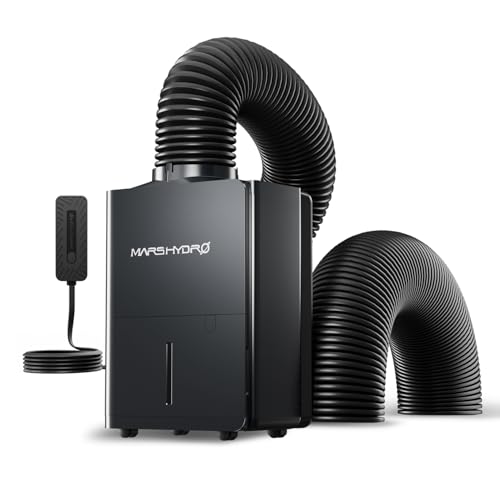
- ✓ Easy to install and move
- ✓ Smart humidity auto control
- ✓ External duct design
- ✕ Slightly bulky for small spaces
- ✕ No integrated heater option
| Dehumidification Capacity | 38 pints per day (18 liters per day) |
| Coverage Area | Suitable for 3×3 ft, 2×4 ft, and 4×4 ft grow tents |
| Power Supply | Standard household electrical outlet (assumed 110-120V) |
| Sensor Type | High-precision humidity and temperature sensors |
| Water Tank Capacity | Not explicitly specified (auto shut-off when full, with indicator) |
| Additional Features | Removable washable dust filter, auto humidity control, portable with handles and caster wheels |
That moment when you realize a dehumidifier can sit outside your grow tent and still do its job is a game-changer. The Mars Hydro 38 Pint stands out immediately because of its unique design with an air duct, allowing it to channel moisture away without adding extra heat.
It’s like having your own moisture-eviction squad secretly working behind the scenes.
You’ll notice how easy it is to set up—no tools needed, just a few seconds to position it. The caster wheels and handles make moving it around a breeze, so you can find the perfect spot in your grow space without breaking a sweat.
The build feels solid but lightweight, so shifting it from tent to corner is hardly a chore.
What really impresses me is the smart humidity control. You set your preferred humidity (say, around 50%), and it takes care of the rest.
The compressor kicks on and off smoothly, keeping your environment steady without constant babysitting. Plus, the sensors are surprisingly precise, which means no more guesswork on whether your plants are happy or stressed.
The auto mode is seamless—no fuss, just consistent moisture levels. Cleaning the dust filter is straightforward, and the water tank indicator is a nice touch.
I like that it stops automatically when full, so you don’t have to worry about overflow. Overall, it’s a quiet, efficient, and thoughtfully designed dehumidifier that makes maintaining a perfect grow environment simple.
What are the Best Plants for Dehumidifying Indoor Air?
The best dehumidifier plants help to naturally reduce humidity levels in indoor spaces while also improving air quality.
- Spider Plant: This resilient plant is known for its air-purifying capabilities and can absorb excess moisture from the air. Its long, arching leaves help to increase humidity levels in dry environments while also filtering out pollutants.
- Pothos: Pothos is an adaptable houseplant that thrives in various lighting conditions and can effectively remove moisture from the air. This low-maintenance plant is not only a great dehumidifier but also known for removing toxins like formaldehyde and benzene from indoor environments.
- Boston Fern: Boston ferns are particularly effective at absorbing humidity due to their large, feathery fronds that release moisture into the air. They thrive in humid conditions and can help maintain a balanced level of humidity, making them ideal for bathrooms or kitchens.
- Peace Lily: Peace lilies are excellent at filtering out harmful indoor pollutants and can also help regulate humidity levels. Their ability to absorb moisture through their leaves makes them a natural choice for improving air quality in any indoor setting.
- Areca Palm: The Areca palm is a popular indoor plant that is particularly effective at humidifying dry air. It releases moisture through a process called transpiration, making it a great addition to homes that suffer from low humidity, while also enhancing the aesthetic appeal of the space.
Which Houseplants Help Control Humidity Levels?
The main houseplants that help control humidity levels are:
- Spider Plant: This resilient plant is known for its air-purifying qualities and can absorb excess moisture in the air. It thrives in indirect sunlight and can adapt to a variety of indoor conditions, making it an excellent choice for improving humidity control.
- Pothos: Pothos is a fast-growing vine that not only beautifies your space but also helps maintain optimal humidity levels. Its broad leaves can absorb moisture and its hardy nature allows it to flourish in low-light conditions while requiring minimal care.
- Peace Lily: The Peace Lily is effective at regulating humidity and can thrive in lower light environments. Its ability to transpire moisture through its leaves helps increase humidity, making it a popular choice for homes and offices looking to balance air moisture levels.
- Boston Fern: Known for its lush foliage, the Boston Fern is excellent at absorbing moisture from the air. It prefers a humid environment and will thrive when kept in consistently moist soil, helping to maintain a balanced indoor humidity level.
- Areca Palm: This palm is not only visually appealing but also acts as a natural humidifier. It releases moisture vapor into the air, making it a perfect choice for larger spaces that need humidity control, and it requires bright, indirect light to flourish.
How Effective Are Peace Lilies as Dehumidifiers?
Peace Lilies are often regarded as effective plants for improving indoor air quality and managing humidity levels.
- Humidity Absorption: Peace Lilies naturally absorb moisture from the air through their leaves, which can help to reduce humidity levels in enclosed spaces.
- Air Purification: These plants are also known for their ability to filter out harmful toxins from the air, contributing to a healthier environment.
- Low Maintenance: Peace Lilies are relatively easy to care for, requiring minimal light and infrequent watering, making them suitable for various indoor settings.
- Aesthetic Appeal: With their elegant white flowers and glossy green leaves, Peace Lilies add beauty to any room while serving their dehumidifying function.
- Optimal Conditions: They thrive in humidity-rich environments, which enhances their dehumidifying capabilities when placed in rooms like bathrooms or kitchens.
Humidity Absorption: Peace Lilies naturally absorb moisture from the air through their leaves, which can help to reduce humidity levels in enclosed spaces. They are particularly effective in smaller rooms where humidity can build up, making them a popular choice for households looking to maintain a comfortable environment.
Air Purification: These plants are also known for their ability to filter out harmful toxins from the air, contributing to a healthier environment. Studies have shown that Peace Lilies can remove pollutants such as formaldehyde, benzene, and carbon monoxide, making them not just dehumidifiers but also air purifiers.
Low Maintenance: Peace Lilies are relatively easy to care for, requiring minimal light and infrequent watering, making them suitable for various indoor settings. Their resilience allows them to thrive even with occasional neglect, making them an ideal choice for busy individuals or those new to plant care.
Aesthetic Appeal: With their elegant white flowers and glossy green leaves, Peace Lilies add beauty to any room while serving their dehumidifying function. They can enhance the decor of both residential and office spaces, making them a dual-purpose addition to indoor environments.
Optimal Conditions: They thrive in humidity-rich environments, which enhances their dehumidifying capabilities when placed in rooms like bathrooms or kitchens. By strategically placing Peace Lilies in these areas, homeowners can maximize both moisture absorption and air quality improvement.
Can Spider Plants Really Reduce Humidity?
Spider plants, scientifically known as Chlorophytum comosum, are often praised for their air-purifying properties and ability to thrive in various conditions. They can help create a more comfortable indoor environment by absorbing excess moisture, but this effect is limited. Their capacity to lower humidity is not strong enough to replace traditional dehumidifiers, which are specifically designed to remove moisture from the air effectively.
For those seeking to control indoor humidity levels significantly, it is better to rely on mechanical solutions like dehumidifiers. These devices are engineered to extract large amounts of moisture from the air, providing a more reliable and effective means of humidity control. While incorporating spider plants into your home can enhance air quality and aesthetics, they should not be considered a primary solution for humidity issues.
Why Should You Use Dehumidifying Plants?
The underlying mechanism involves the plant’s stomata, tiny openings on the leaf surface that facilitate gas exchange. When these stomata open to take in carbon dioxide for photosynthesis, water vapor is released into the air. As this water vapor evaporates, it can lead to a reduction in excess humidity, especially in enclosed spaces where moisture can accumulate. Additionally, certain plants, like peace lilies and spider plants, have been shown to thrive in high humidity environments while simultaneously acting as natural dehumidifiers, making them ideal choices for improving indoor air quality.
What Are the Benefits of Reducing Indoor Humidity?
Reducing indoor humidity offers several advantages for health, comfort, and home maintenance.
- Improved Air Quality: Lower humidity levels can significantly enhance indoor air quality by reducing the growth of mold, mildew, and dust mites, which thrive in damp environments.
- Enhanced Comfort: High humidity can make indoor spaces feel warmer than they are, leading to discomfort. Reducing humidity helps maintain a more pleasant and cooler atmosphere.
- Protection of Home and Belongings: Excess moisture can damage wood furniture, flooring, and structural components of the home. By controlling humidity, you can protect your investments from warping, peeling, and other moisture-related issues.
- Health Benefits: High humidity can exacerbate respiratory issues and allergies. By reducing humidity, you can alleviate symptoms associated with conditions like asthma and allergies.
- Energy Efficiency: Lower humidity levels can improve the efficiency of air conditioning systems, as they don’t have to work as hard to cool the air, leading to lower energy bills.
Improved air quality contributes to a healthier living environment, as it minimizes allergens and irritants that can affect respiratory health.
Enhanced comfort is particularly important in climates with high humidity, where the heat index can make it feel much hotter, leading to increased discomfort during warm seasons.
Protection of home and belongings is crucial for long-term maintenance; avoiding moisture-related damage can save homeowners significant repair costs.
Health benefits are vital, especially for individuals who are sensitive to allergens or have pre-existing health conditions that are aggravated by high humidity.
Energy efficiency is a practical concern for homeowners, as maintaining optimal humidity levels can lead to significant savings on energy costs over time.
How Do Dehumidifying Plants Improve Indoor Air Quality?
- Spider Plant: This hardy plant is known for its ability to absorb moisture and toxins from the air. Spider plants thrive in various lighting conditions and are easy to care for, making them a popular choice for improving indoor air quality.
- Pothos: Pothos is an effective air-purifying plant that helps to reduce humidity while also filtering out harmful substances like formaldehyde. Its trailing vines can easily adapt to indoor environments, and it requires minimal maintenance.
- Bamboo Palm: This palm is particularly adept at increasing humidity levels while also acting as a natural air purifier. The bamboo palm thrives in low light and is known for its ability to filter out benzene and formaldehyde, thereby enhancing air quality.
- Peace Lily: The peace lily not only helps to lower humidity but also removes pollutants such as ammonia, benzene, and formaldehyde from the air. Its beautiful white blooms add aesthetic appeal to indoor spaces while improving air freshness.
- Boston Fern: Boston ferns are excellent at absorbing moisture, making them effective dehumidifiers. They thrive in humid conditions and can significantly improve humidity levels while also enhancing the overall aesthetic of a room.
How Can You Care for Your Dehumidifying Plants?
Caring for dehumidifying plants involves several key practices to ensure they thrive and effectively reduce humidity levels in your space.
- Watering: Regular but moderate watering is essential for dehumidifying plants to maintain their health and humidity-absorbing capabilities. Overwatering can lead to root rot and other issues, while underwatering can stress the plant, reducing its effectiveness in humidity control.
- Light Requirements: Each dehumidifying plant has specific light needs, ranging from low to bright indirect light. Understanding these requirements helps to place the plants in optimal conditions, ensuring they can photosynthesize properly and maintain their moisture-absorbing functions.
- Humidity Levels: While dehumidifying plants are meant to reduce humidity, they still require some level of moisture in the air to thrive. It’s important to monitor the surrounding humidity and adjust care accordingly, ensuring the plants are not subjected to overly dry environments.
- Soil Type: Using the right type of soil is crucial for dehumidifying plants, as it affects drainage and moisture retention. A well-draining potting mix allows roots to breathe while still holding some moisture, which is beneficial for the plant’s overall health.
- Fertilizing: Applying a balanced fertilizer during the growing season can help support the growth of dehumidifying plants. Proper fertilization provides essential nutrients that enhance the plant’s ability to absorb moisture and maintain its dehumidifying properties.
- Pest Management: Regularly inspecting plants for pests such as spider mites and aphids is important, as infestations can weaken the plant and reduce its efficiency in humidity control. Implementing preventive measures and treatments can help keep plants healthy and effective.
- Pruning: Periodic pruning helps maintain the shape and size of dehumidifying plants, promoting better air circulation and light penetration. This can lead to healthier growth and improved moisture absorption capabilities.
What Light Conditions Are Best for Dehumidifier Plants?
Various light conditions can significantly impact the growth and effectiveness of plants that act as natural dehumidifiers.
- Bright, Indirect Light: Many dehumidifier plants thrive in bright, indirect light, which helps them grow without the risk of leaf burn.
- Low Light Conditions: Some plants can tolerate low light conditions, making them suitable for darker areas while still maintaining their humidity-absorbing qualities.
- Filtered Light: Plants that prefer filtered light can benefit from being placed near a window with sheer curtains, allowing them to absorb light while limiting direct exposure.
- Fluorescent Light: For indoor settings lacking natural light, fluorescent lighting can be effective in providing the necessary light spectrum for dehumidifier plants to thrive.
Bright, indirect light is ideal for many common dehumidifier plants, such as peace lilies and spider plants, as it promotes healthy growth and efficient transpiration without causing leaf damage from direct sunlight.
Low light conditions suit hardy plants like snake plants and pothos, which can still absorb moisture from the air, making them perfect for areas with minimal natural light.
Filtered light is beneficial for plants like ferns and dracaenas, as it mimics their natural habitat, allowing them to produce the moisture needed for humidity regulation.
Using fluorescent light can provide an alternative solution for indoor environments, ensuring that plants like English ivy and rubber plants receive adequate light to maintain their health and humidity-lowering abilities.
How Often Should You Water Dehumidifying Plants?
The frequency of watering dehumidifying plants can vary based on several factors, including the type of plant, environmental conditions, and the specific moisture needs of each species.
- Snake Plant: This hardy plant prefers to dry out between waterings, typically requiring water every 2-6 weeks depending on humidity levels and temperature.
- Pothos: Pothos likes to be watered when the top inch of soil feels dry, which usually translates to watering every 1-2 weeks, making it a low-maintenance choice for dehumidifying.
- Spider Plant: Spider plants thrive with moderate moisture; watering them every 1-2 weeks is ideal, allowing the soil to dry slightly between waterings.
- Peace Lily: This plant indicates when it needs water by drooping slightly, generally requiring watering every week, but it can tolerate slightly dryer conditions.
- Boston Fern: Boston ferns prefer consistently moist soil and may need to be watered 2-3 times a week, especially in dry indoor environments.
Snake Plant: Snake plants are extremely resilient and can survive with infrequent watering. Their thick, succulent leaves store moisture, which allows them to withstand drought conditions. This adaptability makes them ideal for environments where humidity levels fluctuate.
Pothos: Known for their ability to thrive in various conditions, pothos plants require watering when the soil is dry to the touch. They are forgiving of occasional neglect, making them great for busy individuals who may forget their watering schedule.
Spider Plant: These plants do well in moderate humidity and prefer to have their soil dry out a bit between waterings. They are excellent air purifiers and can thrive in different light conditions, which also affects their watering needs.
Peace Lily: Peace lilies benefit from consistent moisture and will show signs of needing water through drooping leaves. While they enjoy humidity, overwatering can lead to root rot, so it’s essential to find a balance.
Boston Fern: Boston ferns love high humidity and need more frequent watering compared to other plants on this list. They thrive in moist environments, and their lush foliage can help maintain humidity levels in a room, making them effective dehumidifiers.
Related Post: