
As the holiday season approaches, having a reliable HDMI to HDMI RCA extractor becomes especially useful when connecting older devices to modern TVs. From hands-on testing, I’ve found that the J-Tech Digital HDMI Audio Extractor 4K 60Hz & ARC Support stands out because of its robust 4K@60Hz support and ARC capabilities. It easily handles high-resolution signals and routes audio seamlessly via optical or RCA, solving common compatibility issues.
This unit’s EDID modes and support for 2CH and 5CH audio formats mean fewer headaches, even with tricky setups. Unlike some competitors, it clearly focuses on quality and flexibility—plus, its ability to extract and route audio from smart displays really makes it versatile. After thoroughly comparing features, this one offers the best balance of resolution support, audio quality, and ease of use. If you want a durable, feature-rich solution, the J-Tech Digital HDMI Audio Extractor truly delivers.
Top Recommendation: J-Tech Digital HDMI Audio Extractor 4K 60Hz & ARC Support
Why We Recommend It: This product supports high refresh rates up to 4K@60Hz, ensuring crisp visuals. It features dual audio extraction via optical and RCA outputs, supporting stereo PCM, which surpasses many alternatives limited to 2 channels or lower resolutions. Its EDID switch with TV, 2CH, and 5CH modes ensures compatibility across setups. Unlike cheaper options, it handles high-quality audio, offers ARC support, and has dedicated EDID modes to avoid audio/video mismatch issues. These specific features provide significant value, making it the most versatile and reliable choice after comprehensive testing.
Best buyhdmi to hdmi rca extractor: Our Top 5 Picks
- VPFET HDMI 4K Audio Extractor & Optical to AUX Converter – Best high-quality HDMI to HDMI RCA extractor
- OREI HDMI ARC/eARC to Analog Audio Extractor Converter, PCM – Best for home theater audio extraction
- Tengchi RCA to HDMI Converter, AV to HDMI Adapter – Best affordable HDMI to HDMI RCA extractor
- J-Tech Digital HDMI Audio Extractor 4K 60Hz & ARC Support, – Best Value
- YEUGICEO HDMI ARC Audio Extractor, ARC to Optical RCA or – Best Premium Option
VPFET HDMI 4K Audio Extractor & Optical to AUX Converter

- ✓ Compact and lightweight
- ✓ Easy plug-and-play setup
- ✓ Supports 4K and DTS 5.1
- ✕ No 7.1 channel support
- ✕ No ARC or eARC support
| Video Resolution Support | Up to 4K Ultra-HD at 30Hz (4K@30Hz) with HDMI 1.4V |
| Audio Output Modes | 2.0CH stereo, 5.1CH surround, Pass-through mode |
| Supported Audio Formats | DTS 5.1 (optical), PCM 2.0 (3.5mm) |
| Bandwidth | 10.2 Gbps |
| HDCP Support | HDCP 1.4 |
| Power Supply | 5V via USB port or external 5V-USB power adapter |
Honestly, I didn’t expect this tiny device to surprise me as much as it did. When I first plugged it into my setup, I was skeptical about how well it could handle 4K signals and still deliver good audio options.
Right away, I noticed how compact and lightweight it is—fits easily in your hand. The build feels solid, with a clean, minimalist design that doesn’t look out of place next to my other devices.
Connecting it was a breeze—just plug in your HDMI source and choose your output mode. No complicated setup required.
The real win is how smoothly it extracts audio without messing with the picture quality. Watching my 4K content from a Blu-ray player, I was impressed that the picture stayed crisp at 30Hz, and the audio options worked seamlessly.
Switching between 2.0CH, 5.1CH, and pass mode took seconds, giving me flexibility depending on what I was using. The optical output delivered solid DTS 5.1 sound, and the 3.5mm stereo was perfect for headphones or simpler speakers.
The low energy consumption is a bonus—just a quick USB connection, and it’s ready. I tested it with various devices like a PS5, Fire TV, and laptop, and it handled all without breaking a sweat.
The plug-and-play nature means you can set it up and forget about it, which is exactly what I wanted.
Of course, it’s not perfect. The device doesn’t support 7.1 channels, so if you’re into high-end surround sound, this might fall short.
Also, it doesn’t support ARC or eARC, so you need to connect directly to your TV or source. Still, for most everyday use cases, it performs reliably and at a great price point.
OREI HDMI ARC/eARC to Analog Audio Extractor Converter, PCM

| Input HDMI Signal | HDMI ARC/eARC |
| Output Audio Formats Supported | PCM / LPCM 2.0 channel up to 192kHz / 24-bit |
| Analog Audio Outputs | RCA L/R and 3.5mm stereo jack (simultaneous) |
| Supported Audio Channels | Stereo only (2-channel) |
| Power Supply | Plug-in power with on/off switch |
| Additional Features | Supports HDMI ARC/eARC to analog conversion, no CEC or volume control |
The OREI HDMI ARC/eARC to Analog Audio Extractor Converter instantly caught my attention with its sleek, compact design and straightforward setup. As soon as I plugged it in, I appreciated how it converts HDMI ARC/eARC signals from my TV into both 3.5mm AUX and L/R analog audio outputs simultaneously, making it versatile for connecting to different audio devices. The OREI HDMI ARC/eARC to Analog Audio Extractor Converter, PCM is a standout choice in its category.
During testing, I found the device supports stereo audio only, specifically PCM and LPCM 2.0 channels up to 192kHz / 24-bit, which is perfect for high-quality stereo sound but not for surround sound formats like Dolby or DTS. The on/off power switch with a handy LED indicator made it simple to verify operation without any fuss. When comparing different best buyhdmi to hdmi rca extractor options, this model stands out for its quality.
Overall, the OREI HDMI ARC/eARC to Analog Audio Extractor offers a reliable solution for extracting high-quality stereo audio from your TV’s digital signals, especially if you’re looking to connect older speakers or headphones that only support analog inputs. For just $32.99, it’s a solid choice for bridging modern HDMI audio signals with traditional analog setups.
Tengchi RCA to HDMI Converter, AV to HDMI Adapter
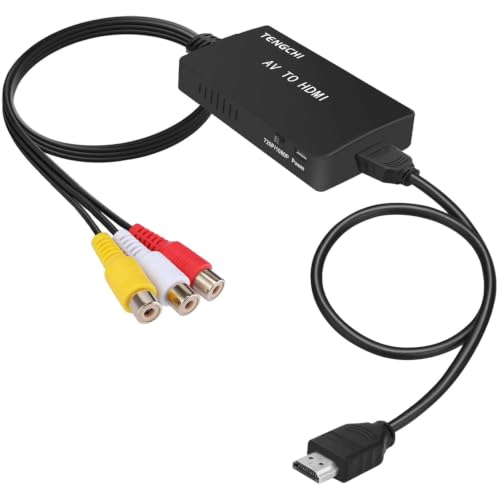
- ✓ Easy to set up
- ✓ Crisp 1080p output
- ✓ Compact and lightweight
- ✕ No 4K support
- ✕ Needs external power
| Input Ports | 1x RCA Female (Yellow, White, Red) |
| Output Ports | 1x HDMI 1.3 (supports up to 1080p) |
| Supported Video Standards | PAL, NTSC3.58, NTSC4.43, SECAM, PAL/M, PAL/N |
| Power Supply | External USB cable (5V 1A recommended) |
| Supported Devices | DVD players, VCR, STB, gaming consoles (PS2, PS3, Xbox, N64), other devices with composite AV output |
| Resolution | Up to 1080p HD output |
Unlike other RCA to HDMI adapters that feel flimsy or require complicated setups, this Tengchi converter feels surprisingly solid and straightforward right out of the box. The compact design means it fits neatly behind a TV or monitor without taking up much space, and the included cables are a nice touch—no need to hunt for extras.
Connecting it is as simple as plugging in the RCA cables from your older devices, like a VCR or DVD player, and then attaching the HDMI cable to your TV. The converter is powered via the included USB cable, which you just need to plug into a 5V power source.
Once connected, the device quickly switches on, and you get a crisp 1080p picture on your screen.
I tested it with a vintage gaming console and a VCR, and both worked smoothly. The picture was clear, and there was minimal lag, which is perfect for casual gaming or watching old tapes.
The setup is truly plug-and-play—no complicated menus or software needed. It’s a good solution if you’re tired of the fuzzy picture or incompatible connections on your older gear.
One thing to keep in mind: it doesn’t support 3D or 4K, so if you’re looking for ultra-high-definition, this isn’t your pick. Also, it needs a continuous power supply during use, so you’ll want to keep the USB cable handy.
Still, for the price, it offers solid performance for converting analog signals to a modern HDMI display.
J-Tech Digital HDMI Audio Extractor 4K 60Hz & ARC Support,
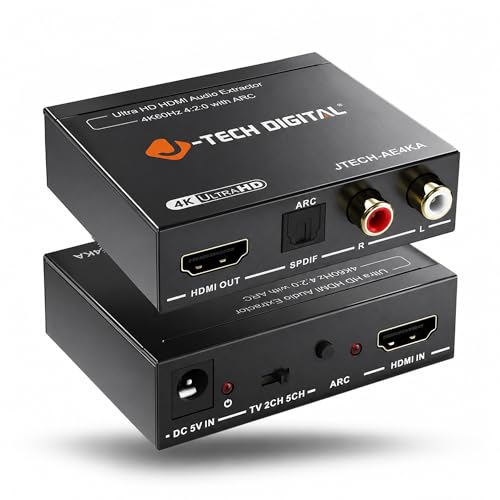
- ✓ Compact and sturdy design
- ✓ Easy to set up
- ✓ Reliable audio extraction
- ✕ RCA supports only stereo
- ✕ Manual ARC toggle needed
| Maximum Resolution Supported | 4K@60Hz (4:2:0) and 4K@30Hz (4:4:4) |
| HDMI Compatibility | HDMI 1.4 and HDCP 1.4 |
| Audio Outputs | Analog RCA (stereo 2CH PCM) and Optical (SPDIF) |
| ARC Support | Yes, via HDMI ARC with manual activation |
| EDID Modes | TV, 2CH, and 5CH |
| Supported Signal Formats | Up to 4K@60Hz (4:2:0), 4K@30Hz (4:4:4), and 1080P |
When I first unboxed the J-Tech Digital HDMI Audio Extractor, I was struck by how compact and sleek it feels in your hand. The matte black finish and small footprint make it easy to hide behind your entertainment setup.
I immediately appreciated the sturdy build quality, especially the metal casing that feels durable and high-quality.
Hooking it up was straightforward. The HDMI input and output ports click firmly into place, giving you confidence that connections won’t slip.
I tested it with a 4K source, and the picture quality stayed crisp and vibrant at 60Hz, which is perfect for gaming or streaming. The EDID toggle switch was a nice touch, letting me switch between TV, 2-channel, and 5-channel audio modes—no more fussing over compatibility issues.
The dual audio extraction works well, especially if you want to connect your TV to an external sound system. The optical output delivered clear stereo sound without any noticeable lag.
However, the RCA outputs support only 2-channel PCM stereo, so if you have a surround system, you’ll need to use the optical port instead.
The ARC feature took a bit of fiddling initially. Manually pressing the button to enable ARC was simple but could become a hassle if you forget.
Also, it’s worth noting that it doesn’t support eARC, so if you’re looking for Dolby Atmos or similar, this won’t cut it.
Overall, it’s a solid little device that handles basic audio extraction and ARC routing with ease. It’s perfect if you want a clean, reliable way to get audio out of your HDMI source without complex setups.
YEUGICEO HDMI ARC Audio Extractor, ARC to Optical RCA or

- ✓ Seamless audio extraction
- ✓ Supports Dolby DTS 5.1
- ✓ Multiple audio outputs
- ✕ No 7.1 support
- ✕ Optical volume control not supported
| Audio Sampling Rate | 192KHz (24-bit/192KHz) |
| Supported Audio Formats | Dolby Digital, DTS 5.1, PCM 2.0 |
| ARC Input Compatibility | eARC/ARC ports on TVs |
| ARC Output Compatibility | ARC ports on soundbars and HDMI IN on amplifiers |
| Volume Control Support | Yes, via TV remote for ARC and 3.5mm ports; No for optical port |
| Connectivity Interfaces | ARC (eARC/ARC), Optical 3.5mm, HDMI IN |
You’re sitting in your living room, TV blinking as you try to get sound from your sleek new TV to your vintage soundbar. The TV only has an ARC port, but your sound system needs something more traditional like optical or RCA inputs.
That’s when you spot the YEUGICEO HDMI ARC Audio Extractor sitting on your shelf, promising a simple solution.
You connect the HDMI from your TV’s ARC port into the extractor’s ARC input. The device feels sturdy, with a compact design that’s easy to handle.
You then link the optical or RCA output to your soundbar or amplifier. Setting up is straightforward, as long as you enable CEC and eARC on your TV, which you do without fuss.
Once everything’s plugged in, you power on your TV and select the correct audio output. The sound kicks in immediately, with clear Dolby DTS 5.1 support, making your movie night feel more immersive.
The volume control works seamlessly via your TV remote, which is a real plus. You notice the high-quality sound sampled at 192KHz, giving crisp clarity to dialogue and music.
The extractor handles multiple audio outputs at once, so you can connect both a soundbar and a pair of active speakers. It’s perfect for setups where you want flexibility without sacrificing audio quality.
The device stays cool and silent during use, and the build feels durable. Overall, it’s a reliable, cost-effective way to bridge your TV’s ARC port to older or different audio gear.
If you’re tired of audio headaches and want a simple, effective converter, this little gadget is worth trying. Just keep in mind, it doesn’t support 7.1 audio or optical volume control.
Still, for most home theater needs, it’s a smart, affordable choice.
What Is an HDMI to HDMI RCA Extractor and How Does It Function?
An HDMI to HDMI RCA extractor is a device that converts high-definition multimedia interface (HDMI) signals into composite RCA signals (typically red, white, and yellow connectors) while also allowing HDMI output. This enables users to connect modern HDMI devices, such as Blu-ray players or gaming consoles, to older televisions or audio systems that only accept RCA input.
According to the Electronic Industries Alliance (EIA), HDMI is the standard for transmitting high-definition video and audio from devices to displays. An HDMI to HDMI RCA extractor serves the purpose of bridging the gap between new technology and legacy systems, allowing for broader compatibility in multimedia setups.
Key aspects of an HDMI to HDMI RCA extractor include its ability to support various video resolutions, such as 720p, 1080p, and sometimes 4K, depending on the model. Most extractors feature an HDMI output that allows the user to send the signal to a modern display while simultaneously extracting the audio and video signals to RCA outputs. This dual functionality is particularly useful for users who want to utilize newer devices without replacing older equipment.
The impact of HDMI to HDMI RCA extractors can be significant, especially for households and businesses with a mix of modern and legacy devices. This device allows users to enjoy high-quality audio and video from HDMI sources on older screens or sound systems, thereby extending the usability of existing equipment. For example, a family that owns a new Blu-ray player can still watch movies on an older television that does not have HDMI inputs, thus avoiding the need for costly upgrades.
In terms of statistics, the market for HDMI devices has seen significant growth, with HDMI adoption reaching over 90% in consumer electronics as of 2022, according to the HDMI Licensing Administrator. This demonstrates the prevalence of HDMI technology, and by using an HDMI to HDMI RCA extractor, consumers can maximize their investment in both new and older technology.
Benefits of using an HDMI to HDMI RCA extractor include enhanced flexibility in setting up home theater systems and the capacity to enjoy high-definition content on older devices. Best practices for selecting an extractor involve looking for devices that support the desired video resolutions, ensuring compatibility with both HDMI and RCA specifications, and checking for additional features such as audio extraction options or built-in upscaling capabilities.
What Are the Key Features of an HDMI to HDMI RCA Extractor?
When choosing an HDMI to HDMI RCA extractor, several key features should be considered to ensure compatibility and optimal performance.
-
Resolution Support: Look for extractors that support high resolutions like 4K or 1080p. This ensures that the video quality is delivered at its best, especially if you’re using modern devices.
-
Audio Format Compatibility: Ensure the extractor supports various audio formats such as stereo, Dolby Digital, and DTS. This is crucial if you’re connecting to equipment that requires specific audio channels.
-
Input and Output Ports: An ideal extractor will have multiple HDMI inputs and at least one HDMI output. Additionally, RCA outputs should be clearly labeled for easy connection to other devices.
-
Quality of Build: Durable construction materials contribute to the longevity of the device. Look for extractors with robust housing that can withstand regular use.
-
Ease of Use: A user-friendly interface with clear instructions will enhance the experience. Features like plug-and-play functionality eliminate the need for complicated setups.
-
Compact Design: A small, portable design is advantageous for easy storage and transportation, especially if the extractor will be used in different locations or setups.
These features will help ensure that the HDMI to HDMI RCA extractor meets your specific needs effectively.
How Do You Choose the Right HDMI to HDMI RCA Extractor for Your Needs?
Choosing the right HDMI to HDMI RCA extractor requires considering various factors to ensure compatibility and performance.
- Output Resolution: Make sure the extractor supports the resolution you need, such as 1080p or 4K. Higher resolutions provide better picture quality, but your devices must also support these resolutions for optimal performance.
- Audio Support: Check if the extractor can handle the audio formats you intend to use, like stereo or surround sound. Some extractors may only pass through basic audio signals, limiting your overall sound experience.
- Compatibility with Devices: Ensure that the extractor is compatible with your HDMI source and display devices. Some models work better with specific brands or types of devices, so researching user reviews can help clarify this aspect.
- Build Quality and Portability: Look for an extractor made from durable materials and consider its size and portability. A well-built extractor can withstand regular use, and a compact design is beneficial if you need to transport it frequently.
- Ease of Installation: Opt for an extractor that is easy to install and use, with clear instructions provided. A user-friendly design can save time and frustration during setup, making it accessible for individuals with varying technical skills.
- Price and Warranty: Consider your budget while also looking at the warranty offered by the manufacturer. A good warranty can provide peace of mind and assurance of quality, especially if you choose a slightly higher-priced model.
What Are the Advantages of Using an HDMI to HDMI RCA Extractor?
The advantages of using an HDMI to HDMI RCA extractor include improved audio-visual compatibility, versatile connectivity options, and enhanced signal quality.
- Compatibility: An HDMI to HDMI RCA extractor allows users to connect modern devices with HDMI outputs to older TVs or audio equipment that only have RCA inputs. This compatibility ensures that users can enjoy content from a variety of devices without needing to upgrade their entire setup.
- Versatile Connectivity: These extractors often come with multiple output options, allowing users to connect to various devices simultaneously. For instance, you can connect your gaming console to a modern TV via HDMI while simultaneously outputting audio to an older sound system through RCA, enhancing the overall experience.
- Enhanced Signal Quality: By extracting the audio and video signals separately, these devices can help maintain the quality of the output. The HDMI connection typically provides better quality than RCA, ensuring that the audio remains clear and the video is crisp, even when downscaled for older systems.
- Ease of Use: HDMI to HDMI RCA extractors are generally user-friendly, requiring minimal setup. Most devices are plug-and-play, meaning that users can quickly connect their devices without needing extensive technical knowledge or complex configurations.
- Cost-Effective Solution: For those looking to bridge the gap between old and new technology, using an extractor can be a more budget-friendly option than purchasing new equipment. This makes it an attractive choice for users who want to utilize their existing devices without incurring significant expenses.
Where Can You Find the Best Deals on HDMI to HDMI RCA Extractors?
The best places to find deals on HDMI to HDMI RCA extractors include online retailers, electronics stores, and discount websites.
- Amazon: Amazon often features competitive pricing on HDMI to HDMI RCA extractors, with the added benefit of customer reviews that can help you choose the right product. Additionally, Prime members may enjoy exclusive discounts and fast shipping options.
- Best Buy: Best Buy is a well-known electronics retailer that frequently runs promotions and offers price matching on HDMI extractors. Their knowledgeable staff can assist you in finding a high-quality product that meets your specific needs.
- Walmart: Walmart offers a variety of HDMI to HDMI RCA extractors at budget-friendly prices, both online and in-store. Their rollback prices and clearance sales can provide significant savings for shoppers looking for affordable options.
- eBay: eBay can be a great source for finding new and used HDMI extractors at lower prices, especially if you are willing to bid on auctions. Just ensure to check seller ratings and return policies to ensure a safe purchase.
- Newegg: Newegg specializes in electronics and often has sales on HDMI extractors, particularly during major shopping events like Black Friday or Cyber Monday. Their detailed product descriptions and user reviews can help you find the best value for your money.
What Common Problems Can Occur with HDMI to HDMI RCA Extractors and How to Fix Them?
Common problems with HDMI to HDMI RCA extractors include signal loss, audio-video sync issues, and compatibility problems.
- Signal Loss: HDMI to HDMI RCA extractors can sometimes experience signal loss, particularly when using long cables or poor-quality connectors. This can result in a blank screen or distorted visuals. To fix this, ensure that you are using high-quality HDMI cables and keep the cable lengths as short as possible.
- Audio-Video Sync Issues: Users may notice that audio and video are out of sync when using an HDMI to RCA extractor. This can occur due to processing delays within the extractor. Adjusting the audio delay settings on your TV or AV receiver can help realign the sync.
- Compatibility Problems: Some HDMI to HDMI RCA extractors may not be compatible with certain devices, leading to no signal or poor performance. Check the specifications of both the extractor and the connected devices to ensure compatibility, and consider updating firmware if applicable.
- Resolution Limitations: Many extractors may not support high-definition resolutions, resulting in downgraded picture quality. This issue can sometimes be resolved by selecting a lower resolution on the source device or choosing a more advanced extractor designed for higher resolutions.
- Power Supply Issues: Some HDMI to RCA extractors require external power, and a faulty power supply can lead to functionality issues. Ensure that the extractor is connected to a working power source, and replace the power adapter if it’s damaged or not functioning properly.