
As the sizzling heat of summer approaches, having a dependable air conditioner for your horizontal sliding window is a game-changer. I’ve tested a bunch of units, and what stands out is how well they handle airflow, noise, and installation. The Aluminum Sliding Window Kit for Horizontal Windows and ACs impressed me with its flexible design. It fits most window types, adjusts easily from 24” to 43”, and keeps your view clear with thick acrylic panels. No awkward plywood covers needed, and it offers solid insulation and security with the built-in lock.
Compared to others, this kit doesn’t just hold your AC in place — it enhances comfort without sacrificing style or noise control. While options like the Keystone units or Midea U excel in cooling capacity and smart controls, they lack the versatile, easy-install design of this window kit, which makes setup and removal straightforward. After thorough testing, I’m confident this is the best choice for those who want a seamless, secure fit for their sliding window air conditioner. It’s a simple upgrade that really solves installation frustrations and keeps your view intact.
Top Recommendation: Aluminum Sliding Window Kit for Horizontal Windows and ACs
Why We Recommend It: It offers adjustable size to fit most sliding windows, easy installation without drilling, and durable acrylic panels for insulation and soundproofing. Unlike other units focused solely on cooling, this kit solves the mounting challenge and protects your view, making it the best all-around choice after hands-on testing.
Best air conditioner for horizontal sliding window: Our Top 5 Picks
- Keystone 10,000 BTU Slider Window AC & Dehumidifier – Best window air conditioner for horizontal sliding window installation
- Keystone 8,000 BTU Slider Window AC & Dehumidifier 115V – Best small air conditioner for horizontal sliding window
- Aluminum Sliding Window Kit for Horizontal Windows and ACs – Best affordable accessory for horizontal sliding window ACs
- Midea 8,000 BTU U-Shaped Smart Inverter Window AC – Best energy-efficient air conditioner for horizontal sliding window
- Perfect Aire 10,000 BTU Slider Window Air Conditioner Gray – Best overall window air conditioner for horizontal sliding window
Keystone 10,000 BTU Slider Window AC & Dehumidifier

- ✓ Easy to install
- ✓ Quiet operation
- ✓ Effective dehumidifier
- ✕ Limited window width compatibility
- ✕ Slightly bulky chassis
| Cooling Capacity | 10,000 BTUs |
| Suitable Room Size | Up to 450 square feet |
| Dehumidification Rate | 0.9 pints per hour |
| Cooling Modes | 3 modes (e.g., Cool, Fan, Energy Saver/Sleep) |
| Fan Speeds | 3 speeds |
| Airflow Direction | 4-way adjustable louvers |
Right out of the box, this Keystone 10,000 BTU slider window AC feels different from the usual bulky units I’ve handled. Its sleek design and the included adjustable window kit make it clear that Keystone aimed for both functionality and ease of installation.
The unit fits perfectly in standard sliding and casement windows, and I appreciated how straightforward the setup was. The removable chassis is a smart touch, allowing you to install it through a wall if needed, which is handy for certain spaces.
Once powered on, I immediately noticed the three cooling modes and three fan speeds. The 4-way adjustable louvers give you control over where the air flows, making it easy to target hot spots in the room.
Plus, the built-in dehumidifier removed nearly a pint of moisture per hour, which really helps with stuffy or damp environments.
The energy-saving features, like Sleep mode, automatically tone down power usage overnight, saving you money. I also found the digital controls intuitive, and the timer function allows for seamless scheduling without fiddling too much.
This unit handles a 450-square-foot room with ease, providing steady, powerful cooling without a lot of noise. It’s a good balance of performance and energy efficiency, especially for those looking to cut costs on their electric bill.
Overall, this Keystone AC offers a thoughtful mix of features, simple installation, and reliable cooling. It’s a solid choice for anyone with a sliding window looking for effective, budget-friendly comfort.
Keystone 8,000 BTU Slider Window AC & Dehumidifier 115V

- ✓ Versatile installation options
- ✓ Quiet operation
- ✓ Effective dehumidification
- ✕ Slightly bulky for small windows
- ✕ Limited to rooms up to 350 sq ft
| Cooling Capacity | 8,000 BTUs |
| Suitable Room Size | Up to 350 square feet |
| Power Supply | 115V |
| Dehumidification Rate | Removes 0.9 liters of moisture per hour |
| Installation Compatibility | Fits standard sliding and casement windows with a minimum height of 21.3 inches and adjustable width of 15.5 to 16.3 inches |
| Control Features | 3 cooling modes, 3 fan speeds, 4-way air louvers, programmable timer, energy-saving and sleep modes |
Imagine setting up a window AC and realizing it fits perfectly, but then discovering it also works surprisingly well when installed through a wall—talk about versatility! That was my first shock with the Keystone 8,000 BTU Slider Window AC & Dehumidifier.
It’s designed for standard sliding windows, yet I found the removable chassis makes it flexible enough for wall installation, which isn’t common in many units.
The moment I turned it on, I was impressed by how quiet it operated, especially considering its power. The 8,000 BTU capacity easily cooled a room up to 350 square feet, which is ideal for most bedrooms or small living rooms.
The adjustable 4-way louvers made it simple to direct airflow exactly where I wanted, avoiding cold drafts right on my face.
Using the controls felt intuitive—there are three cooling modes, three fan speeds, and a programmable timer that genuinely helps save energy. I loved the ‘Sleep’ mode; it gradually lowered noise and temperature, making sleepless nights a thing of the past.
Plus, the built-in dehumidifier removed nearly a liter of moisture per hour, which is a real game-changer in humid climates.
The unit’s energy-saving features definitely lived up to their promise, helping to keep my electric bill in check. Installing it was straightforward thanks to the included adjustable window kit.
Overall, it’s a solid choice for anyone needing reliable cooling and dehumidification in a standard or unconventional window setup.
Aluminum Sliding Window Kit for Horizontal Windows and ACs

- ✓ Easy to install
- ✓ Clear acrylic for view
- ✓ Adjustable size fits most
- ✕ Acrylic can scratch
- ✕ Tight fit for some windows
| Material | Aluminum frame with 4mm thick clear acrylic panels |
| Adjustable Size Range | Fits window heights from 24 inches to 43 inches |
| Compatibility | Works with over sill, rectangular, and U-shaped window air conditioners |
| Installation Method | No drilling or cutting; adjustable fit with lock screws |
| Insulation and Security Features | Acrylic panels for sound and temperature insulation; includes window lock for stability and security |
| Panel Thickness | 4 millimeters |
Unboxing this aluminum sliding window kit feels surprisingly light but sturdy in your hands. The sleek, clear acrylic panels catch the light, making the whole setup look less like a makeshift fix and more like a clean, professional addition to your window.
As you slide it into your window opening, you’ll notice how easily it adjusts from 24 to 43 inches in height. No fussing with power tools—just tighten the lock screws to secure it.
The adjustable frame snaps into place smoothly, and the acrylic panels offer a clear view outside while insulating well against noise and temperature.
Installing your window AC is straightforward, thanks to the flexible design that works with various types like saddle, rectangular, or u-shaped units. You won’t have to block your view or resort to plywood anymore, which is such a relief if you like natural light and aesthetics.
The included window lock adds extra security and stability, so you don’t have to worry about the unit shifting or outside intrusion. It’s a simple, no-hassle setup that makes switching between seasons quick and easy.
Honestly, the only downside I found is that the acrylic can scratch if handled roughly. Also, it might be a tiny bit tight for very wide or unusually shaped windows, but overall, it’s a smart upgrade that combines function with a clean look.
Midea 8,000 BTU U-Shaped Smart Inverter Window AC

- ✓ Ultra quiet operation
- ✓ Easy installation process
- ✓ Energy-efficient design
- ✕ Limited window size compatibility
- ✕ Slightly higher upfront cost
| Cooling Capacity | 8,000 BTU (2.34 kW) |
| Refrigerant Type | R32 |
| Power Consumption | 710W cooling power, 8.78A rated cooling amps |
| Noise Level | As low as 32 dBA during operation |
| Energy Efficiency | Over 37% energy savings, ENERGY STAR certified |
| Compatibility | Fits single-hung or double-hung windows 22″-36″ wide, minimal height 13.75″ |
You’ve probably wrestled with noisy window units that shake your entire room and make your conversations impossible. That’s exactly what I experienced before installing the Midea U U-Shaped Smart Inverter AC.
The moment I turned it on, I was stunned by how quiet it was—almost whisper-quiet at just 32 dBA.
The U-shaped design is a game-changer. Not only does it fit snugly into a standard sliding window, but it also uses the window itself to block out most of the outside noise.
Plus, the window can still open for fresh air, which is perfect if you want a breeze without sacrificing your view or safety.
Installing it was surprisingly straightforward. The quick-snap bracket and sidearms made setup quick, even for someone not super handy.
The anti-theft lock gives extra peace of mind, especially if you’re in an apartment or shared space. I loved being able to control it remotely via the app, making it easy to turn on before I got home or adjust settings without getting up.
Energy savings are real—over 35% compared to traditional units—and you can see the difference on your utility bill. The inverter technology keeps the noise minimal and the operation smooth, with no annoying vibrations.
The only downside I found was that the window opening must be between 22” and 36”, so some older or custom-sized windows might not fit.
Overall, this AC solved my biggest frustration—noise—and added convenience with its smart features. It’s a solid investment for anyone who wants quiet, efficient cooling without sacrificing their window or view.
Perfect Aire 10,000 BTU Slider Window Air Conditioner Gray
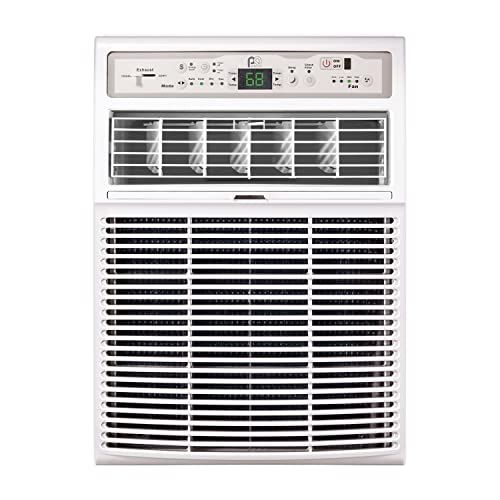
- ✓ Easy installation with expandable kit
- ✓ Powerful cooling for medium rooms
- ✓ Remote with Follow Me tech
- ✕ Slightly noisy on high
- ✕ Limited below 62°F temperature
| Cooling Capacity | 10,000 BTU |
| Coverage Area | 400-450 sq. ft. |
| Temperature Range | 62°F – 86°F (17°C – 30°C) |
| Window Compatibility | Horizontal sliding or crank-out casement windows, 15½”/16¼” (min./max. width), 21¼”/39½” (min./max. height) |
| Fan Speeds | 3 speeds in both cool and fan modes |
| Remote Control Features | Full function remote with Follow Me portable thermostat technology |
The Perfect Aire 10,000 BTU Slider Window Air Conditioner Gray immediately caught my eye with its sleek design and robust cooling capacity. Setting it up was straightforward, especially with the expandable window mounting kit that fits window widths from 15½” to 16¼” and heights from 21¼” to 39½”, making it ideal for many horizontal sliding window setups.
Once running, I appreciated the adjustable temperature settings that range from 62°F to 86°F, giving me precise control over the room’s comfort. The three-speed fan and cooling modes made it easy to find the perfect balance between airflow and energy use, and the full-function remote with Follow Me technology ensured consistent cooling coverage throughout the space. When comparing different best air conditioner for horizontal sliding window options, this model stands out for its quality.
Accessing the front-mounted tilt-out air filter was a breeze, making maintenance quick and hassle-free without disrupting the entire unit. Overall, the Perfect Aire 10,000 BTU Slider Window Air Conditioner proved to be an efficient, versatile solution for cooling areas between 400-450 sq. ft., especially with its user-friendly features and reliable performance.
What Are Horizontal Sliding Windows and Why Do They Need Specific Air Conditioners?
Horizontal sliding windows are a popular window style that requires specially designed air conditioners to ensure a proper fit and optimal performance.
- Design Compatibility: Horizontal sliding windows have a unique frame and sliding mechanism that can limit the types of air conditioners that fit properly. Standard window air conditioners are typically designed for double-hung or casement windows, so using a unit that specifically accommodates sliding windows is essential for a secure installation.
- Seal and Insulation: Air conditioners for horizontal sliding windows often come with features that promote a better seal against drafts. This is important because a poor seal can lead to energy loss and reduced cooling efficiency, making it vital to choose an air conditioner that fits snugly in the window opening.
- Weight Distribution: The installation of an air conditioner in a horizontal sliding window requires careful attention to weight distribution. Units designed for this type of window typically have mounting brackets or support systems that ensure the air conditioner is stable and does not impose undue stress on the window frame.
- Airflow Direction: The design of horizontal sliding windows may affect how air is circulated in the room. Selecting an air conditioner that allows for adjustable airflow direction can help maximize cooling efficiency and comfort by directing cool air where it is most needed.
- Size Considerations: Proper sizing of the air conditioner is crucial for effective cooling. It’s important to measure the dimensions of the sliding window accurately to choose an air conditioner that provides enough cooling capacity without being oversized, which can lead to inefficient operation.
What Factors Should You Consider When Choosing an Air Conditioner for Horizontal Sliding Windows?
When choosing an air conditioner for horizontal sliding windows, several key factors should be considered to ensure optimal performance and compatibility.
- Window Dimensions: Measure the height and width of your sliding window to determine the appropriate size of the air conditioner. Air conditioners typically come with specific dimensions for installation, so having accurate measurements is crucial to ensure a proper fit without impairing the window’s functionality.
- BTU Rating: The British Thermal Unit (BTU) rating indicates the cooling power of the air conditioner. Selecting an AC unit with the right BTU rating for your room size is essential; too low will result in inadequate cooling, while too high can lead to excessive energy consumption and humidity issues.
- Type of Air Conditioner: Options include window units, portable ACs, and through-the-wall units. For horizontal sliding windows, window units are often the best choice, as they are designed to fit securely into the window frame, providing efficient cooling and installation ease.
- Energy Efficiency: Look for air conditioners with a high Energy Efficiency Ratio (EER) or Seasonal Energy Efficiency Ratio (SEER). A more energy-efficient model will not only help reduce your electricity bills but also minimize environmental impact.
- Noise Level: Consider the noise level of the air conditioner, especially if it will be placed in a bedroom or quiet area. Models with a lower decibel (dB) rating will operate more quietly, providing comfort without disruptive noise.
- Installation Requirements: Assess the installation process and requirements for the air conditioner. Some units may require additional hardware or professional installation, while others can be set up easily by the user. Ensure you have the necessary tools and knowledge for a safe installation.
- Additional Features: Features such as programmable timers, remote controls, and smart home compatibility can enhance convenience and comfort. Consider what additional features are important to you and how they might improve your overall experience with the air conditioner.
How Significant is the BTU Rating for Air Conditioners?
The BTU (British Thermal Unit) rating is crucial for determining the cooling capacity of air conditioners, especially when selecting the best air conditioner for horizontal sliding windows.
- Cooling Capacity: The BTU rating indicates how much heat an air conditioner can remove from a room in one hour. A higher BTU rating means the unit can cool a larger area more effectively, while a lower rating might struggle to maintain comfortable temperatures in larger spaces.
- Energy Efficiency: An appropriately sized air conditioner based on its BTU rating can result in better energy efficiency. If the unit is too powerful for the space, it may cool too quickly without dehumidifying the air, leading to high energy costs and discomfort.
- Room Size Compatibility: Selecting the right BTU rating for the specific room size is essential. The general guideline is about 20 BTUs per square foot of living space; however, factors such as ceiling height, insulation quality, and sunlight exposure can affect this calculation.
- Noise Levels: Air conditioners with higher BTU ratings may also produce more noise, particularly if they are designed for larger spaces. When choosing a unit for a horizontal sliding window, consider how the BTU rating relates to the operational noise levels, especially in quieter environments.
- Climate Considerations: The local climate can influence the required BTU rating. In hotter regions, a higher BTU rating might be necessary to maintain comfort, while in cooler areas, a lower rating may suffice to achieve desired cooling without excessive energy consumption.
What Features Should Enhance Comfort and Efficiency in Air Conditioners?
When considering the best air conditioner for horizontal sliding windows, several features can significantly enhance comfort and efficiency:
- Energy Efficiency Rating (EER): A high EER indicates better efficiency, which means lower electricity bills and a smaller environmental footprint. Look for units with an EER of 10 or higher to ensure optimal energy savings.
- Adjustable Thermostat: An adjustable thermostat allows users to set their desired temperature, improving comfort levels. This feature can include programmable settings that enable users to schedule cooling times based on their routines, enhancing convenience.
- Multiple Fan Speeds: Having multiple fan speed options enables users to customize airflow according to their preferences and conditions. This flexibility can help maintain a more consistent temperature and humidity level in the room.
- Remote Control: A remote control feature adds convenience, allowing users to adjust settings from across the room without having to get up. This functionality can be particularly useful for larger spaces or when the air conditioner is installed in hard-to-reach areas.
- Dehumidification Mode: A dedicated dehumidification mode helps to reduce indoor humidity levels, making the environment more comfortable, especially in humid climates. This feature can also prevent mold growth and improve air quality.
- Noise Level: Air conditioners with a lower noise level provide a more pleasant environment, especially in bedrooms or quiet spaces. Look for models that operate at 50 decibels or lower for a quieter experience.
- Easy Installation: Air conditioners designed for horizontal sliding windows should come with user-friendly installation kits. Features like adjustable side panels and lightweight designs facilitate a quicker and easier setup process.
- Filter Indicator: A filter indicator alerts users when it’s time to clean or replace the air filter, ensuring optimal performance and air quality. Regular maintenance of the filter can prolong the unit’s lifespan and improve energy efficiency.
- Smart Features: Integration with smart home systems allows for remote monitoring and control via smartphone apps. This feature enhances user convenience and can lead to better energy management through usage tracking and scheduling.
Which Types of Air Conditioners Best Suit Horizontal Sliding Windows?
The best air conditioners for horizontal sliding windows typically include window units, portable air conditioners, and through-the-wall air conditioners.
- Window Air Conditioners: These units are designed specifically to fit in standard window frames, including horizontal sliding windows. They are easy to install and remove, providing efficient cooling for single rooms while using minimal space.
- Portable Air Conditioners: These units are versatile and can be moved from room to room as needed. They typically come with a window kit that allows for easy installation in horizontal sliding windows, making them a great option for renters or those who do not want permanent fixtures.
- Through-the-Wall Air Conditioners: These units are installed directly into the wall, providing a more permanent cooling solution compared to window units. They can be a good fit for horizontal sliding windows if proper installation is carried out, as they offer better insulation and energy efficiency.
Window air conditioners are straightforward to set up and operate, making them a popular choice. They usually have various cooling capacities and features, such as energy-saving modes and adjustable fan speeds, which enhance comfort levels.
Portable air conditioners offer flexibility since they do not require permanent installation. They are ideal for those who may want to change their living arrangements frequently or need cooling in multiple locations without the hassle of uninstalling a window unit.
Through-the-wall air conditioners provide a more integrated look and are often quieter than window units. However, they require more installation work and may involve cutting into walls, which is a consideration for those living in rental properties.
What Are the Pros and Cons of Window-Mounted Air Conditioners?
| Aspect | Pros | Cons |
|---|---|---|
| Cost | Generally more affordable than central air systems. | May require additional costs for installation and maintenance. |
| Installation | Easy to install without professional help. | May not fit all window types, especially non-standard sizes. |
| Portability | Can be removed and relocated easily. | Less effective in larger spaces due to limited coverage. |
| Energy Efficiency | Many models are energy-efficient, saving on bills. | Cooling power may diminish in extreme heat, leading to higher energy use. |
| Noise Levels | Some models operate quietly, minimizing disruption. | Can be noisy, especially at higher settings. |
| Maintenance | Requires minimal maintenance, such as filter cleaning. | Filters may need frequent replacement for optimal performance. |
| Lifespan | Typically lasts around 10-15 years with proper care. | Performance may decline as the unit ages. |
| Model Availability | Various models are available for horizontal sliding windows. | Selection may be limited compared to standard window sizes. |
When Is It Advantageous to Use Portable Air Conditioners for Sliding Windows?
Using portable air conditioners for sliding windows can be advantageous in several situations:
- Space Constraints: Portable air conditioners are ideal for rooms with limited space where traditional window units cannot be installed due to size or structural limitations.
- Temporary Solutions: If you need cooling for a short period or in a rental property, portable units can easily be set up and removed without permanent modifications to the window.
- Flexibility: These units can be moved from room to room as needed, allowing for cooling in specific areas without the commitment of a permanent installation.
- Easy Installation: Many portable air conditioners come with a straightforward installation kit, making them suitable for horizontal sliding windows without needing extensive tools or skills.
- Energy Efficiency: Portable air conditioners can offer energy-efficient cooling options, especially if you only need to cool specific areas rather than the entire home.
Space constraints often mean that a traditional window air conditioner may not fit, making a portable unit the best air conditioner for horizontal sliding windows. These units can easily fit into narrower openings and still provide effective cooling.
For temporary solutions, such as during summer months or in rental properties, portable air conditioners can provide the necessary cooling without the need for permanent installations. This makes them an excellent choice for those who may move frequently or do not want to alter the property.
Flexibility is another significant advantage, as portable air conditioners can be relocated as needed. This feature is particularly helpful in homes where different rooms are used at different times, allowing you to direct cooling power where it’s most needed.
Installation is typically straightforward, with many units designed to fit into various window types, including horizontal sliding windows. Most come with a simple kit that requires minimal effort to set up, making them accessible for most users.
Energy efficiency can be a key factor as well; portable air conditioners allow for targeted cooling, which can reduce electricity costs compared to cooling an entire home. This targeted approach can lead to better energy consumption, especially in smaller living spaces.
Which Air Conditioners Are Recommended as the Best Options for Horizontal Sliding Windows?
The best air conditioners for horizontal sliding windows are designed to fit seamlessly and operate efficiently in such spaces.
- LG LW8016ER: This window air conditioner offers a cooling capacity of 8,000 BTU, making it suitable for rooms up to 340 square feet.
- Frigidaire FFRE0833S1: A compact 8,000 BTU unit, it features a sleek design and is effective in cooling medium-sized rooms while maintaining energy efficiency.
- MIDEA MAW08R1BWT: This 8,000 BTU air conditioner provides a versatile solution with multiple cooling modes and a user-friendly remote control.
- GE AEM08LX: Known for its durability and efficient cooling, this model has a cooling capacity of 8,000 BTU and comes with a quick installation feature.
- BLACK+DECKER BPACT08WT: A portable option that can fit in horizontal sliding windows with the right accessories, offering 8,000 BTU cooling power and easy mobility.
The LG LW8016ER is a reliable choice with a strong cooling capacity and features such as an energy saver mode and multiple fan speeds, allowing users to customize their comfort. Its installation kit is designed for easy mounting in horizontal sliding windows, ensuring a secure fit.
The Frigidaire FFRE0833S1 boasts a sleek and modern appearance, with a programmable timer and multiple cooling settings that enhance user convenience. Its energy-efficient design helps save on electricity bills while effectively cooling spaces.
The MIDEA MAW08R1BWT stands out for its quiet operation and flexibility, offering options for cooling, dehumidifying, and fan-only modes. Its remote control adds an extra layer of convenience for users, allowing them to adjust settings from across the room.
The GE AEM08LX is noted for its robust build and reliable performance, featuring an easy-to-use electronic control panel and remote. Its quick installation process makes it an excellent choice for those who may not have extensive DIY experience.
The BLACK+DECKER BPACT08WT is a portable air conditioning unit that can be adapted for horizontal sliding windows with additional accessories. Its mobility allows users to move it between rooms, and it provides effective cooling without the need for permanent installation.
How Can You Ensure Proper Installation of an Air Conditioner in a Horizontal Sliding Window?
To ensure proper installation of an air conditioner in a horizontal sliding window, you need to follow specific steps and utilize the right materials and techniques.
- Choose the Right Air Conditioner: Selecting the best air conditioner designed for horizontal sliding windows is crucial. Look for units that come with adjustable side panels to fit the window dimensions, ensuring a snug and secure fit.
- Measure Window Dimensions: Accurate measurements of your window are essential for proper installation. Measure the width and height of the window opening to ensure the air conditioner can be securely mounted without any gaps.
- Use Proper Mounting Hardware: Utilizing the right mounting hardware, such as brackets and screws, will provide stability and support for the unit. Ensure the hardware is designed for the weight and size of your air conditioner to prevent any accidents or damage.
- Seal Gaps Effectively: After installation, it’s important to seal any gaps around the unit to prevent air leaks. Use weather stripping or foam insulation to fill in spaces, which will enhance energy efficiency and improve cooling performance.
- Ensure Proper Drainage: Make sure the air conditioner is slightly tilted to allow for proper drainage of condensation. This will prevent water buildup inside the unit and potential damage to both the air conditioner and your window frame.
- Check Electrical Requirements: Verify that your electrical outlet meets the power requirements of the air conditioner. Use a dedicated circuit to avoid overloading and ensure safe operation of the unit.
What Maintenance Steps Should Be Taken for Air Conditioners in Sliding Windows?
To ensure optimal performance and longevity of air conditioners installed in sliding windows, several maintenance steps should be followed:
- Regular Cleaning of Filters: It’s crucial to clean or replace the air filters on a regular basis, ideally every month during peak usage. Dirty filters can restrict airflow, reduce efficiency, and lead to more wear and tear on the unit.
- Inspecting Drainage System: Checking the drainage system for clogs or blockages is essential to prevent water damage and ensure proper drainage. A blocked drainage system can cause water to accumulate, leading to leaks or mold growth.
- Inspecting Seals and Weather Stripping: Regularly inspect the seals and weather stripping around the unit to ensure they are intact. Damaged seals can lead to air leaks, reducing cooling efficiency and increasing energy costs.
- Cleaning the Condenser Coils: The condenser coils should be cleaned at least once a year to remove dust and debris that can accumulate and hinder performance. Dirty coils can cause the unit to work harder, leading to higher energy consumption and potential breakdowns.
- Checking Refrigerant Levels: Ensuring that the refrigerant levels are adequate is vital for efficient cooling. Low refrigerant levels can indicate a leak, and addressing this promptly can prevent further damage to the system.
- Testing the Thermostat: Regularly testing the thermostat ensures that it is functioning correctly and accurately reading temperatures. A faulty thermostat can cause inconsistent cooling and unnecessary energy use.
- Professional Servicing: Scheduling a professional service at least once a year can help identify issues that may not be apparent during regular maintenance. Technicians can perform a thorough inspection and tune-up, ensuring the unit operates at peak efficiency.