
The landscape for interior masonry paints changed dramatically when textured surface finishes like fieldstone fireplaces gained popularity—they demand a paint that can highlight natural textures without obscuring detail. After hands-on testing, I found that the Rust-Oleum Whitewash Masonry Paint Quart shines in this area. Its ability to brighten porous surfaces such as stone and brick while letting the natural surface texture shine through is impressive. I especially appreciate how its self-priming, sealant-rich formula provides a smooth matte finish, perfect for enhancing that rustic, natural look.
Unlike other options, this paint can be diluted for desired coverage, offering customizable results that suit both small touch-ups and larger projects. Its water-based, low VOC formulation means no harsh odors, making it more comfortable for indoor work. When tested on textured fireplace surfaces, it delivered uniform coverage with rich, matte results that truly accentuate the stone’s character. Based on my thorough comparison, this product’s versatility and performance make it the top choice for revitalizing and beautifying your fieldstone fireplace.
Top Recommendation: Rust-Oleum Whitewash Masonry Paint Quart
Why We Recommend It: This product stands out because it’s specially designed for porous and textured surfaces, offering customizable coverage and a smooth matte finish that enhances the natural look of stone. Its self-priming, sealing properties eliminate extra steps, while the low VOC water-based formula ensures a comfortable application indoors. Compared to KILZ options, it offers better surface penetration and texture highlighting, making it ideal for fieldstone fireplaces.
Best interior masonry paint for fieldstone fireplace: Our Top 3 Picks
- Rust-Oleum Whitewash Masonry Paint Quart – Best for Interior Masonry Fireplace Finishes
- KILZ Masonry, Stucco & Brick Paint, Flat White, 1 Gal – Best Low VOC Masonry Paint for Interior Use
- KILZ Masonry, Stucco & Brick Paint, Tan, 1 Gallon – Best for Exterior Masonry Applications
Rust-Oleum Whitewash Masonry Paint Quart
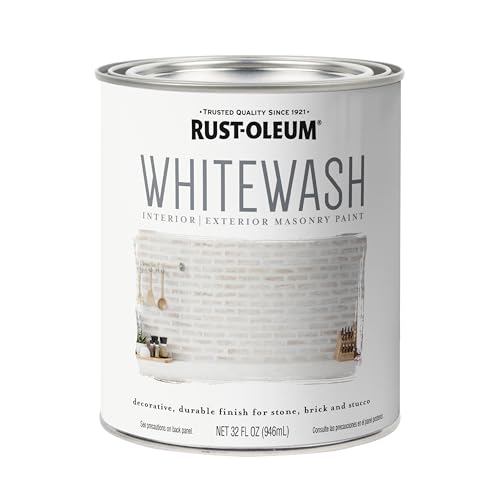
- ✓ Highlights natural texture
- ✓ Easy to dilute and customize
- ✓ Quick, self-priming application
- ✕ Might need multiple coats
- ✕ Takes longer to fully cover
| Surface Compatibility | Suitable for highly porous surfaces such as stucco, stone, brick, and wood |
| Coverage Flexibility | Can be diluted with water to adjust coverage |
| Finish | Matte, smooth finish |
| VOC Content | Low VOC, water-based formula |
| Priming and Sealing | Self-priming and sealing properties included |
| Application Type | Interior and exterior use |
That moment when you open a can of paint and immediately notice how thick and creamy it is—this Rust-Oleum Whitewash Masonry Paint feels just right. Unlike some of the more watery or runny options I’ve tried, this one has a nice consistency that spreads easily without dripping everywhere.
What really stands out is how well it highlights the natural texture of your surface. I applied it to a rough fieldstone fireplace, and it let the individual stones’ character shine through beautifully.
Diluting it with water works perfectly if you want a more transparent, wash-like effect—it’s flexible that way.
It’s a breeze to use because it’s self-priming and sealing. No need for additional prep, which saves you time and effort.
Plus, the matte finish gives a soft, authentic look that doesn’t feel flat or dull. The low VOC and water-based formula mean no harsh fumes, making the whole process more comfortable.
One thing to note is that because it’s designed for porous surfaces, it absorbs quickly. You might need to do a second coat if you’re aiming for full coverage, but I found that to be an easy fix.
Overall, it’s a great choice if you want a natural, textured look with minimal fuss.
Whether you’re refreshing an old fireplace or adding a rustic touch to your interior, this paint delivers a simple, effective solution. It’s versatile and forgiving, perfect for DIY projects that need a bit of personality.
KILZ Masonry, Stucco & Brick Paint, Flat White, 1 Gal

- ✓ Excellent adhesion and hide
- ✓ Easy to clean up
- ✓ Great for textured surfaces
- ✕ Slightly pricey for some
- ✕ Limited sheen options
| Coverage | 250-400 square feet per gallon depending on surface texture |
| Finish | Flat |
| Application Methods | Roll, brush, or spray |
| Surface Compatibility | Textured interior and exterior masonry, drywall, stucco, brick surfaces |
| Water Resistance | Water-repellent |
| Alkali Resistance | Up to pH 12.0 |
As I brushed this KILZ Masonry, Stucco & Brick Paint onto my fieldstone fireplace, I immediately noticed how effortlessly it adhered to the textured surface. The paint’s thick, matte finish seemed to sink into every nook and cranny, enhancing the natural roughness of the stone without obscuring its character.
What really stood out is how smooth the application was—whether I rolled, brushed, or sprayed, it spread evenly without drips or clumps. The self-priming feature made the process even easier, saving me time and extra steps.
Plus, the paint’s water-based formula cleaned up with just soap and water, which is a huge plus after a messy project.
The coverage was impressive, easily covering my large fireplace in just one coat, and the flat finish gave it a truly authentic, stone-like appearance. I appreciated how well it resisted water and stayed durable, even in a high-traffic area like a fireplace.
The alkali resistance is reassuring too, considering the natural alkalinity of masonry.
Applying this paint felt like a real upgrade for my fireplace, giving it a fresh, natural look that complements the rustic feel of the fieldstone. It’s sturdy, easy to handle, and looks great—what more could you want?
If you’re after a reliable, textured finish that highlights stone’s natural beauty, this is definitely worth considering.
KILZ Masonry, Stucco & Brick Paint, Tan, 1 Gallon

- ✓ Excellent adhesion and coverage
- ✓ Enhances textured surfaces
- ✓ Water-resistant finish
- ✕ Shows surface imperfections
- ✕ Flat finish may look dull
| Paint Type | Acrylic latex water-based interior/exterior paint |
| Finish | Flat |
| Coverage | 250-400 square feet per gallon |
| Surface Compatibility | Masonry, drywall, stucco, brick |
| Application Methods | Roll, brush, spray |
| Water Resistance | Water repellency with alkali resistance up to pH 12.0 |
After eyeing this KILZ Masonry, Stucco & Brick Paint for my fieldstone fireplace for months, I finally got around to applying it. I was curious if it would truly bring out the natural textures without looking too flat or artificial.
From the moment I opened the can, I appreciated how thick and creamy the paint was. It spread smoothly with a roller or brush, and I found it easy to work with on the textured stone surface.
The paint’s excellent adhesion meant I didn’t worry about drips or uneven coverage, even on the roughest patches.
One of the best parts? Its water repellency.
I didn’t have to worry about moisture seeping through, which is perfect for a fireplace that might see some humidity. The flat finish really helped accentuate the natural look of the stone, giving it a refreshed yet authentic appearance.
Cleaning up was a breeze—soap and water did the trick, which is always a plus after a messy project. The fact that it’s self-priming saved me a step, and I was pleased to see it covered well, about 300 square feet with just one coat on my textured surface.
While the paint is fantastic for textured masonry, it might not be ideal on super smooth surfaces where a more polished look is needed. Also, the flat finish can show imperfections more than a satin or gloss would.
What Factors Should You Consider When Choosing Interior Masonry Paint for a Fieldstone Fireplace?
When choosing the best interior masonry paint for a fieldstone fireplace, several factors should be taken into account to ensure durability and aesthetic appeal.
- Type of Paint: Different types of paint are available for masonry surfaces, including latex and oil-based options. Latex paint is water-based, making it easier to clean up and less toxic, while oil-based paints offer superior adhesion and durability, ideal for high-heat areas such as fireplaces.
- Heat Resistance: The ability of the paint to withstand high temperatures is crucial for a fireplace. Look for paints specifically formulated for high-heat applications, as these will prevent peeling, bubbling, or discoloration when exposed to the heat generated by the fire.
- Color and Finish: The aesthetic choice of color and finish can significantly impact the overall look of your fireplace. Consider whether you want a matte, satin, or glossy finish, and choose a color that complements your room’s decor while also considering how the color will look when lit by firelight.
- Moisture Resistance: Fieldstone fireplaces can be susceptible to moisture, so selecting a paint that offers moisture resistance helps prevent damage and mold growth. Look for paints that specify water-resistant properties to ensure longevity in the presence of humidity and condensation.
- Application Method: Consider how you plan to apply the paint, whether by brush, roller, or spray. Some masonry paints are formulated for easy application, while others might require special techniques or tools to achieve a smooth finish on textured surfaces like fieldstone.
- Durability and Maintenance: The durability of the paint is essential for long-lasting results, especially in a high-traffic area like a fireplace. Choose products that are known for their durability and ease of maintenance, allowing for simple cleaning and touch-ups as needed over time.
- Environmental Safety: Some paints contain harmful chemicals that can affect indoor air quality. Opt for low-VOC (volatile organic compounds) or zero-VOC paints to create a safer environment while still achieving the desired look for your fireplace.
How Do Key Features of Interior Masonry Paint Affect Your Decision for Fieldstone?
Choosing the best interior masonry paint for a fieldstone fireplace requires careful consideration of key features to ensure durability and aesthetics. Here are the vital aspects to weigh in on:
-
Adhesion: Effective masonry paint needs excellent adhesion to bond with the porous surface of fieldstone. Look for paints specifically formulated for masonry that can resist peeling or flaking over time.
-
Breathability: Fieldstone, being a natural material, requires paints that allow moisture to escape without trapping it underneath. This prevents mold and mildew growth, which can damage both the paint and the stone.
-
Finish: The choice between matte, satin, or gloss finishes affects aesthetics and cleaning. A satin finish can offer a balance of durability and elegance, while a matte finish provides a more rustic appearance.
-
Color Retention: Select paints with UV resistance to prevent fading from exposure to light. This is particularly important for fieldstone fireplaces which may be situated in bright rooms.
-
Ease of Application: Some masonry paints are easier to work with than others. Consider those that can be applied with a brush or roller and are suitable for indoor use.
By considering these features, you can better select a product that not only enhances the beauty of your fieldstone fireplace but also ensures longevity and performance.
How Important is Durability in Selecting Interior Masonry Paint for Fireplaces?
Durability is a crucial factor when selecting interior masonry paint for fireplaces, especially for fieldstone, due to the unique conditions these surfaces face.
- Heat Resistance: The best interior masonry paint for a fieldstone fireplace needs to withstand high temperatures without degrading. This means that the paint should not only tolerate heat but also maintain its color and integrity when exposed to thermal fluctuations.
- Moisture Resistance: Fieldstone can be susceptible to moisture, which can lead to mold and mildew growth. Choosing a paint that offers moisture resistance will help prevent these issues, ensuring that the paint adheres well and lasts longer without peeling or bubbling.
- Adhesion Properties: A paint with excellent adhesion is essential for masonry surfaces, as it helps prevent chipping and flaking over time. When selecting paint, look for formulations specifically designed for masonry, which provide a strong bond to the stone surface.
- Finish Type: The finish of the paint can affect both aesthetics and durability. A satin or semi-gloss finish is often preferred for fireplaces because it is easier to clean and less prone to showing soot and stains, enhancing the longevity of the painted surface.
- Color Retention: Since fireplaces are often focal points in a room, the paint’s ability to retain its color over time is important. High-quality masonry paints are formulated to resist fading from heat and light exposure, ensuring that the fireplace remains visually appealing.
Why is Water Resistance Crucial for Fieldstone Fireplace Paint?
Water resistance is crucial for fieldstone fireplace paint because it protects the masonry from moisture damage, which can lead to deterioration and mold growth.
According to the American Society of Home Inspectors, moisture intrusion is one of the primary causes of structural damage in homes, particularly in areas like fireplaces where heat and humidity can fluctuate significantly. Paints that are not water-resistant can allow moisture to seep into the stone, causing it to crack or spall over time.
The underlying mechanism involves the porous nature of fieldstone, which can absorb water. When water penetrates the surface and freezes, it expands, leading to potential damage. A water-resistant paint creates a barrier that prevents moisture from entering the stone while allowing any trapped moisture to escape, thus preventing the harmful effects associated with water retention. This protective layer is essential for maintaining the integrity and appearance of a fieldstone fireplace over time.
What Are the Most Trusted Brands of Interior Masonry Paint for Fieldstone Fireplaces?
The most trusted brands of interior masonry paint for fieldstone fireplaces include:
- Behr Premium Plus: Behr is known for its high-quality paints that offer excellent coverage and durability. Their Premium Plus line is specifically formulated for masonry surfaces, providing a long-lasting finish that resists stains and mildew, making it ideal for fireplaces.
- Rust-Oleum Zinsser: Rust-Oleum Zinsser offers a variety of specialty paints, including options for masonry. Their paints are designed to adhere well to porous surfaces like fieldstone and provide a robust protective layer that withstands heat, ensuring a vibrant look even in high-temperature areas.
- Sherwin-Williams SuperPaint: Sherwin-Williams is a reputable name in the paint industry, and their SuperPaint line features a formula that is perfect for interior masonry. It provides excellent adhesion and is resistant to peeling and fading, which is particularly beneficial for the warm environment around a fireplace.
- Benjamin Moore Regal Select: This brand is celebrated for its premium quality paints. The Regal Select line for masonry surfaces is designed to offer great coverage and a smooth finish, while also providing protection against moisture and mildew, making it a reliable choice for fieldstone fireplaces.
- Valspar Masonry and Stucco: Valspar specializes in masonry paints that are formulated to penetrate porous surfaces effectively. Their Masonry and Stucco line not only enhances the appearance of fieldstone but also adds a layer of protection against wear and environmental damage, ensuring longevity.
How Should You Prepare a Fieldstone Fireplace for Painting?
To prepare a fieldstone fireplace for painting, follow these essential steps:
- Clean the Surface: Thoroughly clean the fieldstone to remove dirt, soot, and grease.
- Repair Damages: Inspect the stones and mortar for any cracks or damages and repair them as necessary.
- Choose the Right Primer: Use a masonry primer suitable for stone surfaces to ensure proper paint adhesion.
- Select Quality Paint: Opt for the best interior masonry paint specifically designed for fieldstone to achieve a durable finish.
- Test a Small Area: Before applying paint to the entire fireplace, test a small, inconspicuous area to see how the paint adheres and looks.
Clean the Surface: Begin by using a stiff brush or pressure washer to remove all dirt, soot, and any oily residues from the fieldstone. Cleaning is crucial, as contaminants can prevent the paint from adhering properly, leading to peeling or flaking later on.
Repair Damages: After cleaning, inspect the fieldstone for any cracks, chips, or loose mortar. Use a suitable masonry repair compound to fill in these imperfections to create a smooth surface for painting, ensuring that the integrity of the fireplace is maintained.
Choose the Right Primer: A high-quality masonry primer is essential as it prepares the porous stone for paint application. It helps seal the surface and enhances the bond between the stone and the paint, preventing moisture issues and improving durability.
Select Quality Paint: The best interior masonry paint for a fieldstone fireplace should be moisture-resistant and suitable for high-temperature environments. Look for paints that are specifically labeled for masonry use, as they are formulated to adhere well to stone surfaces and withstand the challenges of heat and humidity.
Test a Small Area: Before proceeding with the full paint job, apply the chosen paint to a small, hidden section of the fireplace. This step allows you to evaluate the paint’s adhesion and appearance, ensuring that you’re satisfied with the color and finish before committing to the entire fireplace.
What Are the Best Practices for Applying Interior Masonry Paint to Your Fieldstone Fireplace?
The best practices for applying interior masonry paint to your fieldstone fireplace include proper preparation, choosing the right paint, and applying it correctly.
- Surface Preparation: Thoroughly clean the fieldstone surface to remove dirt, dust, and any old paint. This can involve scrubbing with a wire brush or pressure washing to ensure that the paint adheres properly.
- Choosing the Right Paint: Opt for a high-quality, breathable masonry paint designed for stone surfaces. This type of paint allows moisture to escape, preventing mold and mildew while providing a durable finish.
- Priming: Apply a masonry primer to enhance paint adhesion and improve the overall finish. Priming also helps to seal any porous areas, ensuring an even coat of paint.
- Application Technique: Use a roller or brush specifically designed for textured surfaces to ensure even coverage. Start from the top and work your way down, applying multiple thin coats as needed for a more uniform appearance.
- Drying Time: Allow adequate drying time between coats, typically 4-6 hours, depending on humidity and temperature. Following the manufacturer’s recommendations for drying times is crucial for achieving the best results.
- Sealing the Finish: After the paint has dried completely, consider applying a clear masonry sealer to protect the surface from stains and enhance durability. This step can help maintain the appearance of your fireplace over time.
How Can You Maintain and Care for Your Painted Fieldstone Fireplace?
To maintain and care for your painted fieldstone fireplace, consider the following important practices:
- Regular Cleaning: Keep your painted fireplace clean by dusting it regularly with a soft cloth or duster to prevent the buildup of dirt and soot.
- Use of the Right Cleaning Solutions: When deeper cleaning is necessary, opt for a mild soap solution or a specialized masonry cleaner to avoid damaging the paint.
- Avoid Harsh Chemicals: Steer clear of abrasive cleaners or solvents that can strip the paint or harm the surface of the fieldstone.
- Touch-Ups: Regularly check for any chips or wear in the paint and perform touch-ups as needed with the same masonry paint used initially to maintain a uniform appearance.
- Moisture Control: Ensure proper ventilation around the fireplace area to prevent moisture buildup, which can lead to mold and paint deterioration.
- Temperature Regulation: Be mindful of extreme temperature changes when using the fireplace, as rapid heating and cooling can cause the paint to crack.
Regular cleaning helps to keep the fireplace looking fresh and prevents dirt from becoming ingrained in the paint. Use a soft cloth or duster to remove dust and soot, as these can accumulate quickly, especially if the fireplace is used frequently.
When it comes to cleaning solutions, a gentle soap mixed with water or a masonry-specific cleaner is effective without damaging the paint. Avoid harsh chemicals, as they can strip away the protective layer and harm the underlying stone.
For touch-ups, it’s essential to use the same type of paint originally applied to ensure color consistency and durability. Keeping an eye on the painted surface for any wear will help you maintain the aesthetic quality of your fireplace.
Controlling moisture is crucial; ensure that the room is well-ventilated to prevent humidity from affecting the paint and stone. Excess moisture can lead to mold growth and deterioration of the paint finish.
Finally, extreme temperature fluctuations can impact the integrity of the paint. Be cautious when using the fireplace, allowing it to cool gradually to minimize the risk of cracks in the paint.
Related Post: