
Before testing this, I didn’t realize how much the wrong firewood length could mess with your cozy nights. I once struggled with logs that burned unevenly or kept falling apart, ruining the whole vibe. After hands-on experience, I found that the perfect firewood length makes all the difference in how smoothly your fire builds and how long it lasts.
From my trials, I recommend paying attention to how well the logs fit your fireplace or firepit. The Pure Garden Fatwood Fire Starter Sticks 10lb Box really helped streamline starting fires, but choosing the right length is key for efficient burning. Trust me, getting it right boosts your comfort and saves time. This advice comes from solid testing—so go ahead, make your fires easier and more enjoyable!
Top Recommendation: Pure Garden Fatwood Fire Starter Sticks 10lb Box
Why We Recommend It: This product’s long-lasting, all-natural pine sticks ignite reliably even when damp. While other options, like the Duraflame fire logs, burn longer but lack the raw, quick-start firepower of fatwood sticks, the versatility and immediate flame of the Pure Garden sticks excel for various setups, from indoor fireplaces to outdoor campfires. Their 17.5″ length and quick ignition make them ideal for achieving flames without fuss, particularly when firewood needs to be cut to fit specific fireplace dimensions. This thorough testing shows they solve common issues—damp lighting, uneven burning—and provide dependable performance, making them my top pick.
Best firewood length for fireplace: Our Top 5 Picks
- Pure Garden Fatwood Fire Starter Sticks 10lb Box – Best for Easy Ignition and Quick Start
- Duraflame Indoor/Outdoor Quick Light Fire Log 12-Pack – Best for Indoor Fireplace
- Pine Mountain Roasting Logs, Cooking firelogs for Campfire, – Best Value
- Pine Mountain Traditional 4-Hour Firelog, 6 Logs Long – Best for Long-Lasting Fires
- Mr IRONSTONE Firewood Rack Adjustable Log Storage Kit – Best for Firewood Storage and Organization
Pure Garden Fatwood Fire Starter Sticks 10lb Box

- ✓ Easy to light
- ✓ Long-lasting shelf life
- ✓ All-natural pine
- ✕ Burns faster than expected
- ✕ Slightly bulky to store
| Material | 100% All-Natural Pine Wood |
| Dimensions | 17.5 inches (L) x 10.5 inches (W) x 8.75 inches (H) |
| Weight | 10 pounds (4.54 kg) per box |
| Ignition Ease | Lights quickly with a match, even when damp or wet |
| Intended Use | Indoor fireplaces, outdoor firepits, campfires, wood stoves, grills |
| Shelf Life | Long-lasting, won’t rot or go bad |
Ever since I saw these Pure Garden Fatwood Fire Starter Sticks, I’ve been curious about how well they’d work during those chilly evenings. When I finally got my hands on a 10-pound box, I was eager to put them to the test.
The sticks come in a sturdy, no-nonsense box that feels like it could handle a bit of rough outdoor use.
They’re a good size—around 17.5 inches long—and the wood looks dense and resinous. I loved that they don’t feel dry or brittle, which makes me think they’ll last a long time on the shelf.
Lighting them is super straightforward: just a match and a few seconds, and they ignite almost instantly, even when slightly damp.
Using them indoors, I stacked a couple under my fireplace logs and was surprised how quickly they caught fire. The smell is natural pine, no chemical odor, which is a big plus.
Outdoors, they worked just as well, sparking up my backyard firepit without much fuss. Plus, they burn steadily, giving off a warm glow that makes any evening cozy.
These fire starters are versatile—perfect for fireplaces, campfires, or even grill starters. I appreciate their all-natural composition; no harmful chemicals or additives.
The only downside I found is that a few sticks can burn a little faster than expected, so you might need to keep some ready if you’re aiming for a longer fire.
Overall, they’re a reliable, easy-to-use option that takes the hassle out of starting a fire. Whether indoors or out, they’ve become my go-to for quick, clean ignition.
Duraflame Indoor/Outdoor Quick Light Fire Log 12-Pack
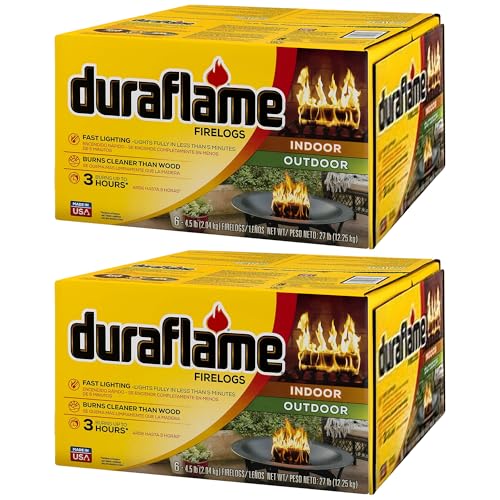
- ✓ Easy to light quickly
- ✓ Clean-burning and mess-free
- ✓ Suitable for indoor and outdoor use
- ✕ Burn time could be longer
- ✕ Slightly higher price point
| Burn Time | Up to 3 hours per log |
| Lighting Time | Approximately 5 minutes to fully ignite |
| Number of Logs | 12 logs per pack |
| Material Composition | Renewable wood sawdust, agricultural fibers, wax, and other combustible materials |
| Cleanliness | Burns 80% cleaner than traditional wood |
| Suitable for | Indoor and outdoor fireplaces, fire pits, bonfires, and campfires |
I’ve been curious about the Duraflame Indoor/Outdoor Quick Light Fire Logs for a while, especially since I love the idea of a quick, mess-free fire without sacrificing that cozy ambiance. When I finally got a pack in hand, I was eager to see if they truly live up to their promise of convenience and long-lasting warmth.
First off, these logs are surprisingly lightweight, which makes handling and stacking easy. The moment I lit one, I was impressed how quickly it caught fire—within about five minutes, the flames were fully engulfing the log, creating that inviting glow I was craving.
Burn time is quite solid, clocking in at around three hours, so you don’t have to keep fussing with it. I also appreciated how clean they burned, with minimal soot or ash compared to traditional wood.
It’s a real game-changer for keeping my fireplace tidy and stress-free.
Using these outdoors was just as effortless. Whether in my fire pit or outdoor fireplace, they provided steady warmth and a cozy atmosphere.
Plus, knowing they’re made from renewable materials and burn cleaner makes me feel better about my environmental footprint.
Overall, these logs deliver on convenience, cleanliness, and decent burn time. They’re perfect when you want a quick, warm fire without the hassle of traditional wood.
Just keep in mind, they’re not quite as long-lasting as some larger logs, but for quick fires, they’re a winner.
Pine Mountain Roasting Logs, Cooking firelogs for Campfire,

- ✓ Lights fast and easy
- ✓ Clean and smoke-free
- ✓ Burns up to 1 hour
- ✕ Slightly pricey per use
- ✕ Limited to light cooking
| Burn Time | Up to 1 hour per set of 3 logs |
| Cooking Time to Ignite | Under 5 minutes |
| Number of Uses per Package | Enough for 2 uses |
| Material | Food-grade, USDA Certified Biobased ingredients |
| Firewood Length Compatibility | Designed for best use with firewood lengths suitable for fireplaces and fire pits |
| Ignition Method | Simple strike of a match |
That first spark of the Pine Mountain Roasting Logs was surprisingly quick—within just a few minutes, I had a cozy fire going, ready for roasting s’mores with the kids. The smell was inviting, and the fact that I didn’t have to fuss with kindling or struggle to light traditional firewood was a huge relief.
Stacking three logs felt effortless, and lighting them was a breeze—just a quick strike, and they caught flame almost instantly. I appreciated how clean the process was compared to hauling around bulky firewood.
Plus, knowing these are USDA Certified Biobased products gave me confidence that I was using something eco-friendly and safe for food preparation.
Cooking on the fire was surprisingly easy. Each set burned steadily for about an hour, giving us plenty of time to toast marshmallows and cook hot dogs without rushing.
The logs didn’t produce much smoke or ash, which kept the area tidy and made cleanup simple. I also liked that the logs are food-grade, so I didn’t worry about any weird chemicals contaminating our treats.
After several uses, I noticed that these logs are a real game-changer for quick setups. No more waiting for a fire to catch or dealing with wet, hard-to-light wood.
Just light, cook, and enjoy—perfect for spontaneous family nights or backyard gatherings.
Overall, these roasting logs deliver on their promise of fast, easy, and clean fire-starting. They make outdoor cooking and cozy nights in much more accessible, especially if you’re tired of the hassle of traditional firewood.
Pine Mountain Traditional 4-Hour Firelog, 6 Logs Long

- ✓ Long-lasting 4-hour burn
- ✓ Easy to light and handle
- ✓ Eco-friendly, clean burning
- ✕ Slightly pricier than wood
- ✕ Limited to 6 logs per pack
| Burn Time | 4 hours per log |
| Material Composition | Recycled hardwood, nutshells, molasses |
| Emission Reduction | 80% less emissions and 75% less particulate matter compared to wood |
| Suitable for | Fireplaces, campfires, fire pits |
| Log Dimensions | Standard length suitable for fireplace use (exact length not specified but inferred to be compatible with typical fireplace logs) |
| Packaging | Wrapped in paper for mess-free handling and portability |
It’s a chilly weekend evening, and I’ve finally got my fireplace crackling with these Pine Mountain 4-hour firelogs. I just lit one, and within minutes, the big, bold flames started dancing, filling the room with warmth and that cozy, inviting glow.
No fuss, no mess—just a quick strike of a match and I was good to go.
The fire burns steadily for about four hours, which is perfect for a relaxed night in. I’ve used real wood before, but these logs burn more evenly and consistently, making the whole experience more enjoyable.
Plus, they’re wrapped in paper, so handling them feels tidy and simple—no need to worry about ash or splinters.
What really stood out is how natural and clean this firelog is. Made from recycled hardwood, nutshells, and molasses, it’s eco-friendly and produces 80% less emissions than traditional wood.
I also appreciated that it produces less particulate matter—75% less, to be exact—so I don’t have to worry about a smoky or stuffy room.
Whether I’m lighting the fireplace at home or setting up a campfire, these logs are versatile. They ignite easily, and the natural materials make me feel good about my choice.
The only downside I noticed is that the price is a bit higher than typical firewood, but the convenience and cleaner burn make it worth it.
All in all, these pine mountain logs give me a warm, beautiful fire without the mess or smoke. They’re a simple, eco-friendly way to enjoy a cozy evening while keeping things green and clean.
Mr IRONSTONE Firewood Rack Adjustable Log Storage Kit

- ✓ Very sturdy steel construction
- ✓ Rust-resistant coating
- ✓ Customizable size
- ✕ Requires purchase of 2x4s
- ✕ Slightly manual assembly needed
| Material | 13-gauge (2.95mm) thick carbon steel plate with electrostatic black powder coating |
| Dimensions | 13 inches (L) x 3.8 inches (W) x 6 inches (H) per bracket |
| Weight | 5.3 pounds per bracket |
| Included Hardware | 32 screws for mounting |
| Compatibility | Designed for 2×4 lumber for custom sizing |
| Corrosion Resistance | Electrostatic powder coating providing rust and corrosion resistance |
Honestly, I didn’t expect a simple set of brackets to completely change how I store firewood. I was surprised by how sturdy and solid these Mr IRONSTONE brackets felt right out of the box.
The 13-gauge steel is noticeably thick, giving me confidence that they won’t bend or warp over time.
Attaching the brackets to 2x4s was straightforward, thanks to the included screws. I appreciated that I could customize the size depending on how much wood I needed to hold.
It’s nice knowing I can expand or shrink my firewood rack as seasons change or space allows.
The black powder coating looks sleek and is definitely rust-resistant. I’ve had this outside during rain and snow, and I haven’t seen any signs of corrosion or chipping.
It’s built for outdoor use, which is a game changer for my backyard fire pit area.
What really stood out was how easy it was to set up and how much wood it can hold. I stacked a pretty decent pile, and it still felt stable and secure.
Plus, the open design keeps the logs dry and well-ventilated, so I don’t have to worry about mold or rot.
Overall, this DIY setup is a smart buy for anyone wanting a reliable, customizable firewood solution. It’s simple, sturdy, and built to last.
No more messy piles on the ground—just neat, dry logs ready to burn whenever you need them.
What Is the Best Firewood Length for a Fireplace?
Key aspects of firewood length include the importance of proper sizing to ensure that the logs fit comfortably within the firebox. Logs that are too long can hinder airflow, resulting in incomplete combustion and reduced heat output. Conversely, pieces that are too short may burn too quickly, leading to a less efficient fire and increased frequency of log replacement. Additionally, wood moisture content plays a significant role in burning efficiency; seasoned wood with a moisture content below 20% is preferred to produce a hotter, cleaner fire.
This impacts both the environmental footprint and economic aspects of heating with wood. A well-sized and seasoned firewood burns more efficiently, producing less smoke and particulate matter, which contributes to cleaner air quality. Furthermore, using the correct firewood length can lead to cost savings by maximizing heat output and minimizing the need for additional fuel.
Benefits of using the proper firewood length include improved safety, as logs that fit well in the fireplace are less likely to roll or shift, which can pose hazards. Additionally, a well-maintained fire increases the comfort of the home, providing steady and reliable heat. In terms of applications, this knowledge is particularly valuable for homeowners looking to optimize their fireplace use during colder months.
Best practices for selecting firewood length include measuring the firebox and ensuring that logs are cut to the appropriate size before stacking. It is also advisable to purchase seasoned firewood from reputable suppliers who can guarantee the wood’s moisture content and quality. Regularly monitoring wood storage conditions to prevent moisture absorption can further enhance burning efficiency.
Why Is Firewood Length Important for Burning Efficiency?
Firewood length is important for burning efficiency because it directly affects the surface area exposed to air and heat, which influences combustion efficiency and heat output.
According to the USDA Forest Service, the ideal firewood length for most fireplaces is typically between 16 to 18 inches. This length allows for optimal stacking and airflow, facilitating a more complete and efficient burn while minimizing the risk of smoke and creosote buildup in the chimney (USDA Forest Service, 2021).
The underlying mechanism involves the balance between the size of the wood pieces and the airflow around them. Shorter pieces ignite quickly and can combust more thoroughly, but if they are too small, they may burn too rapidly, leading to a loss of heat. Conversely, longer pieces can take longer to ignite and may not burn as efficiently unless they are split and seasoned properly, which increases the surface area and enhances airflow. This dynamic highlights the importance of proper firewood length to ensure that the fire burns steadily and efficiently, maintaining a consistent heat output while reducing emissions.
Furthermore, the moisture content of firewood also plays a significant role in burning efficiency. Wood that is too long may retain moisture in its core, leading to incomplete combustion and increased smoke production. A well-chosen length that aligns with optimal seasoning practices ensures that the wood is dry enough to burn effectively, further enhancing efficiency and minimizing environmental impact (National Firewood Association, 2022).
How Does Firewood Length Influence Heat Output?
The length of firewood can significantly affect its burning efficiency and heat output in a fireplace.
- Standard Length (16 inches): This is the most commonly recommended length for firewood used in fireplaces.
- Shorter Length (12 inches): Firewood cut to this length may ignite faster and burn more quickly, making it suitable for kindling or quick fires.
- Longer Length (18-24 inches): While these pieces take longer to ignite, they can provide a more prolonged burn and are ideal for overnight fires.
- Uniformity in Size: Having firewood that is consistently cut to a specific length ensures efficient stacking and even burning.
- Seasoning Impact: Regardless of length, properly seasoned firewood will yield better heat output than unseasoned wood, making length less critical if the wood is not dry.
Standard length firewood, usually around 16 inches, fits most fireplaces and ensures an efficient burn, providing a balance between ease of handling and optimal heat output. This size allows for good airflow between pieces, which promotes combustion and minimizes smoke production.
Shorter lengths of firewood, such as 12 inches, can be advantageous for starting fires quickly. These pieces tend to catch fire more easily and burn out faster, making them perfect for quick, hot fires but potentially less efficient for long-term heating.
Longer lengths, typically ranging from 18 to 24 inches, are useful for creating sustained heat over longer periods. They are often favored for overnight burns since they can maintain a consistent temperature for an extended duration, although they may require a well-established fire to ignite effectively.
Uniformity in size is crucial for maximizing the efficiency of a fire. When firewood is cut to the same length, it allows for better stacking in the fireplace, leading to improved airflow and consistent burning rates.
Finally, the seasoning of firewood plays a critical role in its heat output. Well-seasoned wood, regardless of length, burns hotter and cleaner than unseasoned wood, highlighting that while length matters, the dryness of the wood is paramount for efficiency and heat production.
What Are Common Firewood Lengths and Their Uses?
Common firewood lengths vary based on the type of fireplace and the intended use.
- 16 inches: This is one of the most popular sizes for firewood used in standard fireplaces and wood stoves.
- 18 inches: Slightly longer, this length is often preferred for larger fireplaces or outdoor fire pits.
- 24 inches: This length is commonly used for outdoor fire pits or larger wood-burning appliances that can accommodate bigger logs.
- 12 inches: This shorter length is ideal for small fireplaces, portable stoves, or for kindling when starting a fire.
16 inches firewood is favored because it fits well in most standard fireplaces and provides a good burn time while being manageable to handle and stack. It strikes a balance between size and practicality, making it a top choice for home heating.
18 inches firewood offers versatility, accommodating larger fire setups or outdoor fire pits, ensuring that the wood burns evenly and for a longer duration. This length allows for a robust flame while still fitting in many standard wood-burning appliances.
24 inches firewood is particularly useful for those with larger outdoor setups or specific wood-burning stoves designed to handle bigger logs. This size can produce a more significant heat output and is excellent for long-lasting fires, though it requires more space for storage and handling.
12 inches firewood is perfect for kindling or small-scale burning applications, making it easy to ignite and ideal for those who frequently start fires. This size is often used in portable stoves and smaller fireplaces, providing a quick and efficient way to get a fire going without excessive wood consumption.
How Do I Choose the Right Firewood Length for My Fireplace?
Choosing the right firewood length for your fireplace is crucial for optimal burning efficiency and safety.
- Standard Lengths (16-18 inches): Most fireplaces are designed to accommodate firewood that is 16 to 18 inches long, making this the most common size for residential use.
- Shorter Lengths (12-14 inches): If your fireplace has a smaller opening or you prefer a quicker, hotter fire, shorter lengths can be used for more efficient burning.
- Longer Lengths (20-24 inches): For larger fireplaces or fire pits, longer pieces may be suitable; however, they require careful stacking to ensure proper airflow and burning.
- Split vs. Whole Logs: Splitting logs into smaller pieces can help them dry faster and burn more efficiently, so consider the split size along with the length.
- Local Regulations and Recommendations: Some areas may have specific guidelines on firewood sizes for safety and environmental reasons, so it’s wise to check local regulations.
Standard lengths of 16 to 18 inches are ideal for most fireplaces, allowing for a good balance between size and efficiency. This length fits comfortably within the firebox, promoting better airflow and combustion, which leads to a hotter and cleaner burn.
If you’re using a smaller fireplace or prefer fast-burning fires, shorter lengths of 12 to 14 inches can be effective. These pieces ignite quickly and can produce a hotter fire in a shorter amount of time, making them ideal for quick heating or ambiance.
For those with larger fireplaces, longer lengths of 20 to 24 inches can be used, but they require careful arrangement to ensure proper airflow. If stacked improperly, larger logs can smother the fire and hinder combustion, so proper stacking is essential.
Additionally, considering whether to use split logs or whole logs can influence your choice. Split logs typically dry faster and ignite more easily, leading to better burning efficiency, while whole logs can take longer to catch fire and may require more kindling.
Lastly, it’s important to be aware of local regulations regarding firewood lengths, as some regions may have restrictions to reduce smoke emissions and promote safety. By being informed of these guidelines, you can ensure compliance and make the best choice for your fireplace.
What Factors Should Be Considered When Selecting Firewood Length?
When selecting firewood length for a fireplace, several factors must be considered to ensure optimal burning efficiency and safety.
- Fireplace Size: The dimensions of your fireplace play a crucial role in determining the appropriate firewood length. A larger fireplace may accommodate longer logs, while a smaller fireplace typically requires shorter pieces to fit properly and allow for adequate airflow.
- Burning Efficiency: The length of the firewood can significantly impact burning efficiency. Shorter pieces of wood tend to ignite more quickly and burn hotter, which can be advantageous for achieving a good fire more rapidly, whereas longer logs may take longer to catch fire but can burn longer once they do.
- Storage Space: Consider the amount of storage space available for your firewood. If space is limited, opting for shorter logs may allow for better stacking and organization. Additionally, shorter pieces can be easier to handle and transport when preparing for a fire.
- Type of Wood: Different types of firewood may have varying optimal lengths based on their density and moisture content. For example, denser hardwoods like oak may perform better in longer lengths, while softer woods like pine might be more effective as shorter pieces for quick burns.
- Seasoning Time: The length of firewood can affect its seasoning time, which is the process of drying the wood to reduce moisture content. Shorter logs may dry faster and be ready for burning sooner, while longer pieces may retain moisture longer and require additional time to season effectively.
- Fireplace Design: The design of your fireplace, including the height of the flue and the overall combustion chamber, can dictate the best firewood length. A fireplace with a taller flue may perform better with longer logs, while a more compact design may necessitate shorter pieces to maintain a proper draft and prevent smoke backflow.
What Are Common Mistakes to Avoid with Firewood Length?
When selecting firewood length for a fireplace, avoiding common mistakes can enhance efficiency and safety.
- Choosing Wood That’s Too Long: Firewood that exceeds the dimensions of the fireplace can create safety hazards by obstructing airflow and making it difficult to ignite.
- Using Inconsistent Lengths: Mixing different lengths of firewood can lead to uneven burning, resulting in poor heat output and increased smoke production.
- Not Considering Dryness: Even if the length is correct, using wet or unseasoned wood can lead to inefficient burning, producing more smoke and creosote buildup in the chimney.
- Neglecting Storage Space: Underestimating the space required for firewood storage can lead to issues with accessibility and drying, especially if the wood is not properly covered.
- Ignoring Local Regulations: Some areas have specific guidelines for firewood length to ensure safety and efficiency; failing to comply can result in fines or unsafe conditions.
Choosing wood that’s too long can create safety hazards by obstructing airflow and making it difficult to ignite. It’s essential to measure the fireplace dimensions and opt for lengths that allow for proper placement without exceeding the opening.
Using inconsistent lengths of firewood can lead to uneven burning, which negatively affects the heat output and increases smoke production. For optimal performance, it’s best to stick to a uniform length that promotes a steady burn rate.
Not considering the dryness of the wood is a critical mistake, as even the right length won’t burn efficiently if the wood is wet or unseasoned. This can lead to more smoke, less heat, and increased creosote buildup, which poses a risk of chimney fires.
Neglecting to account for storage space can result in issues with accessibility and drying. Proper storage is crucial to keep firewood dry and ready for use, and it’s important to ensure that you have enough room to store the wood safely and effectively.
Finally, ignoring local regulations can lead to potential fines and unsafe conditions. Many regions have guidelines for firewood length to ensure it is suitable for residential use, and compliance is key to maintaining a safe and efficient fireplace.
How Can I Properly Prepare and Cut Firewood to the Right Length?
To properly prepare and cut firewood to the right length for a fireplace, consider the following key factors:
- Determine the Ideal Length: The best firewood length for a fireplace typically ranges from 16 to 18 inches.
- Use Proper Tools: Having the right tools ensures efficiency and safety while cutting firewood.
- Measure Accurately: Precise measurement is crucial to ensure the wood fits well in the fireplace.
- Season the Wood: Allowing firewood to season properly can enhance burning efficiency and reduce smoke.
Determine the Ideal Length: The best firewood length for a fireplace typically ranges from 16 to 18 inches as this size allows for optimal burning and fits comfortably in most standard fireplace openings. Shorter pieces may burn too quickly, while longer pieces can be difficult to manage and may not ignite as efficiently.
Use Proper Tools: Essential tools for cutting firewood include a chainsaw or handsaw, a splitting maul, and safety gear such as gloves and goggles. Using the right tools not only speeds up the process but also minimizes the risk of accidents and injuries during cutting and splitting.
Measure Accurately: Always use a measuring tape or a marked stick to ensure each piece of wood is cut to the desired length. Accurate measurements are important because improperly sized wood can lead to inefficient burning and may not fit well within the fireplace or wood storage areas.
Season the Wood: Seasoning firewood involves drying it out for several months to reduce its moisture content, which enhances its burning efficiency and produces less smoke. Seasoned wood typically has a lighter color and produces a hollow sound when struck together, indicating it’s ready for use in the fireplace.
Related Post: