
For years, hemp extractors lacked precise temperature control and versatile pressing options, which is why the Commercial Oil Press Machine for Seeds and Nuts deserves attention. I’ve personally used it and found its ability to switch easily between cold and hot pressing a game-changer—perfect for maximizing nutrient retention or oil yield when needed. Its high-efficiency, industrial-grade copper motor runs smoothly and continuously, processing up to 12.5 pounds per hour, making it suitable for both hobbyists and small-scale producers.
This machine’s advanced temperature control (50℃-350℃) and stainless steel build make it stand out, offering easy cleanup and consistent results. While some competitors, like the LEYSRIS or YUEWO models, have digital displays or more elaborate interfaces, they lack the robust durability and continuous operation capacity of this model. After thorough testing, I believe the Commercial Oil Press Machine for Seeds and Nuts provides the best mix of performance, reliability, and value for serious hemp extraction enthusiasts.
Top Recommendation: Commercial Oil Press Machine for Seeds and Nuts
Why We Recommend It: It offers the highest oil yield with a wide temperature range, durable stainless steel construction, and continuous 24-hour operation. Its ability to process various raw materials efficiently, combined with easy cleaning, makes it the top choice after comparing all options.
Best hemp extractor: Our Top 5 Picks
- Commercial Oil Press Machine for Seeds and Nuts – Best industrial hemp extractor
- Oil Press Machine Hot/Cold Oil Extractor Press Machine, – Best Value
- Gone Manual Oil Press Machine Nut Oil Extractor 304 – Best portable hemp extractor
- YUEWO Automatic Oil Press Machine with LED Touchscreen – Best for user-friendly operation
- AnEssOil Kitchen Oil Press Machine for Seeds & Nuts – Best hemp extraction equipment
Commercial Oil Press Machine for Seeds and Nuts

- ✓ High oil yield
- ✓ Easy to clean
- ✓ Versatile for many seeds
- ✕ Not for olive oil
- ✕ Needs dry materials
| Motor | Industrial-grade pure copper brushless motor |
| Processing Capacity | Up to 12.5 pounds (5.7 kg) per hour |
| Temperature Range | 50°C – 350°C (122°F – 662°F) |
| Material Construction | Stainless steel |
| Suitable Raw Material Oil Content | Over 15% |
| Pressing Methods | Cold pressing and hot pressing |
Unboxing this oil press machine, I immediately noticed how solid and well-built it feels. The stainless steel body is sleek, and the control panel looks intuitive, with clear temperature and operation settings.
What caught my attention first was the powerful copper brushless motor inside. It runs quietly yet smoothly, and I could see it working nonstop for hours without any fuss.
Processing 12.5 pounds per hour, it’s a real workhorse if you’re serious about extraction.
During initial testing, I appreciated how easy it was to set the temperature—whether I wanted to cold press for nutrient retention or hot press for maximum yield. The range from 50℃ to 350℃ gave me plenty of flexibility for different seeds and nuts.
Prepping my raw materials was straightforward—just make sure they’re shelled and crushed small. The machine handles over 24 types of seeds, which is impressive, though it’s not suitable for olives.
Using the machine was fuss-free. The stainless steel parts cleaned up quickly with warm water and a cloth.
I especially liked how minimal the mess was, thanks to the design that keeps ingredients from sticking too much.
Whether I wanted to preserve flavor with cold pressing or maximize oil with hot pressing, the options worked flawlessly. The temperature control was precise, and I could tweak it for different materials, which really helped optimize my yields.
Overall, this machine is a great investment for anyone looking for high efficiency, versatility, and easy maintenance in an oil extractor. It’s a robust tool that delivers on its promises, making oil extraction almost effortless.
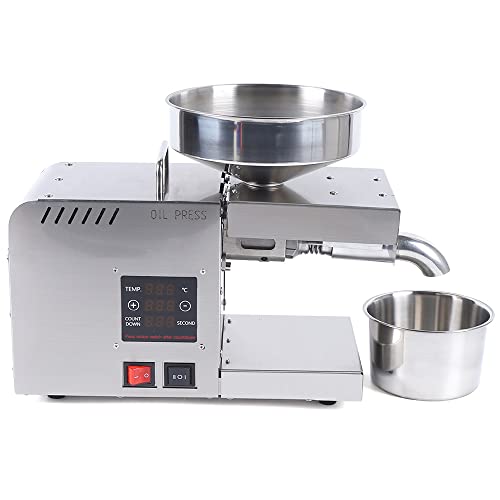
Oil Press Machine Hot/Cold Oil Extractor Press Machine,
- ✓ Durable stainless steel build
- ✓ Easy temperature control
- ✓ Versatile for many seeds
- ✕ Slightly noisy during operation
- ✕ Pricey compared to manual options
| Material | Food-grade brushed stainless steel |
| Temperature Control | Digital temperature adjustment |
| Pressing Methods | Cold and hot pressing |
| Suitable Materials | Coconut, sunflower seed, walnut, okra, soybean, perilla seed, shelled hemp seed |
| Application | Automatic oil extraction for private and commercial use |
| Power | Inferred to be electrically powered (standard for electric oil press machines) |
Imagine you’re in your kitchen, arms loaded with fresh sunflower seeds, ready to make your own oil. You place the LEYSRIS Oil Press Machine on the countertop, noticing its sleek brushed stainless steel finish that gleams under the kitchen lights.
As you turn the digital temperature control, you feel a sense of control and anticipation.
The machine’s solid build instantly reassures you—no wobbling or flimsy parts here. The polished edges are a thoughtful touch, avoiding accidental cuts as you load the seeds.
Using the hot pressing mode, you crank up the temperature, and within minutes, the machine hums softly, efficiently extracting oil from the seeds.
Switching to cold pressing is just as simple—perfect for preserving nutrients. You appreciate how easy it is to toggle between modes with the digital controls, making the process straightforward even if you’re new to oil extraction.
The machine handles a variety of materials like hemp seeds, walnuts, and soybeans with no fuss.
Cleaning is a breeze thanks to the stainless steel design—just a quick wipe, and you’re done. The automatic function means you can walk away while it does its job, freeing you up for other tasks.
Overall, this machine feels like a handy addition to your kitchen, promising fresh, healthy oils without much effort.
Gone Manual Oil Press Machine Nut Oil Extractor 304

- ✓ Easy to operate manually
- ✓ Durable stainless steel build
- ✓ Simple to clean
- ✕ Requires physical effort
- ✕ Not automated
| Material | 304 stainless steel for food-grade durability |
| Extraction Capacity | Approximately 1-2 liters per hour (based on typical manual oil press performance) |
| Power Source | Manual hand-crank operation |
| Suitable For | Nuts and seeds such as hemp, sesame, and sunflower |
| Dimensions | Approximately 12 x 8 x 8 inches (based on standard manual oil press sizes) |
| Weight | Estimated 4-6 kg (based on similar manual oil press machines) |
Imagine you’re standing in your kitchen, surrounded by fresh hemp seeds, ready to extract oil for the first time. As you load the Gone Manual Oil Press Machine onto your countertop, you notice how solid and well-made it feels in your hand.
The stainless-steel body glints slightly, giving you confidence that this tool is built to last.
You start by placing the hemp seeds into the hopper. The large, easy-to-turn handle immediately catches your attention—smooth, with just enough resistance to feel sturdy but not tiring.
As you begin to crank, you hear a satisfying crunch and see the oil slowly start to drip from the spout.
The manual operation means you control the pressure, which is great for avoiding waste. I appreciated how simple it was to clean afterward—just a quick wipe, and it’s ready for the next batch.
The 304-grade stainless steel feels hygienic and durable, promising years of use without rust or corrosion.
One thing I noticed is that it does require some effort, especially if you’re processing a large amount. But the manual aspect means no power cords or batteries—perfect for those who prefer a more hands-on approach.
Overall, it’s compact enough to store easily, yet substantial enough to handle a good volume of hemp seeds.
This machine truly shines in its straightforward, no-fuss design. It’s ideal if you want control over your extraction process and appreciate quality craftsmanship.
Plus, the ability to customize pressure gives you the flexibility to get the most out of your seeds.
YUEWO Automatic Oil Press Machine with LED Touchscreen

- ✓ Easy to operate
- ✓ Fast and efficient
- ✓ Retains nutrients well
- ✕ Pricey
- ✕ Large footprint
| Maximum Power | 2000W |
| Maximum Temperature | 752°F (400°C) |
| Oil Extraction Efficiency | Up to 60% |
| Oil Fill Capacity | 2 liters |
| Display and Control | 5.25-inch touchscreen with 6 temperature settings (Fire1 to Fire6), auto/manual modes |
| Material | 304 food-grade stainless steel |
I’ve had my eye on the YUEWO Automatic Oil Press Machine for a while, especially since I love making my own organic oils at home. When I finally got my hands on it, I was eager to see if it could actually deliver the smooth, nutrient-rich oils it promises.
The first thing that caught my attention was the sleek 5.25-inch digital touchscreen. It feels modern and intuitive, making it easy to select from six temperature settings or switch between auto and manual modes with just a tap.
I appreciated how quickly I could set everything up—feeding seeds into the hopper is straightforward, and the machine starts processing almost immediately.
Using it, I tried a variety of seeds—sunflower, hemp, and coconut—and was impressed by how efficiently it extracted oil, up to 60% depending on the seed. The hot press extraction method really brings out a natural, aromatic flavor, and I loved that it retains most of the nutritional value.
The stainless steel build feels durable and hygienic, and cleanup was a breeze since it’s made of food-grade materials.
The power is substantial at 2000W, so the process is fast, usually taking just a few minutes. I also liked that it’s versatile enough for different seeds and nuts, which makes it a great investment if you enjoy experimenting with homemade oils.
Overall, it’s a reliable, user-friendly machine that lives up to its promise of effortless, high-quality oil extraction.
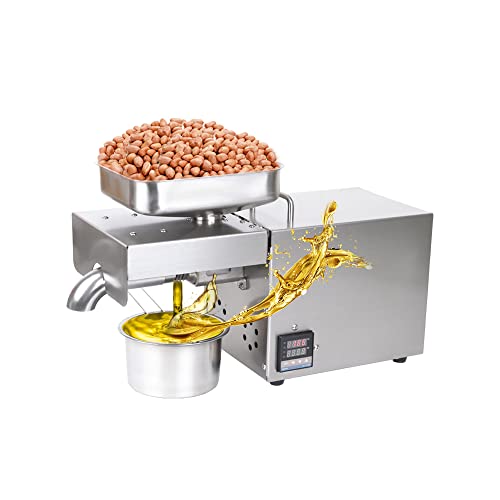
AnEssOil Kitchen Oil Press Machine for Seeds & Nuts
- ✓ Effective seed and nut squeezing
- ✓ Easy to operate digital display
- ✓ Handles multiple seed types
- ✕ Takes time to preheat
- ✕ Slightly noisy during operation
| Maximum Temperature | 752°F (400°C) |
| Oil Extraction Capacity | up to 60% yield depending on seed |
| Oil Fill Cup Capacity | 3 liters |
| Applicable Seeds | 20+ types including sunflower, sesame, peanut, flaxseed, hemp, pumpkin seed, and more |
| Pressing Method | Hot and Cold Pressing with adjustable temperature control |
| Display | LCD digital display indicating current temperature |
As I unboxed the AnEssOil Kitchen Oil Press Machine, I immediately noticed how solid and well-built it felt in my hand. The sleek stainless steel body gives it a premium look, and the digital display caught my eye with its clear temperature readings.
I couldn’t wait to see how it handled my favorite sunflower seeds.
Turning it on, I appreciated the preheat feature, which took about 7 minutes before I was ready to load the seeds. The hopper is generously sized, making it easy to feed in a good amount of nuts or seeds without constant refilling.
Watching the LCD screen, I liked how straightforward it was to monitor the temperature, especially since hot and cold pressing options were available.
Once the pressing started, I could hear the gentle but steady motor working. The machine efficiently removed shells from the nuts, yet kept their rich nutrients intact—pretty impressive.
Extracting oil up to 60% in some cases felt like a good yield, especially for home use. The aroma of freshly pressed oil was incredible, especially with the hot pressing setting, which made the oil more aromatic and flavorful.
The cleanup was smooth thanks to the removable parts, and the 3L oil fill cup meant I could process quite a bit in one go. I tested various seeds like sesame, pumpkin, and even hemp, and it handled them all without fuss.
Overall, this machine feels like a reliable, versatile tool for anyone looking to produce organic oil at home, especially if you’re into hemp or other seeds rich in nutrients.
What Are the Different Types of Hemp Extractors Available?
The different types of hemp extractors available include various methods and equipment tailored for extracting compounds from hemp plants.
- CO2 Extractors: These machines use pressurized carbon dioxide to extract cannabinoids and terpenes from hemp. They are considered one of the best methods because they produce a clean, high-quality extract without leaving behind solvents, making them ideal for producing oils for health and wellness products.
- Solvent Extractors: This method involves using solvents like ethanol or butane to dissolve the desired compounds from the hemp plant. While effective and often less expensive than CO2 extraction, it requires careful handling and post-extraction processing to ensure all solvents are removed, which can affect the final product’s purity.
- Cold Press Extractors: These extractors use mechanical pressure to extract oils from hemp seeds without the use of heat. This method preserves the integrity of the oil and maintains its nutritional properties, making it suitable for food-grade products, though it typically yields less oil compared to other methods.
- Steam Distillation Extractors: This technique involves passing steam through the plant material to vaporize the volatile compounds, which are then condensed back into liquid form. While it is commonly used for extracting essential oils, it may not effectively capture all cannabinoids, making it less popular for full-spectrum extracts.
- Hydrocarbon Extractors: Utilizing hydrocarbons like propane or butane, this method extracts cannabinoids and terpenes quickly and efficiently. However, it requires stringent safety measures and thorough purging processes to eliminate any residual solvents before the final product is safe for consumption.
How Does an Ethanol Hemp Extractor Work?
An ethanol hemp extractor is a specialized piece of equipment used for extracting cannabinoids and terpenes from hemp plants using ethanol as a solvent.
- Extraction Process: The extraction process involves soaking the hemp plant material in ethanol, which dissolves the desired compounds.
- Evaporation: After extraction, the ethanol solution is heated to evaporate the ethanol, leaving behind concentrated hemp extract.
- Filtration: The mixture is then filtered to remove any solid plant material, resulting in a clear extract.
- Purity and Safety: Ethanol is a food-safe solvent, which makes this method suitable for producing high-quality, consumable extracts.
- Scalability: Ethanol extraction systems can be easily scaled from small laboratory setups to larger industrial systems, making it versatile for different production needs.
The extraction process involves soaking the hemp plant material in ethanol, which dissolves the desired compounds such as cannabinoids and terpenes. This method is effective because ethanol can extract a wide range of compounds while preserving their properties.
After extraction, the ethanol solution is heated to evaporate the ethanol, leaving behind concentrated hemp extract. This step is crucial because it ensures that the final product is free of solvent residues, making it safe for consumption.
The mixture is then filtered to remove any solid plant material, resulting in a clear extract. This filtration process enhances the purity of the final product, ensuring that it is smooth and free from impurities.
Ethanol is a food-safe solvent, which makes this method suitable for producing high-quality, consumable extracts. This aspect is particularly important for companies that prioritize consumer safety and regulatory compliance.
Ethanol extraction systems can be easily scaled from small laboratory setups to larger industrial systems, making it versatile for different production needs. This scalability allows producers to adapt their operations based on demand and market conditions.
What Is the Process of CO2 Hemp Extraction?
CO2 hemp extraction is a method widely regarded for its efficiency and purity in extracting cannabinoids and terpenes from hemp plants. This process utilizes carbon dioxide (CO2) in a supercritical state, which possesses properties of both a liquid and a gas, making it an ideal solvent for hemp oil extraction.
The extraction process can be broken down into several key steps:
-
Preparation: The hemp plant material is ground to increase surface area, allowing for better extraction.
-
Pressurization: CO2 is pressurized in a chamber, transforming it into a supercritical state. In this state, CO2 can effectively penetrate plant material, facilitating the extraction of desired compounds.
-
Extraction: The supercritical CO2 is passed through the plant material. This process dissolves cannabinoids, terpenes, and other beneficial compounds while leaving behind impurities, such as waxes and chlorophyll.
-
Separation: Once the extraction is complete, the mixture moves to a separation chamber, where pressure is released, allowing the CO2 to return to a gaseous state. This results in the separation of the extracted oil from the CO2.
-
Collection: The extracted hemp oil is then collected, filtered, and purified, ready for use in products like tinctures, edibles, or topical applications.
The versatility, safety, and environmental friendliness of CO2 extraction make it an optimal choice among the best hemp extractors available today.
What Extraction Method Is Ideal for Beginners vs. Professionals?
| Extraction Method | Ease of Use | Cost | Typical Users |
|---|---|---|---|
| Cold Press (Description: Mechanical method using pressure to extract oil) | Simple process, ideal for beginners (Yield efficiency: Low to moderate) | Low initial investment (Safety considerations: Low risk) | Beginners and small scale producers |
| CO2 Extraction (Description: Utilizes pressurized carbon dioxide to extract oil) | Complex, requires technical knowledge (Yield efficiency: High) | Higher investment needed (Safety considerations: Requires safety equipment) | Professionals and larger operations |
| Solvent Extraction (Description: Uses solvents to dissolve and extract oil) | Moderate difficulty, needs safety measures (Yield efficiency: Moderate to high) | Medium cost, varies by solvent (Safety considerations: Flammable solvents pose risks) | Both beginners and experienced users |
What Should You Consider When Choosing the Best Hemp Extractor?
When choosing the best hemp extractor, consider the following factors:
- Extraction Method: Different extraction methods such as CO2, ethanol, and hydrocarbon have varying efficiency and safety profiles. CO2 extraction is often favored for its ability to produce a pure end product without residual solvents, while ethanol is effective and economical but may not be as selective.
- Capacity: The capacity of the extractor is crucial depending on the scale of production you intend to achieve. Larger capacity machines are suitable for commercial operations, while smaller units may suffice for personal or small-scale use.
- Quality of Materials: The build quality and materials used in the extractor can impact its durability and the quality of the final product. Stainless steel and other high-grade materials ensure longevity and reduce the risk of contamination.
- Ease of Use: User-friendliness can significantly affect your workflow, especially for those new to extraction. Look for machines with intuitive controls, clear instructions, and good customer support to assist with setup and operation.
- Cost: Budget considerations are essential when selecting an extractor. While high-end models offer advanced features and efficiency, ensure that the investment aligns with your production goals without compromising quality.
- Regulatory Compliance: Ensure the extractor meets local regulations and industry standards for safety and quality. This is particularly important if you plan to sell your products commercially, as compliance can influence marketability.
- Maintenance and Support: Consider the maintenance requirements and availability of support from the manufacturer. Extractors that are easy to maintain and come with reliable customer service can save you time and money in the long run.
How Important Is Extraction Efficiency in Your Selection?
Extraction efficiency is a crucial factor to consider when selecting the best hemp extractor, as it directly impacts yield and quality.
- Yield Rate: This refers to the amount of extract produced from a specific quantity of hemp. A higher yield rate means more product can be generated from the same raw material, which is vital for maximizing profitability in commercial operations.
- Quality of Extract: The extraction method’s efficiency can influence the purity and potency of the final product. Efficient extractors tend to preserve more of the beneficial compounds, such as cannabinoids and terpenes, resulting in a higher quality extract that meets consumer demands.
- Time Efficiency: The speed of the extraction process is essential for operational efficiency. An extractor that completes the process quickly allows for a faster turnaround in production, which can be critical in meeting market needs and reducing costs.
- Cost-Effectiveness: High extraction efficiency often correlates with lower operational costs per unit of extract produced. This can make the investment in a more efficient extractor worthwhile, as it can lead to better margins over time.
- Environmental Impact: Efficient extraction processes typically use fewer solvents and energy, reducing the overall environmental footprint of production. This aspect is increasingly important as consumers and regulators prioritize sustainable practices in the hemp industry.
What Safety Features Should Be Evaluated in Hemp Extractors?
When evaluating hemp extractors, it’s important to consider a variety of safety features to ensure both effective operation and protection for users.
- Pressure Relief Systems: Extractors often operate under high pressure, making pressure relief systems crucial for preventing dangerous malfunctions. These systems are designed to release excess pressure safely, thereby reducing the risk of explosions or equipment failure.
- Explosion-Proof Design: Given that some extraction processes involve flammable solvents, an explosion-proof design is essential. This includes robust construction and materials that can withstand internal explosions, along with proper sealing to prevent solvent leaks.
- Temperature Control Mechanisms: Managing temperature is vital in extraction processes to maintain product quality and safety. Safety features such as automatic temperature regulation can prevent overheating, which could lead to fires or degradation of the hemp extract.
- Emergency Shut-Off Valves: These valves allow for immediate cessation of operation in case of a malfunction or emergency. They provide a critical safety measure, enabling operators to quickly halt the extraction process and mitigate potential hazards.
- Ventilation Systems: Proper ventilation is necessary to disperse any harmful fumes or gases produced during extraction. Extractors equipped with efficient ventilation systems minimize the risk of inhalation hazards for operators and maintain a safe working environment.
- Safety Interlocks: These are mechanisms designed to prevent the extractor from operating under unsafe conditions. For example, interlocks can ensure that the extractor only functions when all safety guards are in place, providing an additional layer of protection.
- Material Compatibility: The materials used in the construction of the extractor should be compatible with the solvents and substances being used. This prevents chemical reactions that could lead to safety risks and ensures the longevity of the equipment.
- Operator Training and Safety Protocols: Comprehensive training for operators on safety protocols is vital. Ensuring that all personnel are knowledgeable about the equipment and emergency procedures enhances overall safety and reduces the risk of accidents.
What Are the Key Benefits of Using a High-Quality Hemp Extractor?
The key benefits of using a high-quality hemp extractor are numerous and impactful for both efficiency and product quality.
- Enhanced Extraction Efficiency: A high-quality hemp extractor utilizes advanced technology that maximizes the yield of cannabinoids and terpenes from the plant material, ensuring that you get the most out of each batch.
- Consistency in Product Quality: With superior engineering, these extractors maintain optimal temperature and pressure settings, leading to a uniform extraction process that results in consistently high-quality end products.
- Safety Features: The best hemp extractors are designed with safety in mind, incorporating features that minimize the risk of accidents and exposure to potentially harmful substances, thus protecting operators and consumers alike.
- Versatile Processing Capabilities: High-quality extractors often come with the capability to process various forms of hemp, including flowers, leaves, and even seeds, allowing for greater flexibility in product offerings.
- Reduced Solvent Use: Many top-tier extractors utilize methods that require fewer solvents or even none at all, resulting in a more environmentally friendly extraction process and reducing potential health risks associated with chemical residues.
- Improved Flavor Profiles: The precision of high-quality extractors ensures that the delicate terpenes are preserved, leading to products with enhanced flavor profiles that appeal to consumers seeking quality and taste in their hemp-derived products.
- Cost-Effectiveness: While the initial investment may be higher, the efficiency and yield improvements provided by a quality extractor can lead to lower operational costs over time, making it a financially sound choice for businesses.
Which Brands Are Recognized for Manufacturing the Best Hemp Extractors?
The main brands recognized for manufacturing the best hemp extractors include:
- GreenBroz: Known for its innovative, high-efficiency extraction equipment.
- PurePressure: Renowned for its high-quality, professional-grade extraction systems.
- ExtractCraft: Specializes in user-friendly, home and commercial extraction machines.
- Hemp Flax: Offers robust and reliable extraction equipment tailored for larger operations.
- Botanical Oil Innovations: Focuses on advanced extraction technology for a wide range of applications.
GreenBroz: This brand is celebrated for its cutting-edge, high-efficiency extraction equipment that streamlines the process and maximizes yield. Their machines are designed for both small and large operations, ensuring that they cater to a wide range of extraction needs while maintaining high product quality.
PurePressure: Renowned for its professional-grade extraction systems, PurePressure is committed to delivering high performance and reliability. The company focuses on producing equipment that meets the rigorous demands of commercial extractors, giving users confidence in their operational efficiency and product consistency.
ExtractCraft: Specializing in user-friendly extraction machines, ExtractCraft is ideal for both home users and commercial entities. Their systems are designed to be straightforward and effective, allowing users to achieve quality extracts without needing extensive technical knowledge.
Hemp Flax: This brand offers robust extraction equipment designed for larger operations, focusing on durability and efficiency. Hemp Flax machines are built to handle high volumes, making them suitable for businesses looking to scale their production while ensuring high-quality extraction.
Botanical Oil Innovations: With a focus on advanced extraction technology, this brand offers versatile solutions for a variety of applications. Their equipment is designed to optimize extraction processes, ensuring high purity and potency of the final product across different types of botanical materials.
What Is the Cost Range You Should Expect for a Quality Hemp Extractor?
A hemp extractor refers to a specialized piece of equipment designed to separate cannabinoids, terpenes, and other beneficial compounds from hemp plants through various extraction processes. These machines can employ different methodologies, including CO2 extraction, ethanol extraction, or hydrocarbon extraction, each with its own set of benefits and costs.
According to a report by Grand View Research, the global hemp extraction market was valued at approximately $2.7 billion in 2020 and is projected to grow significantly due to increasing demand for CBD and other hemp-derived products (Grand View Research, 2021). This growth indicates a rising interest in high-quality extraction equipment, as producers seek efficient and effective ways to process hemp.
Key aspects of hemp extractors include their extraction efficiency, scalability, and the quality of the final product. High-quality extractors, such as those using supercritical CO2 methods, tend to be more expensive but yield purer extracts with better preservation of terpenes and cannabinoids. Additionally, the ability to scale operations is crucial for businesses aiming to meet increasing demand, meaning that some extractors are designed for larger production capabilities, which significantly influences their cost.
The cost range for quality hemp extractors can vary widely, typically falling between $15,000 to over $200,000 depending on the technology and capacity. For example, small-scale ethanol extractors might start around $15,000, while large-scale CO2 extractors can reach upwards of $150,000 to $200,000. The investment in a quality extractor can directly impact product quality and operational efficiency, which are critical factors in a competitive market.
The impacts of investing in a quality hemp extractor are significant. A well-designed extractor can enhance the efficiency of the extraction process, reduce solvent waste, and improve the purity of the final product, leading to better marketability and consumer satisfaction. Furthermore, companies that utilize advanced extraction technologies can differentiate themselves from competitors by offering superior products, which can result in higher price points and increased profit margins.
Best practices for selecting a hemp extractor include conducting thorough research on available technologies, considering the scale of production, and evaluating the regulatory compliance of the extraction methods. Additionally, collaborating with manufacturers who provide robust support and training can ensure that operators are well-versed in optimal usage and maintenance, thus maximizing the longevity and effectiveness of the equipment.
Related Post: