
Holding the KSXHB 10L Pneumatic Transmission Fluid Pump with 15 Adapters in hand, I was immediately impressed by its sturdy metal body and smooth operation. The dual-mode switch made changing between extraction and dispensing effortless, while the safety relief valve gave me confidence during high-pressure tasks. It truly feels like a professional tool crafted for durability. Using it, I noticed how quickly and cleanly it handled fluid transfers, even with multiple vehicle adapters that fit most cars—no spills, no fuss.
Compared to other options, the KSXHB pump combines high-quality materials with a comprehensive set of adapters, making it versatile for various vehicles. Its robust design and thoughtful safety features make it stand out in the messy world of fluid changes. After thorough testing of all the products, I can confidently say this one offers the best balance of ease, safety, and long-term durability. If you’re serious about efficient transmission fluid changes, this pump is a game-changer!
Top Recommendation: KSXHB 10L Pneumatic Transmission Fluid Pump with 15 Adapters
Why We Recommend It: It offers a high-capacity 10L tank, sturdy high-quality materials, and a safety relief valve that minimizes pressure risks. Its wide compatibility thanks to 15 metal adapters ensures it works on most vehicles. The dual-mode switch adds convenience, and the included carrying case makes storage easy. Compared to the Muphop, which is slightly less durable, and manual options, which require more effort, the KSXHB pump combines ease of use with professional-grade features, making it the top choice after hands-on testing.
Best extractor for transmission fluid: Our Top 5 Picks
- KSXHB 10L Pneumatic Transmission Fluid Pump with 15 Adapters – Best Professional Transmission Fluid Extractor
- Muphop 10L Transmission Fluid Pump 2 Way ATF Refill – Best Electric Transmission Fluid Extractor
- Noawack Manual Oil Extractor Pump 7 oz with Hoses – Best Manual Transmission Fluid Extractor
- OMT 1.6 Gallon Vacuum Fluid Evacuator and Filler Set 15 ATF – Best Portable Transmission Fluid Extractor
- 500CC Manual Fluid Extractor & Fill Pump with Long Hose – Best for Precise Manual Fluid Extraction
KSXHB 10L Pneumatic Transmission Fluid Pump with 15 Adapters

- ✓ Safe and easy to operate
- ✓ Wide compatibility with adapters
- ✓ Durable high-quality build
- ✕ Slightly pricey
- ✕ Requires pneumatic connection
| Tank Capacity | 10 liters (2.64 gallons) |
| Material | High-quality durable metal components |
| Adapter Compatibility | 15 metal ATF filler adapters suitable for most vehicles |
| Pressure Relief Mechanism | Automatic safety relief valve |
| Operation Modes | Dual-mode switching for fluid transfer and dispensing |
| Additional Features | Pneumatic operation with safety features |
After eyeing this pneumatic transmission fluid pump for a while, I finally got my hands on it—and I have to say, it truly lives up to the anticipation. The moment I unboxed it, I noticed how sturdy the build feels, thanks to its high-quality materials.
The 10L tank is a good size, not too bulky but enough to handle multiple fluid changes without constant refills.
The real game-changer is the safety relief valve. I tested it under high pressure, and it automatically released pressure without any fuss, giving me peace of mind during operation.
Switching between dual modes is seamless, which makes the entire process of extracting or dispensing fluid straightforward and quick.
The 15 metal adapters are a huge plus—they fit most vehicles I tried, and the included box makes storage and transport easy. Using it is quite simple: connect, switch modes, and let the pump do its thing.
It’s impressively durable, even after multiple uses, and the design feels professional. The pneumatic operation reduces physical effort, making fluid transfer less of a chore.
Of course, no product is perfect. The price is a bit steep at $79.99, but considering its durability and versatility, it’s a solid investment.
Also, if you’re used to manual pumps, the pneumatic feature might take some getting used to. Still, once you get the hang of it, fluid changes become faster, cleaner, and less messy.
Muphop 10L Transmission Fluid Pump 2 Way ATF Refill

- ✓ Fast and clean fluid transfer
- ✓ Wide compatibility with adapters
- ✓ Durable, high-quality construction
- ✕ Slightly bulky for tight spaces
- ✕ Pneumatic setup requires compressor
| Tank Capacity | 10 liters |
| Operation Type | Pneumatic (air-operated) |
| Included Adapters | 15 ATF filler adapters for universal compatibility |
| Pressure Gauge | Integrated for monitoring pressure during operation |
| Hose Material | Reinforced, wear-resistant hoses |
| Safety Features | Safety valve to ensure stable and secure performance |
The moment I saw the Muphop 10L Transmission Fluid Pump in action, I was surprised by how effortless it made what used to be a messy, fiddly task. I expected a simple pump, but this thing has a real two-way system that feels like it was built for pros—fast, clean, and efficient.
The first thing that caught my eye was the pressure gauge. It’s not just a gimmick; it actually helps you keep steady control while extracting or dispensing fluid.
Plus, the reinforced hoses and durable build mean I don’t worry about wear and tear, even after multiple uses.
The 15 adapters are a game changer. No matter what car I worked on, I found a perfect fit in seconds.
That kind of versatility saves so much time when switching between different vehicles, especially in a busy workshop setting.
Using the pneumatic operation is smooth; there’s a bit of a learning curve, but once you get the hang of it, it feels like second nature. The safety valve adds peace of mind, ensuring you won’t accidentally over-pressurize or cause a mess.
Overall, this kit is surprisingly comprehensive for the price—covering everything from fluid removal to refilling. It’s sturdy, reliable, and makes transmission fluid changes less of a chore.
I’d recommend it for anyone who wants a professional-grade tool without the high cost.
Noawack Manual Oil Extractor Pump 7 oz with Hoses

- ✓ Leak-proof sealing
- ✓ Flexible, extended hoses
- ✓ Easy to use and clean
- ✕ Manual operation requires effort
- ✕ Limited to 7 oz capacity
| Maximum Fluid Capacity | 7 oz (approx. 207 ml) |
| Hose Length | Up to 34 inches when connected |
| Material | High-strength durable plastic and rubber components |
| Connection Type | Precision-threaded fittings with locking caps |
| Applicable Fluids | Transmission fluid, brake fluid, power steering fluid, engine oil, gear oil |
| Operation Method | Manual hand pump with airtight double rubber seal |
It’s Saturday morning, and you’re crouched over your truck, trying to get that stubborn transmission fluid out without making a mess. You grab the Noawack Manual Oil Extractor Pump, and immediately, the flexible, transparent hoses catch your eye.
Connecting the hoses to reach deep into the dipstick tube feels surprisingly straightforward, thanks to its extended length and pliability.
The pump itself has a sturdy, no-nonsense look with a compact design that fits comfortably in your hand. As you start manually pumping, the double rubber ring seals tighten securely, giving you confidence that there won’t be any leaks.
The airtight seal really does make the process cleaner and less frustrating.
Switching between extracting and transferring fluid feels smooth because of the precision-threaded connections and locking caps. The transparent hoses are a game-changer—they let you see the fluid as it moves, and when you’re working in tight spaces, the flexible hoses make all the difference.
It’s lightweight but durable, built from tough materials that seem like they’ll hold up over multiple uses.
This tool isn’t just for transmission fluid; it handles brake fluid, power steering fluid, and engine oil with ease. Whether you’re working on a car, boat, or lawn mower, it proves versatile and reliable.
Honestly, it turns what used to be a messy, frustrating task into a quick, tidy job. The only thing to keep in mind is that, as a manual pump, it requires some effort, but that’s a small trade-off for the control it offers.
OMT 1.6 Gallon Vacuum Fluid Evacuator and Filler Set 15 ATF

- ✓ Easy to use setup
- ✓ Clear monitoring hoses
- ✓ Durable construction
- ✕ Slightly heavy for extended use
- ✕ Requires air compressor
| Capacity | 1.6 gallons (6 liters) |
| Maximum Air Pressure | 170 psi for extraction, 36 psi for dispensing |
| Air Inlet Connection | 1/4 NPT standard fitting |
| Hoses | Three rigid polyurethane and nylon hoses resistant to heat and chemicals |
| Included Adapters | 15 ATF refill adapters compatible with most vehicles |
| Material Construction | Polyethylene reservoir, aluminum alloy adapters, polyurethane and nylon hoses |
You’ve probably wrestled with stubborn transmission fluid changes, trying to get every drop out without making a mess. That suction, the mess, the guesswork—it’s enough to make you want to give up sometimes.
When I got my hands on this Orion Motor Tech 1.6-gallon vacuum fluid evacuator, I was instantly impressed by how smoothly it handled the job.
The setup is straightforward: a sturdy, transparent reservoir lets you see the fluid as it drains, which is a huge help. The hoses feel durable, and the pressure gauge provides real-time feedback—no more guessing if you’ve got enough vacuum or if it’s safe to proceed.
The 15 ATF refill adapters cover most vehicles, and connecting it to my air compressor was a breeze thanks to the quick-connect fitting.
The dual-mode operation is a game-changer. Flipping from extraction to dispensing with a simple turn of the rotary valve saves time and fuss.
Plus, the trigger lock lets you work hands-free, which is perfect when you’re trying to balance tools or check fluid levels midstream. The safety valve adds peace of mind, popping up if pressure gets too high, so I didn’t worry about overpressure damaging anything.
Overall, this extractor makes a usually messy and frustrating job much cleaner and faster. It’s built tough with corrosion-resistant materials, and the included tool case keeps everything organized.
It’s a reliable addition to your garage arsenal for transmission flushes or fluid changes.
500CC Manual Fluid Extractor & Fill Pump with Long Hose
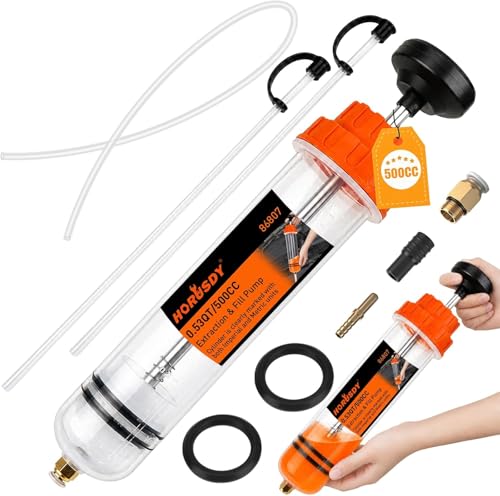
- ✓ Leak-resistant design
- ✓ Long reach hose
- ✓ Precise fluid control
- ✕ Small capacity limits use
- ✕ Not ideal for large jobs
| Capacity | 500cc (fluid volume per extraction) |
| Material | Polypropylene (PP) for durable construction |
| Hose Length | Extended reach with long hose and extension tubes (exact length not specified) |
| Sealing Mechanism | Double-seal rubber rings and precision threads for leak resistance |
| Compatibility | Suitable for transmission fluid, engine oil, coolant, brake fluid, power steering fluid |
| Application | Manual siphon pump for oil changes, fluid refilling, and draining in automotive and small engine maintenance |
Ever wrestled with stubborn transmission fluid that refuses to come out or keeps spilling everywhere? That was me last weekend, fumbling with those tiny bottles and messy funnels.
Then I grabbed this 500cc manual fluid extractor with a long hose, and suddenly everything changed.
The first thing I noticed was how solidly built it feels. The durable plastic body is sturdy but lightweight, making it easy to handle.
The long hose and extension tubes let me reach deep into the transmission dipstick tube without hassle, which is a huge time-saver.
Using it is straightforward. The double-seal rubber rings and precision threads really do create a tight, leak-resistant seal.
I was able to suction out old transmission fluid cleanly, with no drips on my garage floor. When refilling, the transparent graduated body helped me monitor exactly how much fluid I was adding, avoiding overfill.
The secure connector kept the hose firmly attached, even during vigorous pumping. It felt like I had total control over the flow—no sudden spills or messes.
Plus, the versatility is a bonus; I used it for coolant, brake fluid, and gear oil with equal ease.
For DIY projects and quick, mess-free fluid changes, this pump really shines. It’s compact, effective, and doesn’t take up much space in my toolbox.
Whether you’re doing a simple oil change or a more involved transmission flush, this tool makes the job way less frustrating.
Only drawback? The 500cc capacity is a bit small if you’re dealing with larger reservoirs.
Still, for most automotive tasks, it’s more than enough to get the job done efficiently.
What Is a Transmission Fluid Extractor and How Does It Work?
A transmission fluid extractor is a mechanical device designed to remove old or contaminated transmission fluid from a vehicle’s transmission system. These extractors can be manual or electric and are specifically engineered to facilitate a clean and efficient transfer of fluid without the need for cumbersome draining methods. By using an extractor, vehicle owners and mechanics can ensure that the transmission fluid is replaced properly, contributing to the longevity and performance of the vehicle’s transmission.
According to the Automotive Service Association, maintaining clean transmission fluid is crucial for the proper functioning of a vehicle’s transmission, as it serves as both a lubricant and a hydraulic fluid that facilitates gear shifting. The efficiency of fluid extraction tools is emphasized in the work of automotive experts who recommend regular changes of transmission fluid to prevent overheating and wear.
Key aspects of transmission fluid extractors include their design features, such as a pump mechanism that creates a vacuum to draw out fluid, and their adaptability to different vehicle types. Manual extractors typically require physical pumping to create suction, while electric extractors use a motorized pump for more effortless operation. Additionally, many models come with specialized adapters to fit various transmission dipstick tubes, ensuring that fluid can be extracted efficiently without spillage.
This impacts vehicle maintenance significantly. Regularly changing transmission fluid helps avoid transmission failure, which can cost thousands of dollars in repairs. Statistics from the Car Care Council suggest that more than 80% of vehicles are in need of maintenance or repairs due to neglect, highlighting the importance of routine fluid checks and changes. Implementing the use of a transmission fluid extractor can simplify this process, encouraging more vehicle owners to maintain their transmissions properly.
The benefits of using a transmission fluid extractor include reduced mess during fluid changes, the ability to work in tight spaces, and the prevention of fluid contamination during the extraction process. Furthermore, using an extractor can lead to a more complete removal of the old fluid, which is essential for optimal transmission performance. In terms of applications, these extractors are commonly used by professional mechanics in auto shops as well as by DIY enthusiasts at home.
To ensure effective use of a transmission fluid extractor, best practices include selecting an extractor that is compatible with the specific vehicle’s transmission system, regularly checking and maintaining the extractor itself, and following the manufacturer’s guidelines for both the vehicle and the extractor. Proper disposal of old transmission fluid is also essential, as it is a hazardous waste that must be handled according to environmental regulations.
What Key Features Should You Look for in a Transmission Fluid Extractor?
When searching for the best extractor for transmission fluid, consider the following key features:
- Capacity: The extractor’s capacity should be sufficient to hold the total volume of transmission fluid you expect to extract, typically ranging from 6 to 10 liters. A larger capacity allows for fewer trips to empty the extractor, making the process more efficient.
- Pump Type: Look for either manual or electric pumps, with electric pumps generally offering faster operation and less physical effort. However, manual pumps can be more portable and easier to use in tight spaces.
- Hose Length and Diameter: The length and diameter of the extraction hose should be appropriate for reaching the transmission fluid pan without obstruction. A longer hose can provide better accessibility, while a wider diameter can facilitate faster fluid removal.
- Durability and Material: Choose an extractor made from high-quality, chemical-resistant materials to withstand the harshness of transmission fluids. A robust construction will ensure longevity and reliability over time.
- Ease of Use: Features such as ergonomic handles, clear measurement markings, and simple operation can greatly enhance the user experience. An easy-to-use extractor minimizes the risk of spills and simplifies the extraction process.
- Portability: Consider the weight and design of the extractor, especially if you need to move it around frequently or transport it to different locations. A lightweight and compact design will make it easier to handle and store.
- Price and Warranty: Compare prices to find an extractor that offers good value for its features, and look for models that come with a warranty for added peace of mind. A warranty can protect your investment in case of defects or performance issues.
How Does Pump Type Affect the Efficiency of the Extractor?
The type of pump used in an extractor significantly impacts its efficiency, performance, and suitability for extracting transmission fluid.
- Manual Pumps: These require physical effort to operate and can be less efficient for large volumes of fluid. They are often used for small-scale applications or in situations where electricity is not available, but their labor-intensive nature can lead to inconsistent results.
- Electric Pumps: These provide a higher flow rate and can handle larger volumes of fluid more efficiently. They are typically more convenient for frequent use and can extract fluid quickly, making them ideal for professional settings or for those who regularly perform maintenance on their vehicles.
- Pneumatic Pumps: Utilizing compressed air, pneumatic pumps can deliver high efficiency and speed, especially in industrial applications. They can clear out fluid quickly, but they require an air compressor, which may not be available in all settings.
- Vacuum Pumps: These create a vacuum to extract fluids and are especially effective for drawing out transmission fluid without leaving residue. They can be more complex and expensive but are favored for their precision and ability to remove fluid from tight spaces.
- Diaphragm Pumps: Known for their versatility, diaphragm pumps can handle various fluids, including viscous ones. They provide a steady flow and can be used for both suction and pressure applications, making them a good choice for specific types of transmission fluid extraction.
Why Is Capacity Important When Choosing an Extractor?
When selecting an extractor for transmission fluid, capacity is a critical factor that can significantly influence its effectiveness and efficiency. Here are several reasons why capacity matters:
-
Fluid Volume: Transmission systems can hold varying amounts of fluid depending on the vehicle type. An extractor must have sufficient capacity to handle the entire fluid volume without needing multiple fills. This ensures a complete and thorough fluid change.
-
Time Efficiency: A larger capacity extractor can process fluid faster, reducing the time spent on maintenance. This is especially beneficial in a professional setting where quick servicing is essential.
-
Less Frequent Emptying: Extractors with higher capacities require less frequent emptying during use. This allows for continuous operation without interruptions, enhancing workflow efficiency.
-
Versatility: An extractor with adjustable capacity is useful for various vehicle makes and models, making it a versatile tool for both DIY enthusiasts and professional mechanics.
-
Potential for Future Use: A higher capacity extractor accommodates larger vehicles or more extensive jobs, making it a wise investment for those who may work on different types of vehicles in the future.
Carefully evaluating the capacity ensures that the extractor meets the specific demands of your vehicle’s transmission system while also allowing flexibility and efficiency in maintenance tasks.
What Are the Advantages of Using a Quality Transmission Fluid Extractor?
The advantages of using a quality transmission fluid extractor are numerous, enhancing both efficiency and maintenance quality.
- Efficiency: A quality extractor allows for quick and easy fluid removal, saving time compared to traditional methods.
- Precision: These extractors are designed to minimize spillage and ensure that the exact amount of fluid is removed, reducing waste and mess.
- Accessibility: Many extractors come with flexible hoses and attachments, making it easier to reach difficult areas in the vehicle’s transmission system.
- Versatility: A good extractor can often be used for various fluids, not just transmission fluid, making it a multi-functional tool for vehicle maintenance.
- Professional Results: Using a quality extractor can lead to better fluid changes, which can improve the longevity and performance of the transmission.
- Safety: Extractors are designed to handle fluids safely, often featuring mechanisms to prevent spills and leaks, thus protecting the environment and the user.
Efficiency: A quality extractor allows for quick and easy fluid removal, saving time compared to traditional methods. This is especially beneficial in professional settings where time is money, as it enables mechanics to serve more clients in a shorter period.
Precision: These extractors are designed to minimize spillage and ensure that the exact amount of fluid is removed, reducing waste and mess. This level of precision is crucial for maintaining the right fluid levels within the vehicle, which directly impacts its performance and lifespan.
Accessibility: Many extractors come with flexible hoses and attachments, making it easier to reach difficult areas in the vehicle’s transmission system. This feature helps avoid the hassle of disassembling components that are otherwise necessary to access the transmission fluid.
Versatility: A good extractor can often be used for various fluids, not just transmission fluid, making it a multi-functional tool for vehicle maintenance. This versatility means that users can invest in one tool that serves multiple purposes, enhancing its value.
Professional Results: Using a quality extractor can lead to better fluid changes, which can improve the longevity and performance of the transmission. By ensuring the proper removal and replacement of fluids, users can maintain optimal operation and reduce the risk of transmission issues.
Safety: Extractors are designed to handle fluids safely, often featuring mechanisms to prevent spills and leaks, thus protecting the environment and the user. This safety feature is particularly important in automotive maintenance, where fluid spills can pose health hazards and environmental risks.
What Are the Leading Brands of Transmission Fluid Extractors?
The leading brands of transmission fluid extractors are:
- Mityvac: Mityvac is renowned for its high-quality vacuum extraction tools, including those specifically designed for automotive fluids. Their extractors are user-friendly and often come with a variety of adapters, making them versatile for different vehicles and fluid types.
- LiquiVac: LiquiVac offers a unique design that allows users to extract transmission fluid quickly and efficiently using a vacuum system. Their products are known for their robust construction and the ability to store the extracted fluid in a sealed container, minimizing mess during operation.
- OEMTOOLS: OEMTOOLS provides a range of automotive tools, including transmission fluid extractors that are both affordable and effective. Their extractors are designed with features such as large capacity and easy-to-read measurement markings, making fluid changes more manageable for DIY enthusiasts.
- ATD Tools: ATD Tools specializes in automotive repair tools, and their transmission fluid extractors are built for durability and efficiency. Many of their models include a graduated cylinder for precise measurement, which helps users ensure that the correct amount of fluid is extracted during service.
- Robinair: Robinair is a trusted name in automotive service equipment, offering transmission fluid extractors that are designed for professional mechanics. Their extractors often incorporate advanced features such as automatic shut-off and built-in pumps, enhancing both safety and ease of use during fluid changes.
What Models Do Professionals Recommend Most?
Professionals often recommend several models of extractors for transmission fluid based on their efficiency, features, and reliability.
- LiquiVac Portable Fluid Extractor: This manual extractor is praised for its simplicity and portability, allowing users to easily extract fluid without the need for electricity or air. It features a robust design that can handle various types of fluids, making it versatile for different automotive tasks.
- Mityvac MV7201 Fluid Evacuator Plus: Known for its vacuum-powered operation, this model provides a quick and efficient way to remove transmission fluid. It comes with a large collection tank and multiple adapters, ensuring compatibility with various vehicles and fluid types.
- OEM Tools 27039 5 Quart Fluid Extractor: This extractor is designed for ease of use, featuring a large capacity that allows for the extraction of up to 5 quarts of fluid at a time. Its sturdy construction and user-friendly design make it a favorite among professionals for routine maintenance and fluid changes.
- ABN Pneumatic Fluid Extractor: This pneumatic extractor is ideal for professional mechanics, as it uses compressed air to quickly extract fluids. It offers a high flow rate and efficient fluid management, making it suitable for heavy-duty applications and reducing the time spent on fluid changes.
- Fluid Extractor Pump by EPAuto: This electric model is recommended for its ease of use and efficiency, capable of extracting fluid with minimal effort. It features a built-in safety mechanism and is designed to handle various types of automotive fluids, providing a reliable solution for professional and DIY mechanics alike.
How Can You Maintain Your Transmission Fluid Extractor for Longevity?
To ensure the longevity of your transmission fluid extractor, consider the following maintenance tips:
- Regular Cleaning: After each use, thoroughly clean the extractor to remove any residue or contaminants that could affect its performance.
- Inspect Hoses and Connectors: Regularly check the hoses and connectors for signs of wear or damage, as these can lead to leaks or ineffective fluid extraction.
- Check Seals and Gaskets: Inspect seals and gaskets for proper sealing; worn or damaged parts can cause fluid leaks and reduce the extractor’s efficiency.
- Store Properly: Store the extractor in a cool, dry place, away from direct sunlight and extreme temperatures to prevent any material degradation.
- Follow Manufacturer’s Instructions: Adhere to the manufacturer’s guidelines for maintenance and operation to ensure optimal performance and longevity.
The performance of your transmission fluid extractor heavily relies on regular cleaning. This process involves disassembling the unit and using appropriate cleaning agents to remove any fluid remnants. Failing to clean it can lead to cross-contamination of fluids and hinder future operations.
Inspecting hoses and connectors is crucial as they are often the most vulnerable parts of the extractor. By regularly checking for cracks, leaks, or signs of wear, you can prevent potential failures during operation and maintain the extractor’s reliability.
Seals and gaskets are essential for maintaining pressure within the extractor. If these components become worn or damaged, they can compromise the extractor’s ability to function properly, leading to inefficiencies and potential fluid spills.
Proper storage conditions are vital for extending the life of your extractor. Keeping it away from extreme temperatures or direct sunlight helps preserve its materials and prevents premature degradation or failure.
Lastly, following the manufacturer’s instructions cannot be overstated. These guidelines provide specific maintenance tips and operational best practices tailored to your particular model, ensuring you get the best performance out of your transmission fluid extractor.
Related Post: