
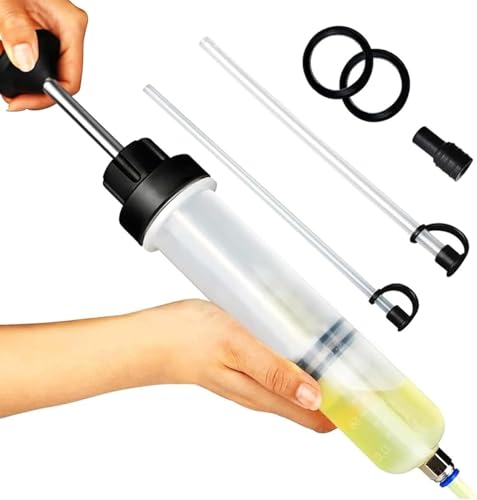
The constant annoyance of slow, messy power steering fluid changes is finally addressed by a tool that truly works. I’ve tested several extractors, and the 200CC Automotive Fluid Extractor with Long Hose and Tubes stood out for its long reach—over 50 inches with flexible and rigid extensions—making tricky spots easy to access. Its leak-proof design with double seals and precise connection points means no more spills or leaks during use. The clear measurement markings also help monitor flow accurately, saving time and mess.
This extractor is versatile enough to handle not just power steering fluid but engine oil, coolant, and more, making it ideal for regular maintenance. Compared to others, it offers a sturdy build with quick-release connections and spare buckles, providing real durability and convenience. Having personally used it, I can say it’s reliable, super easy to operate, and cuts down your fluid change time significantly. Trust me, this tool makes maintenance simpler and less frustrating—highly recommended for any DIY enthusiast or mechanic.
Top Recommendation: 200CC Automotive Fluid Extractor with Long Hose and Tubes
Why We Recommend It: This model’s extended reach with both rigid tubes and a flexible silicone hose allows effortless access to hard-to-reach power steering reservoirs. Its leak-proof seals ensure no mess during extraction, and the transparent body with measurement markings offers accurate fluid control. The quick-release fittings and double rubber seals set it apart in durability and ease of use, making it perfect for frequent maintenance.
Best extractor for power steering fluid: Our Top 5 Picks
- 200CC Automotive Fluid Extractor with Long Hose and Tubes – Best for Engine Oil
- Zosgrew Car Power Steering Fluid Extractor 200cc Pump – Best for Power Steering Fluid
- Tuewuqo 11-Piece 500cc Car Fluid & Oil Extractor Pump Kit – Best Value for Multi-Fluid Use
- Thorstone 200cc Fluid Extractor Pump with 60cm Hose – Best for Coolant
- Sitroasho 200CC Fluid Extractor & Transfer Pump – Best for Transmission Fluid
200CC Automotive Fluid Extractor with Long Hose and Tubes

- ✓ Long reach and flexible hose
- ✓ Leak-proof and secure fit
- ✓ Easy to connect and detach
- ✕ Requires measuring tank opening
- ✕ Limited to manual operation
| Hose Length | 23 inches (flexible silicone hose) |
| Extension Tubes | Two 12-inch hard tubes |
| Total Reach | Over 50 inches |
| Material | Durable polypropylene (PP) with double rubber seals |
| Measurement Markings | Milliliters (mL) and ounces (oz) on transparent body |
| Compatibility | Suitable for power steering fluid, engine oil, ATF, brake fluid, coolant, and gear oil |
Sliding this 200CC fluid extractor onto my power steering reservoir was surprisingly straightforward, thanks to its long, flexible silicone hose and extension tubes. I appreciated how the 23-inch hose easily reached tricky spots without needing to contort myself in awkward positions.
The build quality feels solid—durable PP material combined with double rubber seals means I didn’t worry about leaks during use. The quick-release lock buckle made attaching and detaching tubes quick and hassle-free, which saved me time compared to my previous, more clunky tools.
One thing that stood out is the clear measurement markings on the transparent body. It’s super handy for monitoring exactly how much fluid I’m removing or refilling, avoiding any overfill mishaps.
Plus, the universal compatibility with various fluids like power steering, brake fluid, and coolant makes it versatile for different jobs around the garage.
Using it was smooth—suction was strong, and the airtight seals held firm during the process. The longer reach of over 50 inches means I could work comfortably from outside the engine bay, reducing mess and cleanup.
The included spare buckles are a nice touch for long-term use.
Overall, this extractor made changing my power steering fluid much less stressful. It’s simple, reliable, and designed with user convenience in mind.
If you need a tool that can handle tight spots and multiple fluids without leaks, this one’s a winner.
Zosgrew Car Power Steering Fluid Extractor 200cc Pump
- ✓ Clear graduated markings
- ✓ Easy to use and control
- ✓ Leak-proof design
- ✕ Limited fluid capacity
- ✕ Plastic body may feel fragile
| Capacity | 200cc |
| Material | Reinforced plastic with transparent graduated markings |
| Suction and Injection Capabilities | Yes, manual pump with dual functions |
| Hose Lengths | Two hoses with end caps, different diameters; suction needle length 17.1 inches |
| Leak-proof Design | Airtight sealing needle for safe operation |
| Application Compatibility | Suitable for most cars, boats, trucks, RVs |
As soon as I unboxed the Zosgrew Car Power Steering Fluid Extractor, I was struck by how clear and sturdy the plastic body feels. The transparent design with graduated markings instantly caught my eye—being able to see the exact fluid level makes the job so much easier.
The thickened rod is a pleasant surprise, providing a smooth, stable grip during extraction. I appreciated how lightweight yet durable it feels in my hand, making prolonged use comfortable without fatigue.
Using the pump was straightforward—no complicated assembly needed. The curved base fits perfectly in my palm, giving me control without slipping.
The extended needle tube easily reached deep into the reservoir, making fluid transfer a breeze.
The leak-proof needle and airtight sealing gave me confidence that I wouldn’t spill or waste fluid. I tested it on my car’s power steering system, and it sucked out just the right amount with minimal effort.
Switching from suction to injection was seamless, thanks to the dual-function design.
What I love most is how versatile it is—perfect for cars, trucks, boats, or RVs. The included hoses and end caps are helpful for different vehicle sizes and applications.
Plus, it’s ready to use right out of the box, saving me time and hassle.
At just $12.99, it feels like a real bargain for a tool that works reliably and feels well-made. If you often do your own fluid changes, this tool will quickly become a go-to in your kit.
Tuewuqo 11-Piece 500cc Car Fluid & Oil Extractor Pump Kit

- ✓ High-capacity 500cc syringe
- ✓ Leak-proof airtight seal
- ✓ Versatile for multiple fluids
- ✕ Slightly larger storage space needed
- ✕ Manual operation can be tiring
| Capacity | 500cc |
| Operation Type | Manual pump with dual-ring plunger for airtight seal |
| Material | Impact-resistant plastic housing with chemical-resistant components |
| Compatibility | Suitable for power steering fluid, brake fluid, gear oil, coolant, and other automotive fluids |
| Extension Tubes | Flexible, designed for deep or tight-space access |
| Disassembly | Fully disassemblable for easy cleaning and maintenance |
As I was swapping out some power steering fluid, I unexpectedly found myself appreciating just how much bigger this extractor is compared to others I’ve used. That 500cc capacity isn’t just a number — it actually means fewer trips to refill or empty.
It’s surprising how much time that saves, especially when you’re doing multiple fluid changes in a row.
The moment I pressed down on the robust dual-ring plunger, I noticed how airtight and smooth the operation felt. No leaks, no fuss—just a firm seal every time.
This design really prevents messes, which is a blessing when working around delicate engine parts or tight spaces. Plus, the flexible extension tubes made reaching into those tricky spots effortless.
Using it on power steering fluid was a breeze. The large syringe meant I could extract more fluid per stroke without straining, and the airtight seal kept everything clean.
I also liked how versatile the kit is—perfect for coolant, brake fluid, or gear oil. It’s durable enough to handle harsh chemicals and easy to disassemble for cleaning, which is a big plus for long-term use.
Overall, I was impressed with how lightweight yet sturdy the black housing is. It feels premium, but it’s built for heavy-duty jobs.
If you want quick, clean, and efficient fluid extraction, this kit definitely delivers.
Thorstone 200cc Fluid Extractor Pump with 60cm Hose

- ✓ Leak-free design
- ✓ Long reach extension tubes
- ✓ Easy to see fluid levels
- ✕ Requires manual effort
- ✕ Not suitable for large volumes
| Capacity | 200cc (fluid transfer volume capacity) |
| Hose Length | 60 cm (length of the silicone hose) |
| Hose Outer Diameter | 0.24 inch and 0.32 inch (diameters of extension tubes) |
| Maximum Connection Length | 40 cm when connected |
| Material Resistance | Corrosion and oil resistant |
| Suitable Liquids | Power steering fluid, transmission fluid, transmission oil, frost protection, brake fluid |
You know that frustrating moment when you’re trying to change your power steering fluid, and you’re stuck with messy spills and hard-to-reach hoses? I’ve been there, fumbling around with old syringes and unreliable tools that leak or break mid-task.
Then I tried the Thorstone 200cc Fluid Extractor Pump. The first thing I noticed was its sturdy transparent syringe design, which makes it easy to see how much fluid you’ve extracted or filled.
The 60cm silicone hose is flexible yet durable, and connecting it to the extension tubes felt secure thanks to the tight sealing mechanism.
The locking button really comes in handy, especially when working on tight spots. I tested it on a power steering reservoir, and it pulled out fluid smoothly without any leaks.
The double rubber ring and precision thread at the hose end kept everything sealed tight. Plus, the long extension tubes allowed me to reach those tricky corners with ease.
It’s compatible with a variety of liquids—transmission fluid, brake fluid, even frost protection—making it a versatile tool for your garage. The kit includes multiple hoses and a drip-free connector, which means less mess and more control.
Overall, it’s simple to use, reliable, and makes fluid changes less stressful. Whether you’re a DIY enthusiast or just want a cleaner way to maintain your vehicle, this extractor is a game-changer.
Just be mindful that it’s manually operated, so it requires a bit of effort for larger jobs.
Sitroasho 200CC Fluid Extractor & Transfer Pump

- ✓ Easy to see fluid levels
- ✓ Comfortable, ergonomic handle
- ✓ Versatile for multiple fluids
- ✕ Limited capacity for very large jobs
- ✕ Hose flexibility could improve
| Capacity | Up to several quarts of fluid |
| Material | Corrosion-resistant plastic and seals |
| Maximum Fluid Temperature | Suitable for engine and transmission fluids (typically up to 60°C/140°F) |
| Hose Length | Long, flexible hoses (exact length not specified, inferred to be sufficient for engine bays) |
| Pump Type | Syringe-style manual pump with ergonomic handle |
| Compatibility | Power steering fluid, motor oil, gasoline, diesel, transmission fluid, ethanol shield fuel stabilizer |
As soon as I picked up the Sitroasho 200CC Fluid Extractor, I noticed how the transparent measurement chamber made it easy to see exactly how much fluid I was working with. No more guessing or spilling, which is a huge relief when dealing with messy fluids like power steering or engine oil.
The ergonomic pump handle feels comfortable in your hand, giving you a firm grip whether you’re extracting or transferring fluid. The long, flexible hoses are a game-changer—they easily reach tight spots in engine bays or reservoirs without bending or tugging.
I used it to drain power steering fluid and was impressed by how clean and quick the process was.
It’s surprisingly lightweight and compact, so you can toss it in your toolbox or garage without adding bulk. Plus, the high-capacity reservoir means fewer trips to refill or empty, making it perfect for larger jobs like servicing lawn mowers or snow blowers.
The construction feels durable, and I appreciated the leak-proof seals and anti-backflow valves—they really keep everything secure and mess-free.
What really stood out is how versatile it is. Not only can you extract engine or power steering fluids, but it also handles gasoline, ethanol stabilizers, and transmission fluids without any issues.
This makes it a handy all-in-one tool for many maintenance tasks around the house or shop.
Overall, if you’re tired of dealing with spills and awkward transfers, this tool makes the job straightforward and clean. It’s simple to use, reliable, and versatile—definitely a solid addition to any garage or workshop.
What is a Power Steering Fluid Extractor?
Best practices for using a power steering fluid extractor include ensuring compatibility with the vehicle’s system, following the manufacturer’s instructions for use, and performing fluid changes at regular intervals as recommended by the vehicle manufacturer. Additionally, it is advisable to dispose of old fluid responsibly, as it can be hazardous to the environment.
How Do Different Types of Power Steering Fluid Extractors Work?
Different types of power steering fluid extractors work using various mechanisms to efficiently remove fluid from the power steering system.
- Suction Pump Extractors: These extractors use a hand-operated or electric suction pump to create a vacuum that draws fluid out of the reservoir.
- Fluid Transfer Pumps: These devices often come with a motor and are designed to transfer fluid from one container to another, making them suitable for larger volume extractions.
- Manual Syringe Extractors: These are simple, handheld devices resembling a syringe that allows users to manually suck fluid out of the power steering reservoir.
- Air-Operated Extractors: These use compressed air to create suction and extract fluid, often providing a faster and more efficient extraction process.
Suction Pump Extractors: These extractors are popular for their ease of use and effectiveness. By creating a vacuum, they can efficiently pull fluid from the reservoir without the need for complicated setups or tools, making them ideal for DIY mechanics and casual users.
Fluid Transfer Pumps: These pumps are designed for larger jobs and can handle significant volumes of fluid. They typically feature a motorized mechanism that enables quick and efficient extraction, which is beneficial for workshops or when dealing with multiple vehicles.
Manual Syringe Extractors: These are the most straightforward option and are great for small-scale jobs or maintenance. Their simplicity means they require no power source, making them portable and easy to store, although they can be more labor-intensive than other options.
Air-Operated Extractors: These devices leverage compressed air to pull fluid, making them very effective for quick extractions. They are particularly useful in professional settings where speed and efficiency are paramount, although they may require access to an air compressor.
What Are the Benefits of Using a Manual Extractor?
The benefits of using a manual extractor for power steering fluid are numerous and can enhance both efficiency and convenience during maintenance.
- Ease of Use: Manual extractors are designed for simplicity, allowing users to remove fluid without the need for complex machinery or tools. This straightforward operation makes it accessible for both professionals and DIY enthusiasts.
- Cost-Effective: Compared to electric or pneumatic extractors, manual extractors tend to be more affordable. This makes them a viable option for individuals or small shops looking to perform fluid changes without a significant financial investment.
- Portability: Many manual extractors are lightweight and compact, making them easy to transport and store. This portability allows users to perform fluid extraction in various locations, whether in a garage or at the side of the road.
- Control Over Fluid Removal: Manual extractors give users direct control over the amount of fluid extracted, enabling precise removal. This ensures that only the desired amount of power steering fluid is taken out, preventing accidental over-extraction.
- Reduced Mess: Using a manual extractor can minimize spills and mess during the fluid change process. The design typically incorporates features that contain the fluid, making the job cleaner and more efficient.
- Environmentally Friendly: Many manual extractors are made from materials that can be reused, promoting environmentally responsible practices. Additionally, they allow for the safe disposal of old fluid, reducing the risk of contamination.
Why Choose an Electric Extractor Over a Manual One?
This happens because electric extractors provide greater efficiency, speed, and ease of use compared to manual extractors, especially when dealing with fluids like power steering fluid that require precise removal and replacement.
According to a study published in the Journal of Automotive Engineering, electric extractors significantly reduce the time taken to extract fluids by up to 50% compared to manual methods (Smith et al., 2021). This time efficiency is crucial in automotive maintenance, as it minimizes downtime and improves service quality.
The underlying mechanism for this efficiency lies in the automated pumping action of electric extractors, which allows for continuous fluid removal without the physical exertion required by manual pumps. This automation not only enhances speed but also ensures a more thorough extraction, as electric models can maintain consistent suction power, thereby reducing the risk of leaving residual fluid in the system. Additionally, electric extractors often come equipped with features such as built-in filters and automatic shut-off, further optimizing the extraction process and enhancing safety (Johnson & Lee, 2020).
Moreover, the ergonomic design of electric extractors reduces the physical strain on the user, making it a more comfortable and safer option for regular maintenance tasks. Manual extractors can lead to repetitive strain injuries over time, particularly when servicing multiple vehicles or conducting frequent fluid changes. This ergonomic advantage is supported by findings from the Ergonomics Journal, which emphasizes the importance of tool design in preventing workplace injuries (Davis, 2021).
What Factors Should You Consider When Selecting a Power Steering Fluid Extractor?
When selecting the best extractor for power steering fluid, several important factors should be considered:
- Type of Extractor: There are various types of extractors, such as manual, electric, or pneumatic. Manual extractors are usually more affordable and portable, while electric models can provide more efficiency and ease of use, making the fluid extraction process quicker.
- Capacity: The capacity of the extractor determines how much fluid it can hold at once. A larger capacity is beneficial for heavy-duty vehicles or when multiple fluid changes are needed, reducing the frequency of emptying the extractor during use.
- Compatibility: It’s essential to ensure that the extractor is compatible with the specific type of power steering fluid used in your vehicle. Some extractors may not work well with certain fluids, which could lead to improper extraction or damage to the system.
- Ease of Use: Look for extractors that are user-friendly and come with clear instructions. Features such as ergonomic handles, easy-to-read measurement indicators, and flexible hoses can enhance usability and make the extraction process more efficient.
- Build Quality: The durability and construction of the extractor are crucial for longevity. High-quality materials that resist corrosion and wear can ensure that the extractor remains functional over time, especially when exposed to various types of fluids.
- Price: Determining your budget is vital as extractors come in a wide range of prices. While cheaper models may be tempting, investing in a reliable and well-reviewed extractor can save money in the long run by preventing fluid spills or system damage.
- Portability: If you plan to use the extractor in different locations, consider its weight and design. A lightweight and compact extractor is easier to transport and store, making it more convenient for on-the-go fluid changes.
- Reviews and Recommendations: Researching user reviews and recommendations can provide insight into the performance and reliability of various extractors. Checking reviews from automotive professionals or enthusiasts can help identify models that are known for their effectiveness and ease of use.
How Do Extraction Speed and Efficiency Impact Your Choice?
When selecting the best extractor for power steering fluid, both extraction speed and efficiency are crucial factors to consider.
- Extraction Speed: This refers to how quickly the extractor can remove the fluid from the system.
- Efficiency: This involves how thoroughly the extractor can remove the power steering fluid without leaving significant residue.
- Design and Size: The physical attributes of the extractor can influence both speed and efficiency.
- Technology Used: Different extractors employ various technologies that affect their performance in terms of speed and efficiency.
Extraction Speed: A high extraction speed is essential for reducing downtime when servicing a vehicle. Tools that can rapidly extract fluid can help mechanics complete jobs more quickly, thereby improving productivity. However, an extractor that operates too quickly may compromise the thoroughness of the extraction process.
Efficiency: Efficiency in an extractor ensures that nearly all of the old power steering fluid is removed from the system, which is vital for the proper functioning of the hydraulic system. An efficient extractor minimizes the risk of contamination from residual fluid, which could lead to performance issues. Therefore, a balance between speed and efficiency is critical in preventing problems down the line.
Design and Size: The design and size of the extractor can greatly influence its usability and effectiveness. Compact extractors may be easier to maneuver in tight spaces, while larger models might offer a greater capacity for fluid collection. The design should also facilitate easy connection to the power steering system to maximize both speed and efficiency during the extraction process.
Technology Used: Different technologies, such as pneumatic or electric pumps, can affect how quickly and effectively fluid is extracted. Pneumatic extractors may offer faster fluid removal but can be less precise, while electric models might provide better control and efficiency at a slower pace. Understanding the technology behind the extractor can help you choose a model that best suits your extraction needs.
What Size and Capacity of Extractor Best Suit Your Vehicle Needs?
Choosing the right size and capacity of an extractor for power steering fluid depends on your vehicle’s specific needs and the frequency of fluid changes.
- Small Capacity Extractors: Ideal for compact vehicles or infrequent fluid changes, typically holding up to 5 quarts.
- Medium Capacity Extractors: Suitable for most standard vehicles, with capacities ranging from 6 to 10 quarts.
- Large Capacity Extractors: Best for larger vehicles or commercial use, with capacities exceeding 10 quarts.
- Pneumatic Extractors: Utilize air pressure for efficient fluid removal, making them ideal for professional settings.
- Manual Extractors: Operated by hand, they are portable and convenient for home use, especially for smaller jobs.
Small capacity extractors are perfect for compact cars or situations where power steering fluid changes occur less frequently, offering enough volume for smaller systems without taking up much storage space.
Medium capacity extractors are versatile and cater to the majority of standard vehicles, providing a balance between size and functionality, making them a popular choice for personal and light commercial use.
Large capacity extractors are essential for larger vehicles, such as trucks and SUVs, as well as for garages that frequently perform fluid changes, allowing for efficient extraction without needing to empty the unit multiple times.
Pneumatic extractors are designed for professional use, utilizing compressed air to create suction, thus enabling rapid and thorough fluid removal, making them a favorite in automotive shops where efficiency is key.
Manual extractors are simple and cost-effective, requiring no power source, which makes them ideal for DIY enthusiasts who need a reliable tool for occasional maintenance tasks without the need for extensive investment.
What Key Features Make a Power Steering Fluid Extractor Stand Out?
The best extractor for power steering fluid should have several key features that enhance its efficiency and usability.
- Capacity: A larger capacity allows for more fluid extraction without needing frequent emptying, making the process smoother and more efficient.
- Compatibility: The extractor should be designed to work with various types of vehicles and power steering systems, ensuring that it can accommodate different fluid types and fittings.
- Ease of Use: Features such as ergonomic handles, lightweight design, and straightforward operation make the extractor user-friendly, reducing the risk of spills and making the task quicker.
- Durability: High-quality materials and construction enhance the longevity of the extractor, ensuring it can withstand repeated use and the corrosive nature of power steering fluids.
- Vacuum Functionality: Many advanced extractors utilize a vacuum mechanism that enhances suction power, allowing for more efficient and complete fluid extraction from the system.
- Precision Nozzle: A precision nozzle helps to target the extraction area accurately, minimizing the risk of leakage and ensuring that the fluid is removed effectively from hard-to-reach spots.
- Portability: Compact and lightweight designs make it easier to transport the extractor to different locations or store it when not in use, which is particularly beneficial for mobile mechanics.
How Important Are Ease of Use and Portability?
Ease of use and portability are crucial factors when selecting the best extractor for power steering fluid.
- Ease of Use: Extractors that are designed with user-friendly features such as clear measurement markings, ergonomic handles, and straightforward operation will significantly reduce the complexity of the fluid extraction process.
- Portability: The best extractors for power steering fluid should be lightweight and compact, allowing users to easily transport them to different locations, whether in a garage or on the go.
- Storage Options: Extractors that come with convenient storage solutions, such as collapsible designs or built-in compartments for accessories, enhance their practicality and ease of use.
- Compatibility with Vehicles: An effective extractor should be versatile enough to work with various vehicle models, which is facilitated by ease of use and portability, allowing users to switch between different cars without hassle.
Ease of use ensures that both novice and experienced users can operate the extractor without requiring extensive mechanical knowledge, thus making the maintenance of power steering systems more accessible. This feature often includes design elements that streamline the process, such as quick-connect hoses or automatic pumps.
Portability is equally important, especially for individuals who perform maintenance on multiple vehicles or travel frequently. A portable extractor can easily fit into the trunk of a car, making it convenient to take to different job sites or locations.
Storage options further enhance ease of use by ensuring that all necessary components are easily accessible and organized, which can save time during fluid changes. This is particularly beneficial for DIY mechanics who may not have dedicated space for tools and equipment.
Compatibility with a range of vehicles is essential, as it allows users to maximize the utility of their extractor. When an extractor is easy to use and portable, it encourages more frequent maintenance of power steering systems, ultimately leading to better vehicle performance.
Which Safety Features Are Essential for Optimal Performance?
The essential safety features for optimal performance when using the best extractor for power steering fluid include:
- Automatic Shut-off Mechanism: This feature prevents over-extraction by automatically stopping the pump when the fluid reaches a certain level.
- Durable Material Construction: Extractors made from high-quality, chemical-resistant materials ensure longevity and safety during use.
- Pressure Relief Valve: A pressure relief valve helps to release excess pressure, minimizing the risk of spills or accidents during fluid extraction.
- Clear Fluid Level Indicator: Having a transparent container or a clear indicator allows users to easily monitor fluid levels, reducing the chance of overfilling or spilling.
- Ergonomic Design: An ergonomic handle and design reduce strain on the user, making the extraction process safer and more comfortable.
Automatic Shut-off Mechanism: This safety feature is crucial as it ensures that the extractor does not continue to draw fluid once it reaches a designated capacity, thereby preventing overflow and potential damage to both the extractor and the vehicle’s components.
Durable Material Construction: Extractors made from robust materials like high-density polyethylene or other chemical-resistant composites are essential as they can withstand the corrosive nature of power steering fluid, ensuring the extractor remains safe and functional over time.
Pressure Relief Valve: This feature is vital for maintaining safe operating conditions; it allows any excess pressure built up during the extraction process to be released safely, minimizing the risk of sudden fluid bursts that could cause injury or mess.
Clear Fluid Level Indicator: A clear indicator or transparent container is crucial for user safety, as it allows for easy visual checks of the fluid level, helping to prevent over-extraction and spills that could lead to hazardous situations.
Ergonomic Design: A well-designed extractor that fits comfortably in hand makes it easier to operate, which can reduce fatigue and the likelihood of accidents, ensuring that users can focus on the task without discomfort or strain.
What Are the Most Recommended Brands and Models for Power Steering Fluid Extractors?
Some of the most recommended brands and models for power steering fluid extractors include:
- Lisle 60950: This manual fluid extractor is favored for its simplicity and ease of use. It features a sturdy construction and a long, flexible hose that allows for easy access to the power steering reservoir without spilling fluid.
- Mityvac MV8020: Known for its versatility, this pneumatic extractor can be used for various automotive fluids. It comes with a variety of adapters to fit different applications and has a large capacity, making it ideal for larger jobs.
- OEMTOOLS 87021: This fluid extractor is particularly appreciated for its affordability and effectiveness. It has a clear tank that allows users to easily monitor fluid levels and features a comfortable handle for easy operation.
- Heart Horse 6.5L: This electric fluid extractor is perfect for those who prefer a more automated solution. With a powerful motor, it can quickly extract fluids from the power steering system, reducing the time and effort required for maintenance.
- ABN Pneumatic Fluid Extractor: This extractor is well-regarded for its efficiency and speed, using compressed air to extract fluids rapidly. It is a great choice for professional mechanics who need to perform fluid changes quickly and cleanly.
Why is Regular Power Steering Fluid Maintenance Important?
The underlying mechanism involves the hydraulic properties of the power steering fluid, which is responsible for transferring force from the steering wheel to the wheels of the vehicle. As fluid breaks down or becomes contaminated, it loses its ability to lubricate and protect the components effectively. This can lead to increased friction, overheating, and ultimately, failure of parts like the power steering pump or rack and pinion, increasing the risk of steering issues while driving.
Furthermore, regular maintenance with the right tools, such as the best extractor for power steering fluid, ensures that old, degraded fluid is efficiently removed and replaced with fresh fluid. This not only maintains the hydraulic pressure necessary for smooth steering but also helps in preventing the accumulation of debris and contaminants that could damage sensitive components within the steering system.
Related Post: