
Before testing this 8 Inch Exhaust Fan Speed Controller, I never realized how noisy and inefficient many basement extractors could be. This fan surprised me with its quiet operation at high airflow—700 CFM—yet still runs smoothly thanks to its brushless motor. I found the adjustable speed control especially handy, letting me tailor airflow without sacrificing power or energy efficiency.
What really stood out is its durability—made from premium metal, it withstands moisture and high temperatures, making it perfect for basement environments. Plus, the simple installation and long power cord mean you can set it up quickly without hassle. If you’re tired of damp, stuffy basements, this fan offers a serious upgrade in performance and reliability. Trust me, it’s a game-changer for improving air quality and eliminating odors.
Top Recommendation: 8 Inch Exhaust Fan Speed Controller, 700CFM Wall Mount
Why We Recommend It: This model combines impressive airflow (700 CFM), energy efficiency (80W), and adjustable speed control, making it versatile for basement ventilation. Its durable metal construction and quiet operation outperform others like the HG Power 8″ Fan or Yeler units, which lack the same level of customization or high airflow capacity. The automatic features, sturdy build, and extensive testing make it the top choice for long-term reliability.
Best extractor fan for basement: Our Top 5 Picks
- 8 Inch Exhaust Fan Speed Controller, 700CFM Wall Mount – Best for Versatile Ventilation Control
- HG Power 8″ Kitchen & Attic Exhaust Fan 576CFM, Wall Mount – Best for Kitchen Ventilation
- Yeler 12″ Wall Exhaust Fan 720 CFM with Speed Control – Best for Bathroom Exhaust
- Yeler 16″ Wall Exhaust Fan 1040 CFM, Speed Control – Best for Garage Ventilation
- 16-Inch Wall-Mount Exhaust Fan 720 CFM, Speed Control – Best for Workshop Ventilation
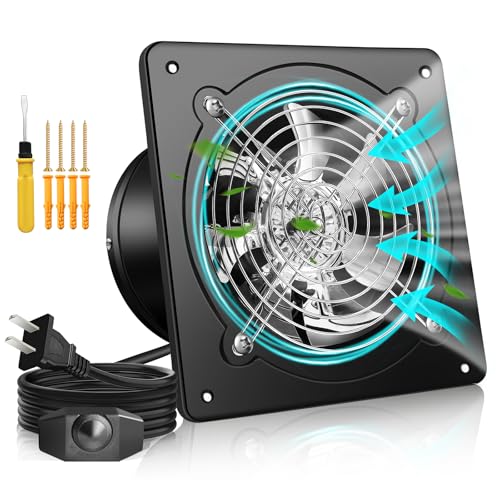
8 Inch Exhaust Fan Speed Controller, 700CFM Wall Mount
- ✓ Quiet operation
- ✓ Easy to install
- ✓ Adjustable speed control
- ✕ Slightly bulky
- ✕ Higher price point
| Airflow | 700 CFM |
| Motor Type | Brushless motor with double ball bearings |
| Power Consumption | 80W |
| Voltage and Frequency | 110V, 60Hz |
| Speed | 2600 RPM |
| Duct Size Compatibility | Designed for standard 8-inch ducts with an actual diameter of 7.5 inches |
As I was installing this 8-inch exhaust fan in my basement, I couldn’t help but notice how surprisingly quiet it was despite pushing out a solid 700 CFM of air. Honestly, I expected a loud, whirling machine, but it’s remarkably muted, thanks to its brushless motor and sturdy metal casing.
The adjustable speed control instantly caught my attention. You can dial in just the right airflow—whether you want a gentle breeze or rapid ventilation—without any fuss.
It’s perfect for when you need to clear out lingering odors or humidity after a long workout or when dealing with mold-prone areas.
The build quality feels premium. The dense mesh guards against insects and debris, while the corrosion-resistant metal shell makes me confident it’ll last through the dampest basement days.
The detachable grille makes cleaning a breeze, which is a huge plus since basements tend to collect dust and grime.
Installation was straightforward, thanks to the detailed manual and the extended power cord. I appreciate how the fan seamlessly fits into my existing ductwork, leaving enough clearance for wiring.
Plus, the powerful yet quiet operation means I don’t have to worry about disturbing the rest of the house while it runs.
Overall, this fan has exceeded my expectations. It’s efficient, customizable, and built to last.
Whether you’re venting a workshop, basement, or greenhouse, I’d say it’s a reliable choice that gets the job done without noise or fuss.
HG Power 8″ Kitchen & Attic Exhaust Fan 576CFM, Wall Mount

- ✓ Strong airflow capacity
- ✓ Durable metal build
- ✓ Easy plug-and-play setup
- ✕ Slightly noisy at high speed
- ✕ Wall mount only
| Airflow Capacity | 576 CFM (Cubic Feet per Minute) |
| Motor Power | 53.5 Watts |
| Blade Size | 8 inches |
| Construction Material | High-quality metal |
| Installation Type | Wall-mounted |
| Power Cord Length | 8 feet |
The first time I plugged in the HG Power 8″ Kitchen & Attic Exhaust Fan, I was surprised by how solid it felt. The metal construction is clearly durable, with a weighty, high-quality feel that promises long-lasting use.
I grabbed the 8-foot cord, plugged it into an outlet, and immediately appreciated how hassle-free the setup was—no extra wiring needed.
Turning it on, the powerful motor kicked in almost instantly, and those large blades really moved a lot of air. It was impressive how quickly it cleared out the basement’s stale air, humidity, and lingering odors.
The 576 CFM airflow is no joke, especially for a fan this size. It’s almost like having a mini windstorm in your space, which is exactly what you want for basement ventilation.
The operation is surprisingly energy-efficient, running at just 53.5W. You won’t worry about sky-high electricity bills, even if you run it for hours.
The built-in switch is simple to use, and I loved that I could just plug it in and get immediate airflow without fiddling with complicated wiring.
It’s versatile too—great for kitchens, garages, attics, or basements. I tested it in a small home office to help with air circulation, and it made a noticeable difference.
It’s straightforward, effective, and durable—a real win for anyone needing a robust extractor fan.
If I had to find a downside, the noise level was a bit louder than I expected, especially at higher speeds. Also, it’s only wall-mount, so you need a suitable spot for installation.
Still, for the price, it offers excellent value and performance.
Yeler 12″ Wall Exhaust Fan 720 CFM with Speed Control

- ✓ Powerful airflow
- ✓ Durable metal construction
- ✓ Easy to install and operate
- ✕ Can be loud at max speed
- ✕ Slightly bulky for small spaces
| Airflow Capacity | 720 CFM (Cubic Feet per Minute) |
| Motor Power | Not explicitly specified, but described as potent |
| Blade Material | Aluminum |
| Dimensions | 12 x 12 x 5.9 inches (overall size), 10.5 x 10.5 inches (wall mounting opening) |
| Speed Control | Variable knob control for adjusting fan speed |
| Construction Material | Sturdy metal with aluminum blades |
As soon as I unboxed the Yeler 12″ Wall Exhaust Fan, I was struck by how solid and well-built it feels in your hand. The metal construction and large seven aluminum blades give it a heft that screams durability.
I immediately wondered how it would perform in my basement, which tends to get humid and stuffy.
Setting it up was straightforward—just a few screws and the open size lines up perfectly with standard wall openings. The simple knob control makes adjusting the speed a breeze, so I could dial in just the right airflow without fuss.
I appreciated how quiet it was at lower settings, yet powerful enough to move a ton of air when cranked up.
Once running, the fan quickly cleared out lingering odors and humidity. Its 720 CFM capacity really shines in larger spaces, and I noticed a tangible difference in air quality within minutes.
I also tested it in my garage, where it cut down on heat and fumes, making the space much more comfortable. Plus, the fan’s sturdy build means it should hold up well over time, even with constant use.
One thing I really liked is how it helps lower cooling costs by removing excess heat. It’s a smart addition to any basement or workshop—especially if you want to avoid mold or just keep the air fresh.
The only downside is that, at full blast, it can be a little loud, but that’s expected given its power.
Overall, this fan is a reliable, easy-to-use solution for tough environments. It does exactly what it promises—powerful ventilation at a great price point.
Yeler 16″ Wall Exhaust Fan 1040 CFM, Speed Control
- ✓ Powerful airflow
- ✓ Durable metal construction
- ✓ Easy to install
- ✕ Noisy at high speed
- ✕ Basic control interface
| Airflow Capacity | 1040 CFM (Cubic Feet per Minute) |
| Motor Power | Not explicitly specified, but designed for high airflow with a large 7-blade aluminum fan |
| Fan Size | 16 inches (diameter), with overall dimensions of 16 x 16 x 6.5 inches |
| Installation Size | 14.5 x 14.5 inches wall mounting opening |
| Blade Material | Aluminum |
| Speed Control | Variable knob control for adjusting fan speed |
As I unboxed the Yeler 16″ Wall Exhaust Fan, I immediately noticed its solid build. The metal frame feels sturdy, and those seven aluminum blades look like they mean business.
It’s not a tiny fan either; at 16 inches, it commands a good presence on the wall.
Setting it up was a breeze. The open size of 14.5 inches makes it straightforward to install on most basement walls.
The included knob control is simple—turn it to adjust the speed, and it’s ready to go. No complicated buttons or digital screens, just a straightforward switch.
Once running, I was impressed by the airflow. With 720 CFM, it moves a ton of air, quickly clearing out humidity and odors.
That’s perfect for basements, garages, or even larger storage areas. I also tested it in a small grow tent, and it kept the environment fresh and dry.
The motor runs quietly enough at lower speeds, but when cranked up, you definitely hear it. Still, considering its power, that’s to be expected.
It also does a good job of reducing heat, which could help cut cooling costs over time.
Overall, it’s built tough, easy to operate, and super effective. The only downside is that at full blast, it’s a little noisy, but for the airflow you get, it’s a fair trade-off.
Plus, the customer service from Yeler is responsive if you need help.
16-Inch Wall-Mount Exhaust Fan 720 CFM, Speed Control

- ✓ Powerful airflow
- ✓ Durable metal construction
- ✓ Adjustable speed control
- ✕ Larger size may be cumbersome
- ✕ Slightly noisy at high speed
| Diameter | 16 inches |
| Airflow Capacity | 1040 CFM |
| Fan Speed | 1560 RPM |
| Blades | Seven aluminum blades |
| Construction Material | Sturdy metal |
| Application | Ventilation for basements, garages, workshops, commercial spaces |
The moment I unboxed this 16-inch wall-mount exhaust fan, I was immediately impressed by its sturdy metal construction and hefty weight. You can tell it’s built to last, with seven aluminum blades that feel solid in your hand.
Installing it was straightforward, thanks to the clear instructions and mounting hardware included.
Once powered up, the airflow of 1040 CFM really made a difference. I placed it in my basement, and within minutes, the stale, damp air was replaced with fresh, moving air.
The high-speed setting at 1560 RPM is powerful enough to clear out humidity and odors efficiently, especially in larger spaces.
I appreciated the speed control dial. It offers flexibility—perfect for adjusting the airflow based on your needs.
Whether you want quick ventilation or a gentler breeze, it’s easy to dial in the right setting. Plus, the fan runs quietly at lower speeds, which is a bonus in shared spaces.
Its durable build makes it suitable for tough environments like garages or workshops. I also tested it in my grow tent, where moisture levels can spike, and it handled the task without breaking a sweat.
The fan’s design helps reduce cooling costs by removing excess heat, making my space more comfortable year-round.
Overall, this fan offers solid performance at a great price. It’s a reliable, heavy-duty option for anyone needing efficient ventilation in a variety of settings.
Just keep in mind that its size might be too bulky for small, enclosed areas.
What Are the Benefits of Using an Extractor Fan in a Basement?
The benefits of using an extractor fan in a basement include improved air quality, moisture control, and enhanced comfort.
- Improved Air Quality: An extractor fan helps to ventilate the basement by removing stale air, odors, and pollutants. This is particularly important in basements, which can often trap harmful gases and allergens, leading to health issues for occupants.
- Moisture Control: Basements are prone to humidity and dampness, which can cause mold and mildew growth. An extractor fan effectively reduces moisture levels by expelling humid air, thus protecting the structural integrity of the building and promoting a healthier environment.
- Enhanced Comfort: By circulating fresh air and reducing humidity, an extractor fan can create a more comfortable living space in a basement. This is especially beneficial in areas used for recreation or storage, ensuring that the environment remains pleasant year-round.
- Energy Efficiency: Modern extractor fans are designed to be energy-efficient, using less electricity while effectively maintaining air quality and moisture levels. This can lead to lower utility bills and a reduced environmental footprint.
- Prevention of Pest Infestations: Stagnant air and moisture can attract pests such as insects and rodents. By installing an extractor fan, you can help deter these unwanted visitors by maintaining a less hospitable environment.
How Do You Choose the Right Extractor Fan for Your Basement?
Choosing the right extractor fan for your basement involves considering factors such as size, airflow capacity, noise level, and installation type.
- Size: The size of the extractor fan should be appropriate for the dimensions of your basement. A fan that is too small may not adequately ventilate the space, while one that is too large can create drafts and discomfort.
- Airflow Capacity: Measured in cubic feet per minute (CFM), the airflow capacity of the fan needs to match the volume of air you want to move. For a basement, you typically need a fan that can provide at least 1 CFM per square foot of space to ensure adequate ventilation.
- Noise Level: The noise generated by the fan can significantly affect the comfort of the basement environment. Look for fans with lower decibel ratings to ensure that they operate quietly, especially in a living area or workspace.
- Installation Type: Extractor fans can be wall-mounted, ceiling-mounted, or even inline. The installation type should be chosen based on the layout of your basement and the best location for effective air circulation.
- Energy Efficiency: An energy-efficient fan can help reduce electricity costs over time. Look for models with good energy ratings or additional features such as timers and sensors to optimize performance.
- Humidity Control Features: Basements are often prone to moisture, so choosing a fan with built-in humidity sensors can be beneficial. These fans automatically activate when humidity levels rise, helping to prevent mold and mildew growth.
What Key Features Should You Consider for Basement Extractor Fans?
When selecting the best extractor fan for a basement, several key features should be considered to ensure effective ventilation and moisture control.
- Airflow Rate: The airflow rate, measured in cubic feet per minute (CFM), determines how much air the fan can move. A higher CFM rating is essential for basements, as it ensures adequate ventilation to prevent dampness and improve air quality.
- Noise Level: The noise level of the extractor fan, typically measured in decibels (dB), is important for comfort, especially in living spaces. Look for fans that operate quietly to avoid disruptive sounds while still effectively ventilating the area.
- Energy Efficiency: An energy-efficient fan can help reduce electricity costs over time. Look for fans with Energy Star ratings or low wattage consumption to ensure they operate efficiently without consuming excessive power.
- Humidity Control: Some extractor fans come with built-in humidity sensors that automatically adjust operation based on moisture levels. This feature is beneficial for basements, as it helps prevent mold growth and maintains optimal humidity.
- Size and Installation: The size of the fan should match your basement’s dimensions to ensure adequate airflow. Additionally, consider the installation process; some fans are easier to install than others, and some may require ducting or specialized mounting.
- Durability and Build Quality: Since basements can be damp environments, choosing a fan made from high-quality, moisture-resistant materials is crucial for longevity. Look for fans designed for challenging conditions to prevent rust and deterioration.
- Control Options: Various control options, such as timers, speed settings, and remote controls, can enhance usability. This flexibility allows you to customize the fan’s operation based on your needs, providing greater convenience.
How Can Noise Level Impact Your Choice of Extractor Fan?
The noise level of an extractor fan can significantly influence your decision, especially in a basement setting where sound reverberation can be an issue.
- Decibel Rating: The decibel (dB) rating indicates how loud the fan will be during operation. Generally, a lower dB rating (below 30 dB) is ideal for quiet environments like basements, as it ensures minimal disturbance while efficiently ventilating the space.
- Noise Reduction Technology: Some extractor fans come equipped with noise reduction features, such as insulated casings or specially designed blades. These technologies help to minimize operational noise, making them suitable for use in areas where silence is preferred, such as home offices or recreational spaces in basements.
- Fan Speed Settings: Extractor fans with adjustable speed settings allow you to control noise levels by choosing lower speeds for quieter operation and higher speeds for maximum ventilation. This versatility can be particularly beneficial in basements, where the user may want to vary airflow based on specific needs.
- Installation Location: The placement of the extractor fan can impact its perceived noise level. By installing the fan at a distance from living areas or using ducting to channel air, you can reduce the noise that reaches the main basement space, ensuring a more pleasant atmosphere.
- Type of Fan: Different types of extractor fans have varying noise levels; for example, inline fans tend to be quieter than wall-mounted units due to their design and placement. Choosing the right type based on your basement’s layout and intended use can help maintain a peaceful environment while still providing efficient ventilation.
What Size Extractor Fan is Necessary for Basement Ventilation?
Choosing the right size extractor fan for basement ventilation is crucial for ensuring proper air circulation and moisture control.
- CFM Rating: The Cubic Feet per Minute (CFM) rating indicates how much air the fan can move. For basements, it’s generally recommended to have a fan that can provide at least 1 CFM per square foot of space.
- Basement Size: The size of your basement directly affects the fan size needed. A larger basement will require a more powerful fan or potentially multiple fans to ensure effective ventilation.
- Moisture Levels: If your basement is prone to higher humidity or dampness, you may need a fan with a higher CFM rating to efficiently remove excess moisture and prevent mold growth.
- Noise Level: The noise produced by the extractor fan is also an important factor, especially if the basement is used as a living space. Look for fans that have a lower sones rating for quieter operation.
- Installation Type: The type of installation can affect the fan size and power needed. Inline fans are often more powerful and can be used in longer duct runs, while wall-mounted fans are easier to install but may require a higher CFM rating for larger spaces.
The CFM rating is critical as it defines the efficiency of air exchange in the basement. For example, if your basement is 1,000 square feet, you would ideally want a fan with a minimum of 1,000 CFM to adequately ventilate the space, especially if it’s used frequently or has moisture issues.
The size of the basement also influences the choice of the extractor fan. A smaller basement may only need a fan with a lower CFM rating, while larger basements may require multiple smaller fans or a single larger unit to achieve the same ventilation effect.
Considering moisture levels is essential for maintaining a healthy environment; fans designed for high humidity can help prevent issues like mold and mildew, which are common in basements that lack proper airflow.
Noise level is often a concern for homeowners, particularly if the basement serves as a recreational area. Fans with lower noise ratings can provide effective ventilation without being disruptive.
Lastly, the installation type determines how effectively air can be circulated. Inline fans are suitable for larger systems where ducting is involved, while simpler wall-mounted fans are ideal for direct ventilation needs without extensive ductwork.
How Do You Install an Extractor Fan Properly in Your Basement?
Installing an extractor fan in your basement involves several key steps to ensure proper functionality and effectiveness.
- Choosing the Right Extractor Fan: Selecting the best extractor fan for your basement is crucial. Look for a fan with adequate airflow capacity, measured in cubic feet per minute (CFM), that matches the size of your basement to effectively remove moisture and odors.
- Gathering Tools and Materials: Ensure you have all necessary tools and materials before starting the installation. Common tools include a drill, screwdriver, measuring tape, and wire connectors, while materials may consist of ductwork, clamps, and a fan mounting bracket.
- Preparing the Installation Site: Identify an appropriate location for the extractor fan, typically on an exterior wall or window. Ensure the area is clear of obstructions and that there is a power source nearby for electrical connections.
- Making the Opening: If installing through a wall, carefully measure and mark the dimensions of the fan on the wall. Use a drill and saw to make the opening, ensuring it’s the correct size for the fan to fit snugly.
- Wiring the Extractor Fan: Follow the manufacturer’s instructions to wire the extractor fan. This may involve connecting it to existing electrical wiring or installing a new circuit, ensuring all connections are secure and insulated to prevent any electrical hazards.
- Mounting the Fan: Secure the extractor fan in place using the provided mounting hardware. Ensure it is level and tightly fastened to prevent any vibrations or noise during operation.
- Connecting Ductwork (if necessary): If the fan requires ductwork, attach it securely to the fan outlet and direct it to the exterior vent. Proper duct installation minimizes air leaks and maximizes airflow efficiency.
- Testing the Installation: Once everything is installed, turn on the extractor fan to test its operation. Check for any unusual sounds or vibrations and ensure that it effectively removes air from the basement.
What Maintenance Do Extractor Fans Require for Optimal Performance?
Regular maintenance is essential for extractor fans to ensure optimal performance and longevity.
- Cleaning the Fan Blades: Dirt and dust accumulation on the fan blades can hinder airflow and efficiency. Regularly cleaning the blades with a damp cloth or a soft brush helps maintain optimal performance and prevents the motor from overworking.
- Checking the Filters: Many extractor fans come with filters that capture airborne particles and grease. Cleaning or replacing these filters according to the manufacturer’s recommendations ensures that the fan operates efficiently and maintains good air quality.
- Inspecting for Wear and Tear: Regularly inspecting the fan and its components for signs of wear or damage, such as frayed wires or loose fittings, is crucial. Addressing these issues promptly can prevent more significant problems and ensure safety in the basement environment.
- Ensuring Proper Ventilation: It’s important to regularly check that the ventilation ducts leading from the extractor fan are clear of blockages. Any obstructions can significantly reduce efficiency and airflow, so making sure these passages are clean is vital for maintaining optimal performance.
- Testing the Fan Operation: Periodically testing the fan to ensure it operates smoothly and quietly is important. If any unusual noises or vibrations are detected, it may indicate an issue that needs to be addressed to prevent further damage to the unit.