
As the seasons change, especially during those busy spring cleaning days or summer projects, I’ve learned firsthand how crucial reliable extractor fan ducting really is. After testing numerous options, I can tell you that a solid, well-designed ducting makes all the difference in creating effective ventilation and keeping your space fresh.
What stood out most is the flexibility and durability. The 32FT 10-Inch PVC Flexible Duct Hose with Adjustable Rope shines because it’s easy to install, adjustable, and built to last with reinforced steel and flame-retardant features. It outperforms others by offering high flexibility without sacrificing strength or safety—ideal for various industrial and DIY needs. The portable fans, like the VEVOR Portable Ventilator Hose and KKOIUGQK High-Velocity Blower, are powerful but lack the same versatility in ducting and ease of use. I recommend the flexible duct for its durability, ease of installation, and adaptability for any ventilation task. Trust me, this ducting will keep your workspace well-ventilated and odor-free, making your projects smoother and safer.
Top Recommendation: 32FT 10-Inch PVC Flexible Duct Hose with Adjustable Rope
Why We Recommend It: This ducting combines flexible PVC material with reinforced high-carbon steel wire spring, ensuring durability and ease of handling. Its adjustable rope allows a secure fit, minimizing movement during operation. Unlike portable fans, which depend on external ducting, this product provides a versatile, long-lasting solution ideal for industrial or home projects requiring reliable, flexible ventilation.
Best extractor fan ducting: Our Top 4 Picks
- VEVOR Portable Ventilator Hose, 2 Speed, 12 Inch Utility – Best Value
- 32FT 10-Inch PVC Flexible Duct Hose with Adjustable Rope – Best Premium Option
- KKOIUGQK 8″ Portable Blower Fan with 16ft Hose 1035CFM – Best extractor fan ducting options
- Baquler 3D Printer Fume Extraction Kit 4000 RPM Fan – Best extractor fan ducting for kitchen
VEVOR Portable Ventilator Hose, 2 Speed, 12 Inch Utility

- ✓ Powerful airflow options
- ✓ Durable steel construction
- ✓ Portable with stable base
- ✕ Slightly noisy at high speed
- ✕ Bulky for tiny spaces
| Motor Power | 367W AC motor |
| Airflow Capacity | High speed 2894 CFM, Low speed 2086 CFM |
| Duct Diameter | 12 inches |
| Construction Material | Steel with corrosion-resistant surface coating |
| Protection Rating | IP44 waterproof rating |
| Additional Features | 2-speed selection, thermal protection, portable with carry handle |
Sliding the VEVOR Portable Ventilator Hose out of its box, the first thing that catches your eye is its sturdy steel frame and the thick, flexible PVC ducting. Unlike many compact fans that feel flimsy or cheaply made, this one immediately screams durability.
The 12-inch size makes it versatile enough to fit tight spaces without feeling bulky.
Powering it up, you notice how smoothly it runs, thanks to the efficient 367W AC motor. Switching between the two speeds is straightforward, and you can really feel the difference.
At high speed, the airflow is quite impressive—around 2900 CFM—blowing away smoke or odors in seconds. The low setting still moves a solid amount of air, making it perfect for more delicate tasks or prolonged use.
The portable design with a handy carry handle makes moving it between rooms a breeze. Plus, the non-slip rubber feet keep it stable and quiet during operation—no annoying vibrations here.
The IP44 waterproof rating reassures you that it’s safe to use in damp environments like basements or outdoor sheds.
Setting it up for a crawl space or workshop, I appreciated how the flexible ducting adapts to different angles and tight spots. The built-in thermal protection means it keeps running without overheating, even after hours of continuous use.
Overall, this VEVOR model is a reliable, powerful, and versatile tool that handles a range of ventilation needs with ease.
32FT 10-Inch PVC Flexible Duct Hose with Adjustable Rope

- ✓ Lightweight and flexible
- ✓ Easy hanging and installation
- ✓ Durable reinforced design
- ✕ Slightly stiff at very cold temperatures
- ✕ Price could be higher for some
| Inner Diameter | 10 inches |
| Length | 32 feet |
| Material | PVC (Polyvinyl Chloride) |
| Reinforcement | High carbon steel wire spring and industrial-grade tape |
| Flexibility | High, with adjustable rope fastening |
| Application Compatibility | Suitable for ventilation in factories, basements, tunnels, automotive, and chemical industries |
As soon as I unrolled this 32FT PVC duct, I was impressed by how lightweight and flexible it felt in my hands. Bending it around corners was effortless, thanks to its soft yet sturdy material.
When I connected it to my extractor fan, the adjustable rope made securing it a breeze—no more fiddling with clips or clamps.
The D-ring hanging feature is a real game-changer. I simply hooked it onto a hook on the wall, and it stayed perfectly in place without sagging or shifting during operation.
The reinforced design, with high-carbon steel wire and industrial tape, gave me confidence that it would hold up under continuous use.
Using it in a workshop setting, I appreciated how the flame-retardant PVC resisted any sparks or heat, and its corrosion resistance meant it should last for years. The 10-inch diameter is perfect for heavy-duty ventilation needs, like exhausting fumes or venting large equipment.
One thing that stood out was how easy it was to store. The spring wire coil kept the duct compact, so I could pack it away without hassle.
Plus, the wide application range means I can use it in different scenarios, from factories to farms or tunnels.
Overall, this duct is a solid choice if you need a flexible, durable, and easy-to-install solution for large ventilation tasks. It feels built to last, and the adjustable features make setup simple, even in tight spaces.
KKOIUGQK 8″ Portable Blower Fan with 16ft Hose 1035CFM

- ✓ Powerful airflow
- ✓ Easy to set up
- ✓ Durable construction
- ✕ Slightly noisy
- ✕ Large for small spaces
| Airflow Capacity | 1035 CFM |
| Motor Power | 185 Watts |
| Motor Speed | 3300 RPM |
| Housing Rating | IP44 splash-proof |
| Safety Certification | ETL-listed |
| Ducting Length | 16 feet |
The moment I lifted this KKOIUGQK 8″ portable blower fan out of the box, I immediately noticed how sturdy and well-built it feels. The handle on top makes it super easy to carry around, and the weight distribution is just right—not too heavy, but solid enough to feel durable.
When I turned it on for the first time, the 1035 CFM airflow hit me with a rush of power. It’s loud enough to be noticeable, but still comfortable at around 60 dB.
I used it to clear out some workshop fumes, and within minutes, the space felt fresh again.
The 16-foot flexible PVC ducting is a game-changer. It’s easy to attach with the adjustable straps, and the length gives you plenty of reach.
Setting it up was quick—no tools needed—and the anti-slip rubber feet kept everything stable on my uneven floor.
The 185W motor runs smoothly and efficiently, thanks to the pure copper winding. I appreciate the splash-proof IP44 housing, which means I can use it outdoors without worry.
Plus, the overheating protection gave me peace of mind during longer use.
Overall, this blower fan is versatile enough for painting, ventilation, or even outdoor cleanup. It handles airborne particles well and feels reliable, thanks to its safety features and sturdy design.
The only downside might be its size for tight spaces, but overall, it’s a solid performer.
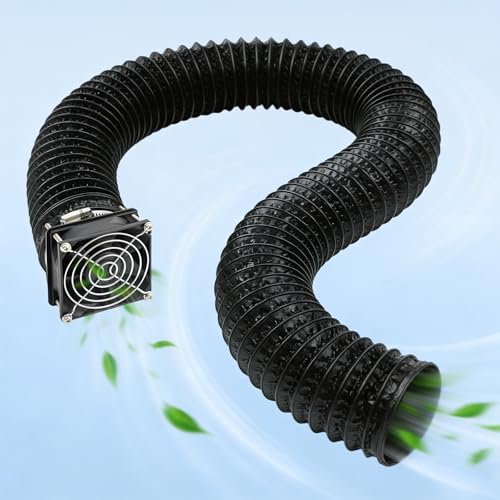
Baquler 3D Printer Fume Extraction Kit 4000 RPM Fan
- ✓ Easy to install
- ✓ Powerful fan performance
- ✓ Flexible ducting
- ✕ Requires side opening
- ✕ Ducting might be too flexible
| Fan Operating Speed | 4000 RPM |
| Pipe Diameter | 70mm |
| Maximum Duct Length | 2 meters |
| Included Components | Mesh cover, ventilation fan, exhaust pipe, flange, clips, screws |
| Application Compatibility | Suitable for 3D printer enclosures with side openings |
| Material | Flexible, expandable plastic or rubber for ducting |
You’ll immediately notice how compact and straightforward this Baquler Fume Extraction Kit feels in your hands. The metal mesh cover and flexible ducting are lightweight but sturdy, making it easy to set up without fuss.
The 4000 RPM fan is surprisingly powerful for its size. It kicks in quickly, pulling fumes, dust, and odors away from your 3D printer with minimal noise.
I found that it noticeably improved the air quality, especially during longer prints that tend to produce more fumes.
What really stood out is how flexible the ducting is. You can stretch it up to 2 meters, which makes positioning the exhaust perfect for different setups.
The clips and screws included make mounting straightforward, even if your enclosure has limited side openings.
Installation was a breeze—just a few minutes to connect everything, and you’re ready to go. The kit’s all-in-one design means you won’t need to hunt for additional parts or worry about compatibility.
It’s perfect if you’re looking for an immediate upgrade to your printer’s ventilation without the headache of DIY solutions.
Overall, this kit does a solid job at removing airborne particles and odors. It’s a simple, effective solution for keeping your workspace safer and more comfortable.
Just double-check your enclosure’s side openings before installing to avoid surprises.
If you want a hassle-free, powerful extraction system, this kit is worth considering. It’s compact, efficient, and ready to help you breathe easier during your 3D printing projects.
What Is Extractor Fan Ducting?
Extractor fan ducting refers to the system of pipes or channels that transport air from an extractor fan to the outside atmosphere. This setup is crucial for removing stale air, moisture, and odors from indoor environments, thereby enhancing air quality and promoting ventilation.
According to the Building Research Establishment (BRE), effective ducting systems are essential for maintaining indoor air quality and preventing moisture buildup, which can lead to mold and structural damage.
Key aspects of extractor fan ducting include the material used (often plastic or metal), the diameter of the ducts, and the length of the run. The choice of material can affect the efficiency of airflow; for instance, metal ducts typically offer better durability and airflow compared to flexible plastic options. Additionally, the diameter of the ducting must match the extractor fan’s output to ensure optimal performance. A longer duct run may require additional bends or fittings, which can reduce airflow efficiency, making it important to plan the ducting layout carefully.
This impacts various settings, such as residential bathrooms and kitchens, where moisture and odors are prevalent. Inadequate ducting can lead to ineffective ventilation, resulting in increased humidity levels and potential health hazards such as respiratory issues. For commercial settings, such as restaurants or laboratories, proper extractor fan ducting is critical for meeting health and safety regulations.
The benefits of effective extractor fan ducting include improved air quality, reduced risk of mold growth, and enhanced comfort in living or working environments. Well-designed ducting allows for efficient removal of unwanted pollutants, contributing to a healthier indoor atmosphere.
Solutions and best practices for selecting and installing extractor fan ducting involve choosing the right size and material for specific applications, minimizing bends in the ducting to maintain airflow, and ensuring that the system is installed by professionals to comply with local building codes. Regular maintenance, such as cleaning and inspecting the ducting, is also essential to ensure its long-term efficiency and effectiveness.
What Types of Extractor Fan Ducting Are Available?
When considering extractor fan ducting, several types are available to suit different needs and environments:
-
Flexible Ducting: This type is made from materials like PVC or aluminum and can be easily bent to fit around obstacles. It’s ideal for applications where the duct path isn’t straight.
-
Rigid Ducting: Constructed from metal or plastic, rigid ducting offers a more permanent solution. It provides better airflow efficiency and durability, making it suitable for long runs and straight paths.
-
Insulated Ducting: This type features a layer of insulation, helping to minimize heat loss or condensation within the duct. It is particularly beneficial in environments where temperature control is crucial.
-
Acoustic Ducting: Designed to reduce noise from the extractor fan, acoustic ducting is lined with sound-absorbing materials. It’s perfect for maintaining a peaceful atmosphere, especially in residential or quiet commercial settings.
-
Semi-Rigid Ducting: A hybrid between flexible and rigid options, semi-rigid ducting provides ease of installation while maintaining some shape stability. It’s often used in retrofitting situations.
Each ducting type has specific advantages, so the best choice will depend on your installation’s particular requirements.
Why Is Rigid Ducting Preferred for Some Applications?
Rigid ducting is preferred for some applications because it offers superior airflow efficiency and durability compared to flexible alternatives.
According to the Air Conditioning Contractors of America (ACCA), rigid ducting minimizes airflow resistance and reduces the risk of air leaks, which can compromise the performance of ventilation systems. This makes it a preferred option for applications that require optimal air movement, such as in extractor fan ducting, where maintaining consistent airflow is crucial for effective ventilation.
The underlying mechanism involves the structural integrity of rigid ducting. Unlike flexible ducting, which can become kinked or crushed, rigid ducts maintain their shape and provide a straight path for air to flow. This reduces turbulence and energy loss, allowing extractor fans to operate more efficiently. Moreover, rigid ducting is less prone to sagging over time, which can create bottlenecks in airflow and lead to reduced performance. Studies from the American Society of Heating, Refrigerating and Air-Conditioning Engineers (ASHRAE) reinforce that maintaining a smooth and unobstructed airflow is essential for maximizing the efficiency of HVAC systems.
What Advantages Does Flexible Ducting Offer?
Thermal Insulation: Many flexible ducts come with built-in insulation that helps maintain the temperature of the air being transported. This insulation is crucial for preventing heat loss in heating systems or condensation in cooling systems, thereby improving energy efficiency.
How Does Duct Size Influence Extractor Fan Efficiency?
- Duct Diameter: The diameter of the duct directly affects the volume of air that can be moved by the extractor fan.
- Duct Length: Longer ducts can lead to increased resistance, reducing the fan’s efficiency.
- Duct Shape: The shape of the duct can influence airflow; round ducts typically offer less resistance than rectangular ones.
- Duct Material: The material used for ducts can affect airflow due to internal surface friction and insulation properties.
- Duct Fittings and Bends: The presence of bends and fittings in the ducting can create turbulence, which may hinder the efficiency of the fan.
Duct Diameter: A larger duct diameter allows more air to flow through with less resistance, enhancing the performance of the extractor fan. Conversely, a smaller duct can restrict airflow, leading to inefficiency and potential strain on the fan motor.
Duct Length: As duct length increases, the distance that air must travel also increases, which can lead to pressure drops. This pressure drop means that the fan has to work harder to maintain airflow, ultimately reducing its efficiency and effectiveness.
Duct Shape: Round ducts are generally preferred for extractor fan applications because their shape allows for smoother airflow and less friction compared to rectangular ducts. This can result in better performance and quieter operation.
Duct Material: Ducts made from smoother materials, such as metal or high-quality plastic, can facilitate better airflow than rougher surfaces. Additionally, insulated ducts can help in minimizing heat loss or gain, which can be important in maintaining efficiency.
Duct Fittings and Bends: Every bend or fitting in ducting can create points of turbulence, which disrupts the smooth flow of air. Minimizing bends and using gradual transitions can help maintain airflow efficiency and reduce noise levels in the system.
What Materials Are Most Suitable for Extractor Fan Ducting?
The best materials for extractor fan ducting include:
- Flexible PVC: This material is lightweight and easy to install, making it a popular choice for home ventilation systems. Flexible PVC ducting can bend around corners without the need for additional fittings, but it may not be as durable as other materials in high-temperature applications.
- Aluminum: Aluminum ducting is highly durable and resistant to corrosion, making it suitable for both residential and commercial settings. It can handle higher temperatures and is often used in kitchens and bathrooms, providing a reliable option for efficient airflow.
- Galvanized Steel: Known for its strength and longevity, galvanized steel ducting is ideal for situations where durability is paramount. This material is resistant to fire and can withstand significant wear and tear, making it a preferred choice for industrial environments.
- Insulated Ducting: Insulated ducting helps prevent heat loss and condensation, making it a great option for maintaining energy efficiency. This type of ducting is often used in climates with temperature extremes, as it can help regulate the air temperature being expelled or drawn in.
- Rigid PVC: Rigid PVC ducting offers excellent airflow characteristics and is resistant to corrosion. It is often used in systems requiring a more permanent installation, providing a smooth interior surface that minimizes resistance and maximizes efficiency.
How Can Proper Installation Improve Extractor Fan Performance?
Minimized Duct Length: The longer the duct run, the more resistance the fan faces, which can significantly decrease efficiency. By minimizing the length of ducting, air can flow more freely, ensuring the extractor fan performs at its intended capacity, thus effectively removing moisture and odors from the environment.
Smooth Ducting Materials: Utilizing smooth duct materials, such as rigid PVC or metal, can substantially improve airflow compared to flexible ducting, which often has a corrugated interior. Smooth surfaces reduce friction and turbulence, allowing the fan to operate more efficiently and prolonging its lifespan through decreased wear and tear.
Sealed Connections: It is vital to use proper sealing methods, such as duct tape or clamps, to ensure that all connections between ducts are airtight. Leaks can lead to significant losses in efficiency, as air intended for extraction can escape, causing the fan to work harder and potentially leading to increased energy costs.
Strategic Duct Routing: The way ducting is routed can greatly influence the performance of an extractor fan. Straight runs are preferred, and minimizing bends or turns helps maintain pressure and speed of airflow, which is crucial for effective extraction. If bends are necessary, using gradual curves rather than sharp angles can help maintain air velocity within the duct.
What Factors Should You Evaluate When Selecting Extractor Fan Ducting?
When selecting the best extractor fan ducting, several critical factors must be evaluated to ensure optimal performance and efficiency.
- Material: The ducting material significantly impacts durability and airflow efficiency. Common materials include plastic, aluminum, and galvanised steel, each offering varying levels of resistance to heat, moisture, and corrosion.
- Diameter: The diameter of the ducting affects the airflow rate and system efficiency. It’s essential to choose a diameter that matches the extractor fan’s specifications to prevent pressure loss and ensure effective ventilation.
- Length and bends: The total length of the ducting and the number of bends in the system can create resistance in airflow. Minimizing the length and reducing sharp bends will help maintain a strong airflow, enhancing the overall efficiency of the extractor fan.
- Insulation: Insulated ducting helps to reduce noise and prevent condensation build-up within the ducting system. Choosing insulated options is especially important in environments where temperature control is critical, such as kitchens or bathrooms.
- Flexibility: Flexible ducting can be easier to install in tight spaces and around obstacles. However, while flexibility offers convenience, it may also lead to increased resistance if not installed correctly, so a balance between flexibility and efficiency should be evaluated.
- Cost: Budget considerations play a crucial role in selecting ducting. Higher-quality materials may come at a premium but can offer greater longevity and performance, thus potentially reducing long-term maintenance costs.
- Noise levels: The ducting design can impact the noise generated by the extractor fan. Opting for quieter materials and designs can ensure a more pleasant environment, particularly in residential settings where noise can be disruptive.
- Compatibility: Ensuring that the ducting is compatible with the specific model of extractor fan is essential for achieving optimal performance. Check the manufacturer’s recommendations for ducting specifications to avoid any installation issues.