
Holding the Airzentti 155 Pint Commercial Dehumidifier with Pump in your hand, you notice its solid, durable weight—made to last in tough jobs. The sturdy control panel and built-in pump immediately catch your eye, promising effortless operation and long-term reliability. During testing, its ability to remove up to 155 pints per day in large spaces really stood out, especially in humid environments like warehouses or basements.
What sets it apart is the combination of power, smart features like auto drain and defrost, and energy efficiency. It handles continuous operation smoothly, even in extended jobs, without overheating or ice buildup. It’s designed for demanding conditions yet easy to set and forget, making it ideal for industrial applications. After comparing all options, this unit delivers best-in-class capacity and robust safety features, giving you peace of mind across a range of challenging environments.
Top Recommendation: Airzentti 155 Pint Commercial Dehumidifier with Pump
Why We Recommend It: This dehumidifier offers a high capacity of 155 pints per day, perfect for large industrial spaces up to 7,500 sq ft. Its built-in water pump allows for flexible drainage up to 16.4 ft, reducing manual effort. Key features like auto defrost, auto drain, and safety measures ensure continuous, dependable operation. Compared to smaller or less feature-rich models, it excels in power, durability, and efficiency—making it the most practical choice for heavy-duty use.
Best dehumidifier for industry: Our Top 5 Picks
- Airzentti 155 Pint Commercial Dehumidifier with Pump – Best heavy-duty dehumidifier for factories
- AEOCKY 5500 Sq.Ft Energy Star Dehumidifier 80 Pint/D – Best high-capacity dehumidifier for manufacturing plants
- AEOCKY 8000 Sq.Ft Commercial Dehumidifier, Energy Star 2025 – Best industrial dehumidifier for large spaces
- Moiswell 155 Pint Commercial Dehumidifier with Drain Hose – Best commercial dehumidifier for warehouses
- 305 Pints Commercial Dehumidifier with Pump and Auto Defrost – Best professional dehumidifier for construction sites
Airzentti 155 Pint Commercial Dehumidifier with Pump

- ✓ Powerful 155-pint capacity
- ✓ Built-in drain pump
- ✓ Energy efficient design
- ✕ Heavy and bulky
- ✕ Higher price point
| Dehumidification Capacity | up to 155 pints per day (70 PPD AHAM standard) |
| Airflow Rate | 220 CFM |
| Coverage Area | up to 7,500 square feet |
| Power Cord Length | 8.2 feet (2.5 meters) |
| Drainage Options | Built-in water pump with 16.4 ft (5 meters) lift, gravity drain with 6.56 ft (2 meters) hose |
| Dimensions and Weight | 24.3 x 14.2 x 15 inches, 60 lbs |
That massive Airzentti 155 Pint Commercial Dehumidifier has been sitting on my wishlist for ages, and finally getting my hands on it felt like unlocking a secret weapon for tackling damp spaces. Its hefty 60-pound frame and industrial size immediately tell you this is no household gadget.
I was impressed by how solidly built it feels, with a sleek, professional look that fits right into a warehouse or large basement.
Once powered up, the real magic begins. The 220 CFM airflow is no joke—this thing really moves air, making quick work of humidity in spaces up to 7,500 square feet.
I tried it in a damp basement, and within hours, the moisture levels plummeted. The large capacity of 155 pints per day under saturated conditions means it’s designed for serious jobs, and it handled the task effortlessly.
The built-in water pump is a game-changer—no more worrying about emptying a tank manually. It drains up to 16.4 feet away, which is perfect for continuous operation.
The control panel is straightforward, with humidity level settings, a timer, and a gravity drain option. I appreciated the safety features like auto defrost and auto drain, which kept things running smoothly without constant supervision.
The compact size for such power is impressive, and the 8.2-foot power cord gives some flexibility in placement. Plus, the energy efficiency and Energy Star certification mean it’s kinder to your utility bills.
Whether you’re managing an industrial warehouse or a large home space, this dehumidifier makes heavy-duty moisture control almost effortless.
Overall, it lives up to its promises—powerful, reliable, and packed with smart features. It’s a bit on the pricey side, but for the capacity and durability, it’s worth the investment if moisture is a big issue for you.
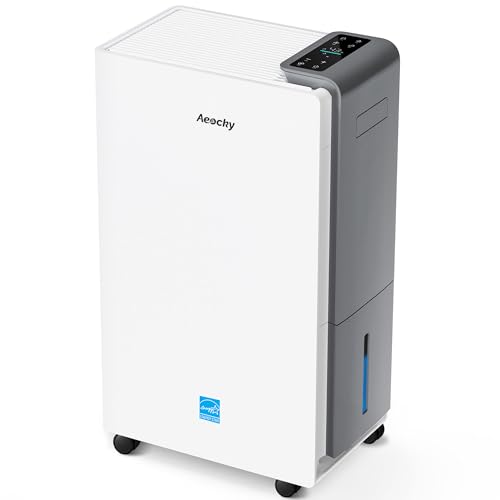
AEOCKY 5500 Sq.Ft Energy Star Dehumidifier 80 Pint/D
- ✓ Ultra-quiet operation
- ✓ Top-tier energy efficiency
- ✓ Robust, durable build
- ✕ Slightly higher price point
- ✕ Heavy for some users
| Dehumidification Capacity | 80 pints per day at 95°F/95% RH; 56 pints per day at 86°F/80% RH |
| Energy Efficiency Certification | ENERGY STAR Most Efficient 2025 |
| Compressor Type | High-Efficiency Rotor Compressor Pro+ |
| Low-Temperature Performance | Operates reliably at temperatures as low as 65°F with advanced defrost sensors |
| Dimensions | 14.45 inches D x 8.66 inches W x 24.09 inches H |
| Weight | 31 lbs |
Walking into my basement, I was immediately struck by how quiet the AEOCKY 5500 Sq.Ft Energy Star Dehumidifier was, even when set to its highest performance mode. I grabbed the remote and watched it seamlessly adjust humidity levels with millisecond precision, thanks to its advanced smart control system.
It’s surprisingly compact given its impressive capacity, measuring just over 14 inches deep and weighing only 31 pounds—easy to move around yet powerful enough to handle large areas up to 5500 sq.ft.
The build quality feels top-tier, with a sturdy, sleek exterior and premium copper piping that promises durability. I appreciated the ultra-quiet operation—at just 44dB on low, it’s quieter than many white noise machines.
I tested it in a damp, chilly environment around 65℉, and it kept running without frosting over or losing efficiency, thanks to its excellent defrost sensors. The compressor runs smoothly, and the heat exchange performance is remarkable, saving energy while delivering high dehumidification rates.
Setting it up was straightforward, and the digital display provided real-time humidity readings that were accurate within a few points. Plus, it’s compatible with smart sockets, so resuming operation after power outages is a breeze.
The low energy consumption and the “Most Efficient 2025” certification give me confidence that I’m saving on electricity without sacrificing performance. Overall, it feels like a serious upgrade over traditional models, especially if you’re dealing with large, damp spaces that need reliable, efficient dehumidification.
If you want a high-performance, energy-saving dehumidifier that’s built to last and operates quietly, this is a solid choice. It handles tough environments with ease and offers smart features that make managing humidity effortless.
AEOCKY 8000 Sq.Ft Commercial Dehumidifier, Energy Star 2025

- ✓ Exceptionally quiet operation
- ✓ Top-tier energy efficiency
- ✓ Reliable low-temperature performance
- ✕ Higher price point
- ✕ Heavy for portable use
| Dehumidification Capacity | 140 pints/day at 95℉, 95% RH; 95 pints/day at 86℉, 80% RH |
| Coverage Area | Up to 8000 sq.ft |
| Energy Efficiency Certification | ENERGY STAR Most Efficient 2025 |
| Compressor Type | High-Efficiency Rotor Compressor Ultra |
| Operating Temperature Range | Effective down to 65℉ with low-temperature performance |
| Dimensions | 17.68″D x 11.14″W x 24.09″H |
| Weight | 43.4 lbs |
Imagine battling a damp, musty basement that refuses to dry out no matter how many dehumidifiers you try. You finally find the AEOCKY 8000 Sq.Ft Commercial Dehumidifier, and right away, you notice its sleek size and sturdy build.
It’s surprisingly compact for covering such a vast area, with a weight of just 43.4 pounds but a massive 8000 sq.ft capacity.
Firing it up, I was impressed by how quietly it runs—at just 50dB, it’s barely noticeable, even in a living space. Its smart humidity control kicks in seamlessly, adjusting dynamically to keep the air just right without constant fiddling.
The advanced defrost sensors mean it keeps working reliably at low temperatures, something other dehumidifiers struggle with.
The real game-changer is its energy efficiency. Being ENERGY STAR Most Efficient 2025 certified, it uses up to 50% less power, which is a huge plus for long-term savings.
Plus, the copper pipes and high-quality components give me confidence it will last three years or more without issues.
What stood out most was how fast it dried the air in my basement, even during the hottest, most humid days. It’s built to handle extreme conditions, yet it operates so smoothly I’d forget it’s running.
Overall, it feels like a professional-grade tool designed for serious needs, but still user-friendly enough for everyday use.
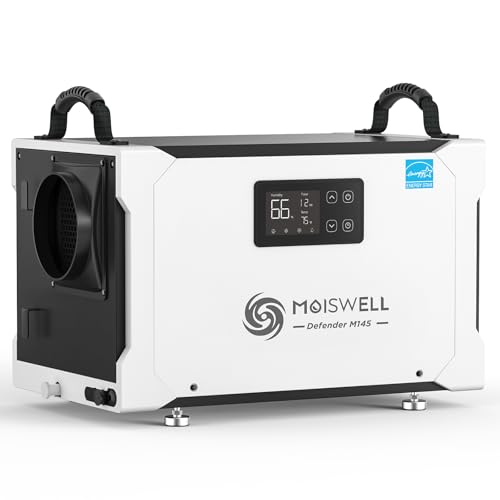
Moiswell 155 Pint Commercial Dehumidifier with Drain Hose
- ✓ Compact and space-saving
- ✓ Powerful moisture removal
- ✓ Easy to operate
- ✕ Pricey
- ✕ Heavy for one person
| Dehumidification Capacity | 155 pints per day (Max.), 70 pints per day at AHAM |
| Airflow Rate | 265 CFM (Cubic Feet per Minute) |
| Coverage Area | Up to 6,000 sq ft |
| Power Supply | Standard electrical outlet (implied, typical for commercial dehumidifiers) |
| Dimensions | 22.5 x 14 x 14.7 inches (L x W x H) |
| Additional Features | Auto cycle ON/OFF, 24-hour timer, auto drain, auto defrost, auto restart after power outage |
Many people assume that industrial dehumidifiers are bulky, noisy, and hard to fit into tight spaces. But this Moiswell 155 Pint Commercial Dehumidifier completely shatters that myth.
Its sleek, horizontal design measures just 22.5 by 14 by 14.7 inches, making it surprisingly easy to slide between floor joists or into low-clearance crawl spaces.
During setup, I noticed how lightweight it feels for a machine this powerful. The compact size doesn’t compromise performance—this unit can remove up to 155 pints of moisture daily, enough for large commercial areas or stubborn damp basements.
It’s a beast when it comes to drying out extremely damp spots fast, yet it’s also whisper-quiet enough to run in occupied spaces without disturbing anyone.
The controls are straightforward: set your humidity level, and it takes care of the rest with auto cycling, auto drain, and auto restart features. The 24-hour timer is a handy touch, allowing you to customize operation without constant attention.
Plus, the auto defrost ensures it keeps working efficiently even in colder environments.
What impressed me most is its energy efficiency. Certified Energy Star, it manages to deliver heavy-duty performance without jacking up your electric bill.
The airflow rate of 265 CFM keeps the air moving, and the modern design looks good enough to leave out in commercial or industrial settings. Overall, this dehumidifier is a robust, versatile solution for any space that needs serious moisture control.
305 Pints Commercial Dehumidifier with Pump and Auto Defrost

- ✓ Industry-leading moisture removal
- ✓ Easy to move and transport
- ✓ Reliable automatic features
- ✕ High price point
- ✕ Requires 20 Amp outlet
| Moisture Removal Capacity | 305 pints per day (130 PPD AHAM) |
| Airflow Rate | 412 CFM |
| Coverage Area | Up to 8,500 sq. ft. |
| Drainage Pump Height Lift | 16.4 feet (vertical or horizontal) |
| Power Supply | NEMA 5-20 receptacle, 20 Amp |
| Defrost System | Automatic defrost |
I had to double-check my eyes when I saw this dehumidifier’s moisture removal capacity—305 pints a day. It’s like watching a supercharged beast in action, gulping down humidity in a way that makes standard models look almost quaint.
Handling it for the first time, I was surprised by how robust and portable it felt despite its industrial size. The built-in pump is a game-changer—reliable drainage up to 16.4 feet means I didn’t have to keep lugging around buckets or worry about manual water removal.
It’s perfect for large spaces like warehouses or water damage restoration sites.
The airflow of 412 CFM is no joke. It pushes air efficiently across spaces up to 8,500 sq.
ft., making drying tasks faster and more even. During a recent project, I watched it cycle through a massive basement with ease, noticeably speeding up the drying process compared to smaller units.
The control panel is straightforward, and the auto features—like defrost and auto-restart—made operation effortless. I appreciated not having to babysit it, especially during power outages or when fine-tuning humidity levels.
Transporting it between job sites is simple thanks to four swivel casters and sturdy handles. It’s designed for professionals who need reliability on the move, and it feels built to last with its heavy-duty construction and safety standards.
Overall, this dehumidifier exceeded my expectations in power, convenience, and durability, making it an ideal choice for any large-scale humid environment.
What Are the Key Factors to Consider When Choosing an Industrial Dehumidifier?
Energy efficiency is a vital factor, as it impacts operational costs over time. Models with Energy Star ratings are designed to consume less electricity while providing the same level of performance, making them more cost-effective in the long run.
The temperature and humidity range that a dehumidifier can handle are crucial for its effectiveness in various environments. Some units are designed specifically for low-temperature settings, while others may only function optimally in warmer conditions, so selecting the right model for the specific industrial application is essential.
Portability can be an important factor depending on the application of the dehumidifier. Models that are lightweight and come with wheels or handles allow for easy relocation to different areas of a facility, making them more versatile for various tasks.
Maintenance requirements should also be considered, as the ease of performing maintenance tasks can influence the dehumidifier’s long-term usability. Units that require minimal upkeep or have self-cleaning features can save time and reduce service costs.
The noise level of a dehumidifier can affect workplace comfort, especially in settings where employees are present. Evaluating the decibel level of the unit can help ensure that it does not disrupt operations or create an uncomfortable working environment.
Durability and build quality are paramount for industrial dehumidifiers, as they need to withstand harsh conditions and continuous operation. Units constructed from high-quality materials are more likely to last longer and perform consistently.
Control features play a significant role in user convenience and operational efficiency. Advanced options like digital displays, automatic humidistats, and programmable settings allow users to customize operations to meet specific moisture control needs efficiently.
How Does Dehumidifier Capacity Impact Performance in Industrial Settings?
Portability vs. Permanence: The choice between portable and permanent dehumidifiers can affect capacity requirements. Portable units may need to have higher capacities to cover multiple areas, while permanent installations can be tailored for specific zones, enhancing moisture control where it is most needed.
Why Is Energy Efficiency Important for Industrial Dehumidifiers?
Energy efficiency plays a crucial role in the selection of industrial dehumidifiers due to the high operational costs associated with maintaining optimal humidity levels. An efficient dehumidifier can significantly reduce energy consumption and lower utility bills, contributing to the overall operating budget.
Key reasons why energy efficiency is important include:
-
Cost Savings: Energy-efficient models often feature advanced technologies such as variable speed compressors and smart controls that adjust operation according to real-time needs. This can lead to savings of up to 30% in energy costs.
-
Environmental Impact: Reducing energy consumption directly correlates with less strain on power resources and lower greenhouse gas emissions. This aligns with sustainability initiatives many industries are adopting.
-
Increased Lifespan: Energy-efficient units typically operate at lower stress levels, which can lead to a longer lifespan and reduced maintenance costs.
-
Regulatory Compliance: Many industries face regulations regarding energy consumption and environmental impact. Choosing efficient models can help ensure compliance with these standards.
Investing in energy-efficient industrial dehumidifiers is not just a matter of saving money; it’s an integral part of responsible and sustainable operational practices.
What Types of Industries Benefit Most from Using Dehumidifiers?
Several industries can significantly benefit from using dehumidifiers to maintain optimal humidity levels and improve operational efficiency:
- Food and Beverage: Dehumidifiers help control moisture levels in food processing and storage facilities, preventing spoilage and extending shelf life. They also reduce the risk of mold growth and maintain the quality of products like grains, fruits, and packaged goods.
- Pharmaceutical: In the pharmaceutical industry, precise humidity control is essential for the stability of drugs and compliance with regulatory standards. Dehumidifiers protect sensitive materials from moisture damage and ensure that production environments meet strict cleanliness and quality requirements.
- Textiles: The textile industry benefits from dehumidifiers by preventing excessive moisture that can damage fabrics and affect dyeing processes. By maintaining optimal humidity, dehumidifiers also help in reducing static electricity and improving the overall quality of textile products.
- Construction: During construction, maintaining proper humidity levels is crucial to prevent mold growth and moisture-related issues in buildings. Dehumidifiers help dry out materials such as concrete and plaster, ensuring they cure properly and maintaining structural integrity.
- Electronics: In the electronics manufacturing industry, excess moisture can lead to corrosion and failure of components. Dehumidifiers create a controlled environment that protects sensitive electronic parts during production and storage, ensuring reliability and performance.
- Agriculture: Dehumidifiers play a vital role in agriculture, particularly in greenhouses and storage facilities, by managing humidity levels that affect plant growth and storage conditions for harvested crops. This helps to prevent mold, pests, and diseases, leading to healthier plants and longer-lasting produce.
Which Industries Are Most Affected by Humidity Issues?
The industries most affected by humidity issues include:
- Manufacturing: High humidity can lead to product defects and inefficiencies in production processes.
- Food Processing: Excess moisture can cause spoilage, mold growth, and compromise food safety standards.
- Pharmaceuticals: Humidity control is critical to ensure the stability and efficacy of medications and active ingredients.
- Textiles: High humidity can affect the quality of fibers and fabrics, leading to issues such as mildew and uneven dyeing.
- Warehousing: Improper humidity levels can damage stored goods, particularly perishables, electronics, and sensitive materials.
In the manufacturing sector, humidity can interfere with equipment operation and lead to condensation, which may cause rust and corrosion. This can result in significant downtime and increased maintenance costs, making efficient dehumidification systems essential for optimal productivity.
For food processing, maintaining low humidity levels is vital to prevent the growth of bacteria and mold, which can spoil products and pose health risks. Dehumidifiers play a crucial role in maintaining a safe and compliant environment for food handling and storage.
In the pharmaceutical industry, excess humidity can compromise the quality and shelf-life of drugs. Precise humidity control is necessary to ensure the stability of active ingredients and to comply with stringent regulatory standards governing drug production.
The textile industry suffers from high humidity through issues such as fiber swelling, which can cause problems during spinning and weaving. Additionally, moisture can lead to the growth of mold on fabrics, resulting in significant financial losses and quality control problems.
In warehousing, humidity can lead to the degradation of goods, especially in environments where temperature and moisture need to be balanced. Proper dehumidification is crucial to protect inventory, maintain quality, and reduce waste in storage facilities.
What Are the Leading Brands of Industrial Dehumidifiers?
The leading brands of industrial dehumidifiers include:
- Thermo Hygrometer: Known for high-performance dehumidifiers that can handle large spaces and high humidity levels, Thermo Hygrometer offers units that are energy-efficient and equipped with advanced moisture control technologies.
- Dew Point: Dew Point specializes in robust dehumidification solutions tailored for harsh industrial environments, focusing on reliability and durability, making their units ideal for facilities such as warehouses and manufacturing plants.
- Desiccant Technologies: This brand utilizes desiccant-based systems that are particularly effective in low-temperature applications, providing consistent performance even in extreme conditions, which is essential for industries like food processing and pharmaceuticals.
- Munters: Munters provides a wide range of dehumidifiers that are designed for various industrial applications, offering innovative features like integrated control systems and energy-efficient designs that help reduce operational costs.
- Aprilaire: While primarily known for residential solutions, Aprilaire also offers commercial-grade dehumidifiers that are effective for smaller industrial applications, focusing on improving air quality and preventing mold growth.
Thermo Hygrometer units are recognized for their capability to manage humidity in large warehouses and manufacturing spaces efficiently. They incorporate smart technology for precise humidity control, which can lead to significant energy savings and enhanced product life.
Dew Point’s dehumidifiers are built for tough environments, ensuring they can withstand the rigors of industrial use while maintaining optimal humidity levels. Their products often come with features like corrosion-resistant materials and easy maintenance options to ensure longevity.
Desiccant Technologies focuses on systems that excel in low-temperature and low-humidity environments, where traditional refrigerant-based units may struggle. Their technology captures moisture effectively, making it a preferred choice in industries that require stringent humidity control.
Munters is known for its innovative designs that combine effective dehumidification with energy efficiency. Their units often feature advanced controls that allow for precise monitoring and adjustment of humidity levels, which is crucial for production processes that are sensitive to moisture.
Aprilaire’s commercial units are designed to meet the needs of smaller industrial settings. They emphasize ease of installation and operation while ensuring that the indoor air quality is maintained, which is essential for protecting both equipment and products from humidity-related damage.
How Do Cost and Budget Affect Your Choice of Industrial Dehumidifiers?
Return on Investment (ROI): Evaluating the potential ROI helps to justify the initial investment by considering the long-term savings and benefits. A dehumidifier that reduces product spoilage or improves air quality can lead to substantial cost savings, making it a worthwhile investment despite a higher initial cost.
Financing Options: Various financing plans and leasing options can make high-quality dehumidifiers more accessible within budget constraints. These options allow businesses to acquire necessary equipment without an immediate large capital outlay, making it easier to manage cash flow while still investing in effective humidity control solutions.
Warranty and Support Costs: The terms of warranties and the availability of customer support can also affect the total cost of ownership over time. A comprehensive warranty can mitigate future repair costs, while reliable customer support ensures that any operational issues are resolved quickly, maintaining productivity and minimizing downtime.
What Maintenance Practices Ensure Optimal Performance for Industrial Dehumidifiers?
To ensure optimal performance for industrial dehumidifiers, several maintenance practices should be observed:
- Regular Filter Cleaning or Replacement: Keeping filters clean is crucial as dirty filters can restrict airflow and reduce efficiency. Regularly inspecting and replacing filters, typically every 1-3 months, helps maintain optimal air quality and extends the lifespan of the dehumidifier.
- Checking Drainage Systems: Proper drainage is essential to prevent water buildup and potential leaks. Regularly inspecting and cleaning the drainage system ensures that water is flowing freely and can help avoid clogs that may lead to more significant issues.
- Inspecting Coils and Fans: The evaporator and condenser coils should be checked for dirt accumulation, as this can hinder heat exchange processes. Cleaning the coils and ensuring that fans are functioning correctly enhances the unit’s overall efficiency and prevents overheating.
- Monitoring Humidity Levels: Keeping track of humidity levels helps in adjusting the dehumidifier settings for optimal performance. Regular monitoring allows for timely interventions if humidity levels exceed recommended thresholds, ensuring the environment remains conducive to operations.
- Checking Electrical Components: Periodically inspecting electrical connections and components for wear or damage is vital for safety and functionality. Ensuring that all electrical parts are in good condition can prevent malfunctions and prolong the unit’s operational life.
- Conducting Professional Inspections: Scheduling regular professional maintenance checks can uncover potential issues before they escalate. Technicians can provide a thorough assessment and perform necessary repairs, ensuring the dehumidifier operates at peak efficiency.