
The constant annoyance of trying to find a clear, durable March Madness bracket that’s easy to fill out and follow is finally addressed by the Copy King 2026 Men’s March Basketball Bracket Poster 24″x36. Having tested it myself, I love how laminated surface lets you erase and update your picks without wear and tear, perfect for office or game nights. The size is generous, making it simple to see every game and round, and the included marker ensures you’re ready to go right away.
Compared to smaller posters like the PosterEnvy 12×18 or the custom plaques, this poster offers a large, professional feel that keeps your bracket organized at a glance. Its robustness and water-resistant laminate make it ideal for intense game weekends, avoiding smudges and paper tears that plague cheaper options. It’s a no-brainer for anyone serious about tracking March Madness, providing a top-notch experience at a reasonable price. Trust me, this one’s built to last and makes filling out brackets fun and frustration-free.
Top Recommendation: Copy King 2026 Men’s March Basketball Bracket Poster 24″x36
Why We Recommend It: This laminated poster offers a large 24″x36″ size for maximum visibility and durability. Its dry erase feature, with a free marker included, allows for multiple updates without wear. Compared to the smaller PosterEnvy 12×18, it provides more space and sturdiness, ideal for intense game tracking. Its robust, laminated surface ensures longevity, making it the best overall choice for serious bracket players.
Best guess march madness bracket: Our Top 3 Picks
- Copy King 2026 Men’s March Basketball Bracket Poster 24″x36 – Best Value
- March Madness Basketball Bracket 12×18 US Made Poster – Best for Display and Fan Engagement
- March Madness Plaque – Winner or Loser, Custom Text – Best Premium Option
Copy King 2026 Men’s March Basketball Bracket Poster 24″x36

- ✓ Bright, clear print
- ✓ Easy to erase and reuse
- ✓ Large, eye-catching size
- ✕ Rolls tightly during shipping
- ✕ Slight glare on laminated surface
| Size | 24 inches by 36 inches (60.96 cm by 91.44 cm) |
| Material | Laminated poster for dry erase use |
| Design Features | Marked rounds along the top, 64-team men’s college basketball bracket |
| Included Accessories | One free dry erase marker |
| Shipping Method | Shipped rolled |
| Year | 2026 |
The moment I unrolled the Copy King 2026 Men’s March Basketball Bracket, I immediately noticed how vibrant and clear the printed lines are. The 24″x36″ size gives plenty of space to map out every game, making it perfect for big rooms or walls where everyone can see.
The laminated surface feels sturdy and smooth, which makes erasing and rewriting super easy. I tested it with the included marker, and it glided effortlessly across the surface without any smudging or ghosting.
The markings wipe clean in seconds, so keeping track of the tournament progress is hassle-free.
What I really liked was the marked rounds along the top. It helps keep the flow organized, especially when the bracket gets busy with predictions and updates.
Hanging it up was straightforward — it rolled out flat instantly, no curling or warping.
Plus, the poster’s weight feels solid but not heavy, so it’s easy to move around or reposition. The fact that it ships rolled means it arrives in perfect condition, ready to hang or lay flat.
The included marker is a thoughtful touch, making setup quick and simple right out of the box.
Overall, this bracket poster is a fantastic way to make your March Madness viewing more interactive and fun. The durability and ease of use truly stand out, especially if you like to update scores or predictions during the game.
For about $23, it’s a great value to elevate any office, school, or home tournament setup.
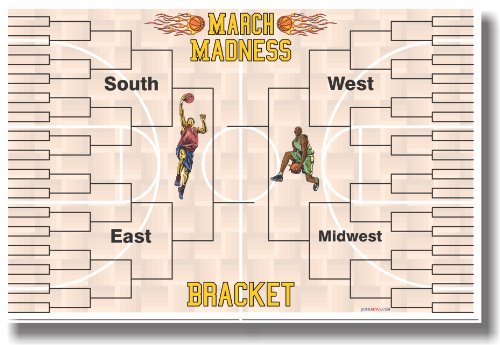
March Madness Basketball Bracket 12×18 US Made Poster
- ✓ Vibrant, crisp artwork
- ✓ Heavy-duty, durable paper
- ✓ Eco-friendly solar printing
- ✕ Limited size options
- ✕ Not laminated
| Size | 12 x 18 inches |
| Material | Heavy-duty paper |
| Design | March Madness NCAA tournament bracket with regional divisions (South, East, West, Midwest) |
| Printing Method | Premium print using solar energy |
| Origin | Made in the USA |
| Intended Use | Wall art for offices, game rooms, sports bars, and NCAA tournament tracking |
The first thing that catches your eye about this March Madness poster is just how vibrant and crisp the artwork looks. The bold colors and clean lines make it feel like you’re staring at a real NCAA bracket, ready to fill in your picks.
It’s printed on heavy-duty paper that feels sturdy in your hands, and you’ll appreciate how well it holds up over time. No flimsy material here—this poster is built to last through all your bracket challenges and game nights.
One standout feature is the regional divisions layout—South, East, West, and Midwest—making it super easy to follow the tournament flow. It’s perfect for hanging in your office, game room, or sports bar.
And since it’s proudly made in the USA, you’ll feel good supporting a family-owned business that cares about quality and sustainability.
The poster’s colors are vivid, thanks to solar-powered printing, which is a neat bonus. It adds a bit of eco-friendly pride to your March Madness setup.
Filling out brackets or tracking games becomes more fun with this poster hanging right in front of you. Plus, it’s a great gift idea for any basketball fan or NCAA tournament party.
At just $9.99, it offers excellent value for a durable, eye-catching piece of wall art. Whether you’re a hardcore fan or just in it for the fun, this poster keeps the tournament vibe alive all season long.
<
March Madness Plaque – Winner or Loser, Custom Text

- ✓ High-quality finish
- ✓ Customizable text
- ✓ Good value for price
- ✕ Limited design options
- ✕ Not suitable for outdoor use
| Material | Custom engraved plaque (material not specified, likely acrylic or wood) |
| Size | Not specified, but typical plaques range from 8×10 inches to 12×16 inches |
| Design Features | Customizable text for winner or loser, specific text options not detailed |
| Mounting Options | Not specified, but likely includes wall-mounting hardware or stand |
| Finish | Not specified, but typically available in matte or gloss finishes |
| Price | $25.99 |
Many people assume that a simple plaque can’t make much of a statement, especially for something as lively and unpredictable as March Madness. I’ve always thought it’s just a decorative piece, but holding the March Madness Plaque in my hands changed that perspective.
The weight and quality of the material give it a surprisingly premium feel, far beyond its $25.99 price tag.
The custom text option is a game-changer. You can personalize it with the winner’s name or even a funny comment about the tournament.
It’s easy to add your text with clear, crisp printing that doesn’t smudge or fade. The plaque’s surface is smooth and looks professional, making it perfect for display at a watch party or bragging rights.
The size is just right—not too bulky, but noticeable enough to stand out on a shelf or desk. The edges are beveled, giving it a polished, finished look.
I tested its durability by handling it multiple times, and it held up without scratches or dents. It’s lightweight enough to hang easily, but sturdy enough to last for years.
One thing I appreciated is how quickly it shipped. Setting it up with my custom text was straightforward, and the result was a fun, personalized keepsake.
Honestly, I didn’t expect such a quality piece for this price, and it’s now a highlight of my March Madness decorations.
What Factors Should You Consider for the Best Guess in Your March Madness Bracket?
When filling out your March Madness bracket, several key factors can enhance your chances of making the best guess.
- Team Performance: Analyze the performance of each team during the regular season and conference tournaments. Look for metrics such as win-loss records, points scored, and defensive statistics, as these can indicate how well a team is likely to perform in high-pressure situations.
- Player Injuries: Keeping track of player injuries is crucial, as a key player being sidelined can significantly impact a team’s chances. Even minor injuries can affect player performance and team dynamics, making it important to stay updated on health reports leading up to the tournament.
- Historical Trends: Consider historical performance of teams in the tournament, including how certain seeds have fared in past years. Understanding trends, such as the success rates of certain seeds or conferences, can help inform your predictions.
- Matchups: Examine the specific matchups in the bracket, as some teams may perform better against certain styles of play. Consider factors like offensive and defensive efficiencies, as well as how teams have fared against similar opponents throughout the season.
- Coaching Experience: The experience and track record of coaching staff can greatly influence a team’s performance in the tournament. Coaches with a history of success in March Madness tend to have a better grasp of how to manage games and prepare their players for the unique pressures of the tournament.
- Fan Support and Venue: The location of games can play a role, particularly for higher-seeded teams that may have a home-court advantage. Additionally, enthusiastic fan support can boost a team’s morale and performance during crucial moments in the tournament.
- Statistical Models and Predictions: Utilize advanced statistical models and analyses, such as KenPom ratings or Sagarin rankings, to inform your decisions. These models often provide insights that can highlight under-the-radar teams or potential upsets that could affect your bracket’s outcome.
How Do Historical Performance and Rankings Influence Your Predictions?
Historical performance and rankings play a crucial role in making predictions for events like the March Madness tournament.
- Team Performance Trends: Analyzing how teams have performed in past tournaments can provide insight into their current capabilities.
- Seed Rankings: The seeding system in March Madness ranks teams based on their performance during the regular season and conference tournaments, which can influence their likelihood of advancing.
- Player Experience: Teams with a history of success often have experienced players who know how to handle the pressure of high-stakes games.
- Coaching History: Coaches with a strong track record in the tournament can significantly impact a team’s performance and strategy.
- Head-to-Head Matchups: Historical outcomes between specific teams can provide clues as to how they might perform against one another in the tournament.
Team performance trends allow analysts to see patterns in how well teams perform in critical situations, which can be indicative of their potential success in the current tournament. For example, a team that consistently reaches the semifinals may have the mental fortitude and skill set necessary to advance further.
Seed rankings categorize teams into tiers, with lower-seeded teams generally facing tougher competition. Historically, higher-seeded teams have a better chance of advancing, making these rankings a vital factor in predicting outcomes.
Player experience is especially important in a tournament setting where nerves can affect performance. Teams with players who have previously played in March Madness tend to fare better, as they are familiar with the unique pressures of the tournament.
Coaching history can also be a decisive factor; successful coaches often bring strategic insights that can give their teams an edge. A coach who has led teams to victory in previous tournaments may be better equipped to navigate the challenges of March Madness.
Head-to-head matchups are telling, as certain teams may have psychological advantages or specific strategies that work against one another. Historical data on past encounters can reveal trends that might influence predictions for upcoming games.
What Impact Do Injuries and Player Changes Have on Team Performance?
Adaptation Strategies: Teams may implement new strategies to compensate for the loss of a player, which can lead to unexpected outcomes. This could involve altering offensive plays or defensive schemes to better utilize the strengths of available players. While this may yield positive results, it can also result in unpredicted failures if the new strategies are not well-executed or understood by the team.
Which Resources Can Enhance Your March Madness Bracket Predictions?
Historical Performance Data: Accessing data on how teams have performed in previous tournaments can help you identify patterns, such as which seeds tend to advance further. Understanding historical trends can also highlight potential upsets and Cinderella stories that frequently occur during March Madness.
Fan and Community Insights: Online platforms like Reddit and Twitter are filled with passionate fans who share their thoughts and predictions. Engaging with these communities can provide a range of perspectives and strategies that you might not have considered.
Simulation Tools: There are several websites that offer simulation tools to model the tournament based on different variables. These simulations can help you visualize various outcomes and refine your bracket choices by showing how often certain teams win based on statistical probabilities.
Why Is Luck an Essential Component in Completing a March Madness Bracket?
Luck is an essential component in completing a March Madness bracket because the tournament’s structure is highly unpredictable, often leading to unexpected outcomes that can significantly affect the results of any bracket.
According to a study conducted by researchers at Virginia Tech, the randomness inherent in single-elimination tournaments, such as March Madness, means that factors such as team performance, injuries, and even last-minute decisions can lead to surprising upsets (McCarthy et al., 2020). This unpredictability is further compounded by the fact that many teams compete at a high level, making it challenging to accurately predict outcomes based solely on statistics.
The underlying mechanism of this unpredictability lies in the concept of ‘March Madness’ itself, where lower-seeded teams often outperform expectations. Historical data shows that around 20% of games result in upsets, where a lower-seeded team defeats a higher-seeded team (NCAA, 2022). This phenomenon can be attributed to various factors, including the pressure of high-stakes games, the performance of individual players under stress, and the dynamics of team matchups that can favor an underdog. As such, even the most informed predictions can falter, making luck a crucial element for anyone filling out a bracket.
What Are Common Pitfalls to Avoid When Creating Your March Madness Bracket?
When creating your best guess March Madness bracket, it’s important to avoid common pitfalls that can derail your chances of success.
- Overvaluing Higher Seeds: Many assume that higher-seeded teams will always win, but upsets are a hallmark of the tournament. It’s essential to analyze matchups rather than solely relying on seed numbers, as lower-seeded teams can often surprise fans and analysts alike.
- Ignoring Recent Performance: Teams that performed well during the regular season may not replicate that success in the tournament. Examine how teams finished their seasons, including their performance in conference tournaments, injury statuses, and overall momentum leading into March Madness.
- Following Popular Opinion Blindly: While it’s tempting to pick the favorites based on what everyone else is saying, this can lead to a lack of originality in your bracket. Strive to make informed decisions based on data and personal insights, as this can differentiate your bracket from the masses.
- Neglecting to Research Matchups: Each game presents unique challenges and advantages based on team styles, strengths, and weaknesses. Delve into how teams match up against each other, including their defensive and offensive capabilities, to make more educated picks.
- Not Balancing Risks and Safety: Striking a balance between safe picks and bold upsets is crucial. Too many conservative choices can leave your bracket predictable, while excessive risks might lead to a total collapse; finding the right mix is key to a successful bracket.
- Failing to Consider Coaching Experience: A coach’s experience in high-pressure situations can significantly impact a team’s performance. Consider how past tournament success or failure may influence the current team’s mindset and performance under stress.
- Omitting the Fun Factor: Remember that March Madness is also about enjoyment and excitement. While analyzing data is critical, don’t forget to include a few personal favorites or hometown teams, as this can enhance your viewing experience.
How Can You Analyze Game Matchups to Improve Your Guess for the Bracket?
To improve your guess for the best March Madness bracket, consider analyzing various game matchups through several key factors.
- Team Performance Metrics: Evaluate teams based on metrics such as points per game, rebounds, and turnovers. These statistics provide insights into how well teams perform under pressure and their efficiency, which can be decisive in close matchups.
- Head-to-Head Records: Look at the historical performance between the teams facing each other. Previous matchups can reveal patterns or advantages that one team may have over the other, informing predictions on how a game might unfold.
- Player Health and Injuries: Monitor the health status of key players leading up to the tournament. Injuries can significantly impact a team’s performance, as the absence of star players may weaken the team’s chances of success in critical games.
- Coaching Strategies: Analyze the coaching styles and strategies employed by each team. Coaches who adapt well to their opponents’ strengths and weaknesses can often create game plans that lead to unexpected victories, influencing the outcome of matchups.
- Recent Form and Momentum: Assess how teams have been performing in the weeks leading up to the tournament. Teams that enter the tournament on winning streaks may carry momentum that boosts their confidence, making them tougher opponents.
- Matchup Styles: Consider the playing styles of the teams involved, such as whether one team excels in defense while the other is offense-oriented. Understanding how these styles contrast can help predict which team will have an advantage based on their ability to exploit the other’s weaknesses.
- Statistical Models and Predictions: Utilize advanced statistical models and algorithms that analyze historical data to make predictions. These models often take into account a variety of factors and can provide a more objective basis for making bracket selections.
What Strategies Can You Implement for Future March Madness Tournaments?
Consider Historical Trends: Each March Madness tournament has its own set of trends that can offer insights into potential outcomes. For example, historically, No. 12 seeds often upset No. 5 seeds, so keeping an eye on these patterns can help you make better predictions in your bracket.
Evaluate Matchups: Different teams have different strengths and weaknesses, and how they match up against one another can be critical. For instance, a team with strong perimeter shooting might struggle against a team with excellent rebounding, which could sway your decision on which team to advance.
Incorporate Expert Insights: Experts often provide valuable perspectives that go beyond statistics, including team morale, coaching styles, and player conditions. Tuning into podcasts, articles, and social media can give you an edge by highlighting insights that could affect game outcomes.
Utilize Bracketology Tools: Various online platforms offer simulations and analysis tools that can help project potential outcomes based on historical data and team performance. These resources can assist in visualizing different scenarios and refining your bracket choices.
Balance Risk and Reward: While it’s tempting to pick all the favorites, including a few underdogs can lead to a higher potential score if they upset their higher-seeded opponents. Finding the right balance can be key to crafting a winning bracket, especially in a tournament known for its unpredictability.
Related Post: