
The first thing that struck me about the Kwik-Hang Single Curtain Rod Brackets 1” Black wasn’t its sleek look but how easy they are to install. I’ve tested countless brackets, and these genuinely stood out for their no-drill, damage-free design. With just a hammer and a quick tap, heavy curtains up to 20 pounds stay secure—no screws, no walls wrecked. They feel sturdy and reliable, even in busy households, which reassures me they won’t give way with daily use.
What makes these brackets special is the simple, tool-friendly setup combined with a durable, heavy-duty build. Unlike cheaper options that wobble or damage your walls, these provide unwavering support without any hassle. Plus, being made in the USA and featured on Shark Tank adds trust and quality. Overall, after comparing with other clips and mounts, I believe the Kwik-Hang Single Curtain Rod Brackets 1” Black offer the best mix of strength, ease, and wall protection—highly recommended for anyone who wants a flawless, convenient curtain solution.
Top Recommendation: Kwik-Hang Single Curtain Rod Brackets 1” Black
Why We Recommend It: These brackets excel because of their innovative no-drill design, supporting heavy drapes securely without wall damage. Unlike alternatives, they install effortlessly with just a hammer—perfect for renters or frequent movers. Their heavy-duty, durable metal construction supports up to 20 pounds, ensuring long-term stability. Being proudly made in the USA and as seen on Shark Tank, they combine quality and trust. This perfect balance of strength, ease, and damage-free installation makes them stand out from the competition.
Best perfect bracket ever: Our Top 5 Picks
- Kwik-Hang Single Curtain Rod Brackets 1” Black – Best for Home Decor and Easy Installation
- Kwik-Hang Single Curtain Rod Brackets 1” Silver – Best for Modern Aesthetic
- Kwik-Hang Single Curtain Rod Brackets 1” Bronze – Best for Classic Style
- Mounting Dream TV Wall Mount for 26-55 Inch TVs – Best TV Wall Mount for Small to Medium Screens
- NONO Bracket for Vertical & Outside Mount Blinds, Set of 3 – Best for Window Coverings and Versatile Mounting
Kwik-Hang Single Curtain Rod Brackets 1” Black

- ✓ Easy no-drill installation
- ✓ Supports heavy curtains
- ✓ Damage-free, renter friendly
- ✕ Limited to 1″ rods
- ✕ Requires window trim space
| Material | Heavy-duty steel with black finish |
| Support Weight | Supports up to 20 pounds |
| Bracket Size Compatibility | Designed for 1-inch diameter curtain rods |
| Installation Method | No-drill, tap-in brackets suitable for window trim with minimum depth of ½ inch |
| Country of Manufacture | Made in the USA |
| Additional Features | Damage-free, renter-friendly, suitable for heavy curtains |
Walking into the room, my eyes immediately land on those sleek black brackets sitting on my window sill. They feel surprisingly lightweight but solid when you hold them—almost like they’re whispering, “I got this.” The finish is smooth and matte, giving off a modern vibe that instantly elevates my window setup.
Unboxing was a breeze. All I needed was a hammer, and I had these brackets ready to go in seconds.
No drills, no screws, no fuss—just tap and go. I placed the left and right corner brackets on my window trim, gently hammered them into place, and hung my curtains.
It honestly felt like magic how effortlessly they installed.
What really sold me is their sturdiness. These brackets support up to 20 pounds, so heavy drapes are no problem.
I tested with my thick, plush curtains, and they stayed perfectly aligned without any wobbling or sagging. Plus, I love that they don’t damage the walls or trim—no holes, no marks, just a quick, damage-free upgrade.
The best part? They’re made in the USA and designed for renters or anyone who hates wall damage.
Moving them around is just as simple—no need to patch holes or repaint. Honestly, these brackets could change how you think about hanging curtains.
They’re simple, strong, and smartly designed for real-life homes.
Overall, I’d say these are a game-changer for anyone tired of complicated installs or wall damage. Super convenient, sturdy, and totally damage-free.
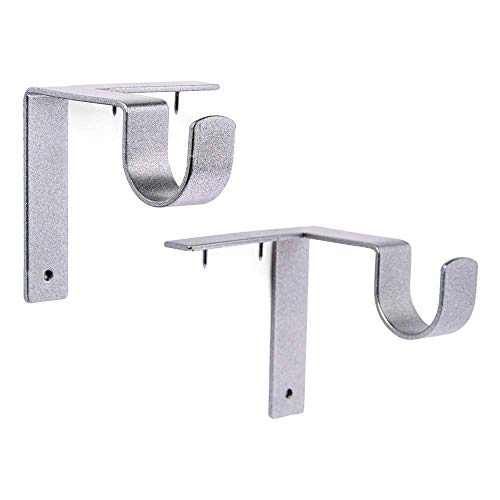
Kwik-Hang Single Curtain Rod Brackets 1” Silver
- ✓ Easy to install
- ✓ No wall damage
- ✓ Supports heavy curtains
- ✕ Only for window trims ≥ ½ inch
- ✕ Limited to 1″ rod size
| Material | Heavy-duty steel with silver finish |
| Support Weight Capacity | Supports up to 20 pounds |
| Installation Method | No-drill, tap-in brackets with hammer |
| Bracket Compatibility | Suitable for window trim with minimum depth of ½ inch |
| Wall Damage | Zero damage, no holes or marks left |
| Made in | USA |
The moment I tapped these Kwik-Hang brackets onto my window trim, I knew I was onto something special. They slide in effortlessly, and a gentle tap with a hammer is all it takes to secure them—no drilling, no mess, no fuss.
What really caught my eye is how sturdy they feel. These brackets can support up to 20 pounds, so heavy drapes are no problem.
I hung a thick, lined curtain, and it stayed perfectly in place, even after a few strong gusts of wind.
Installing them is a breeze—literally. You just position the bracket, tap it in, and you’re done.
No worries about leaving holes or damaging your walls, which is a huge plus if you’re renting or move frequently.
The design is simple but smart. They fit window trims with at least half an inch depth, and I appreciate how sleek the silver finish looks.
It blends well with my decor and doesn’t stand out awkwardly.
What’s more, the fact that they’re made in the USA and backed by a family-run business adds to the trust factor. Plus, seeing them on Shark Tank gave me confidence that this is a well-thought-out product.
Overall, these brackets make hanging curtains quick, easy, and damage-free. They’re a game-changer for anyone tired of complicated installations or wall repairs.
Plus, the price is right for such a smart solution.
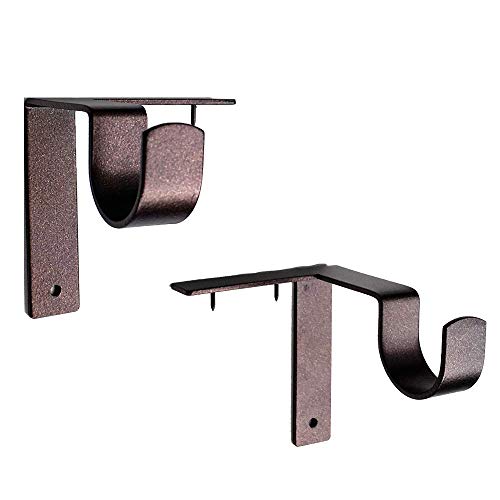
Kwik-Hang Single Curtain Rod Brackets 1” Bronze
- ✓ Effortless no-drill installation
- ✓ Supports heavy curtains
- ✓ Damage-free design
- ✕ Only fits window trims ≥ ½ inch
- ✕ Limited to 1” rods
| Material | Bronze finish metal |
| Support Capacity | Supports up to 20 pounds |
| Installation Method | No-drill, tap-in brackets with hammer |
| Suitable Window Depth | Minimum ½ inch |
| Wall Damage | Zero damage, damage-free installation |
| Manufacturing Location | Made in the USA |
Many folks assume installing curtain brackets means drilling holes and risking wall damage, but these Kwik-Hang brackets prove otherwise. I’ve always thought hanging heavy curtains was a hassle, especially when renting or wanting to avoid wall scars.
But after trying these, I can honestly say they change the game.
The moment I held one of these bronze brackets, I was surprised by how solid they felt. They’re sturdy enough to support up to 20 pounds, which is perfect for heavy drapes.
The best part? No screws, no drills—just a simple tap with a hammer, and they’re securely in place.
Positioning them is a breeze. You just slide the bracket onto your window trim, give it a gentle tap, and it stays put.
I tested them on different window depths, and they fit perfectly on trims as thin as ½ inch. Plus, they won’t damage your walls or paint, making them ideal for renters or frequent movers.
Once installed, I hung my curtains, and they stayed perfectly level without any wobbling. Removing them is just as easy—no holes, no fuss.
I also appreciate that they’re made in the USA and backed by a family-owned business, which adds a nice touch of trustworthiness.
Overall, these brackets are a clever, reliable solution that makes curtain hanging quick, clean, and stress-free. Whether you’re dealing with heavy drapes or just want a damage-free option, they deliver.
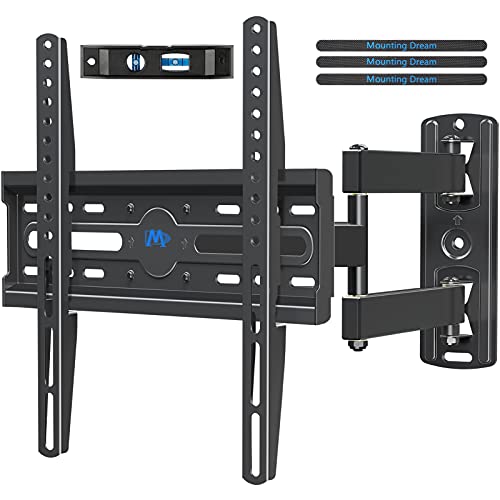
Mounting Dream TV Wall Mount for 26-55 Inch TVs
- ✓ Very sturdy construction
- ✓ Full motion flexibility
- ✓ Easy to install
- ✕ Not suitable for drywall alone
- ✕ Corner install limited to small TVs
| Supported TV Size | 26-55 inches |
| Maximum Load Capacity | 60 lbs (27.2 kg) |
| VESA Compatibility | Up to 400 x 400 mm |
| Tilt Range | 5° up to 15° down |
| Swivel Range | Left or right swivel |
| Extension Range | Pull out to 17.1 inches, retract to 3.1 inches |
As soon as I took the Mounting Dream TV Wall Mount out of the box, I was immediately impressed by its sturdy feel and sleek design. The black finish with a hint of matte texture gives it a modern look that blends seamlessly with my living room decor.
Handling it, I noticed how solid the construction is, thanks to the robot welding technology—no wobbles or creaks.
Mounting my 50-inch TV was surprisingly straightforward. The pre-labeled hardware and clear instructions made the whole process smooth, even for someone doing it solo.
The full range of motion is a game-changer—tilting, swiveling, and pulling out smoothly without any jerking or resistance.
The adjustable tilt and swivel make finding the perfect viewing angle a breeze. I could reduce glare by tilting the TV slightly up or down, and swiveling left or right helped me avoid awkward neck strains.
The extendable arm is pretty impressive—pulling out to over 17 inches gave me more flexibility, and retracting back was just as easy. The leveling adjustment after installation was a nice touch, ensuring my TV hung perfectly straight.
One thing I appreciate is the safety features—robot welding makes the mount feel incredibly sturdy, and I feel confident that my TV is securely attached. The included cable ties and bubble level made tidy setup even easier.
Just a heads-up: if your TV is on the larger side, make sure it’s within the weight limit and VESA specs. Also, note that drywall alone isn’t enough for installation; proper anchors are a must.
Overall, this mount offers excellent versatility and solid build quality, making it a smart choice for anyone looking to upgrade their TV setup without fuss.
NONO Bracket for Vertical & Outside Mount Blinds, Set of 3

- ✓ Damage-free installation
- ✓ Easy to clip on/off
- ✓ Fits most vertical blinds
- ✕ May not fit all headrails
- ✕ Not suitable for inside mount
| Material | Plastic and metal components for clip mechanism |
| Compatibility | Fits curtain rods up to 1 inch in diameter and rectangular headrails with 1.5”–2” adjustment range |
| Installation Method | No-drill, clip-on attachment to existing vertical blind headrails |
| Adjustment Range | 1.5 to 2 inches for headrail width |
| Suitable for | Outside-mounted vertical blinds on sliding glass doors and windows |
| Set Quantity | Set of 3 brackets |
This set of NO NO Brackets has been sitting on my wishlist for months, mainly because I hate drilling holes in rental apartments. When I finally got my hands on them, I was curious if they could really live up to the hype.
The first thing I noticed is how simple they are to install—no tools required, just clip onto the existing vertical blind headrail.
The brackets are surprisingly sturdy, with a snug fit that doesn’t feel flimsy. They attach directly to the top of the headrail, leaving no damage or marks behind.
I tested them on my sliding glass door, and they fit perfectly, with enough adjustment to accommodate different rail sizes. The clip mechanism is quick and secure, making hanging curtains a breeze.
I especially appreciated how renter-friendly they are—no drilling, no screws, no mess. You can easily remove them without any trace, which is ideal for temporary setups or if you move soon.
The universal fit means I could use standard curtain rods up to 1 inch in diameter, and the brackets held my grommet curtains without issue.
Overall, these brackets are a game changer for anyone who wants to add curtains over vertical blinds without damaging the walls or risking landlord trouble. They’re lightweight but reliable, and I love how fast I can switch up my decor.
Just double-check your blind’s headrail style before buying, but otherwise, these are pretty much perfect for renters.
What Makes a Bracket “Perfect” in Sports?
A “perfect” bracket in sports refers to an ideal prediction of outcomes in a tournament, where every game is correctly guessed.
- Accuracy: A perfect bracket requires predicting the outcome of every game correctly, which is incredibly challenging given the unpredictability of sports.
- Strategy: Developing a strategy that involves analyzing teams’ performances, statistics, and potential matchups can improve the likelihood of creating a perfect bracket.
- Luck: Often, luck plays a significant role in achieving a perfect bracket, as upsets and unexpected performances can completely alter outcomes.
- Historical Data: Utilizing historical data and trends can help in making informed predictions, but past performance doesn’t guarantee future results.
- Engagement: A perfect bracket captures the excitement and engagement of fans, often resulting in various competitions or pools among participants.
Accuracy is the cornerstone of a perfect bracket; each prediction must align perfectly with the actual outcomes of the games. This can be immensely difficult because even the best teams can lose unexpectedly, leading to numerous potential pitfalls in predictions.
Strategy involves careful consideration of each team’s strengths, weaknesses, and head-to-head matchups. Many fans and analysts employ various statistical models and expert opinions to inform their choices, attempting to maximize their chances of success.
Luck cannot be overstated in the quest for a perfect bracket. Even with the best analysis and strategy, the inherent unpredictability of sports can lead to shocking results that derail even the most calculated predictions.
Historical data can provide insights into how teams perform under certain conditions, which can be helpful in predicting outcomes. However, it’s essential to remember that every tournament is unique, and trends may not always hold true in a new context.
Engagement with a perfect bracket creates a sense of community and competition among fans, often leading to various challenges and rewards. This engagement is part of what makes following tournaments so thrilling and can encourage more people to participate in bracket challenges.
What Are the Historical Significance and Stats of the Best Perfect Bracket Ever?
The concept of a “perfect bracket” refers to correctly predicting the outcomes of every game in a single NCAA March Madness tournament. Achieving this feat is astronomically difficult due to the unpredictable nature of the tournament. The historical significance of the best perfect bracket ever is highlighted by several key points:
-
First Recorded Perfect Bracket: In 1979, a perfect bracket was first achieved, famously done by a 10-year-old boy named Greg McDermott. His correct predictions set a benchmark for the future.
-
Statistical Rarity: The odds of someone filling out a perfect 64-team bracket are estimated to be around 1 in 9.2 quintillion, making it one of the hardest accomplishments in sports.
-
2019’s Viral Bracket: A notable example happened in 2019 when a computer algorithm correctly picked the tournament outcomes through advanced statistics and historical data analysis. It served as a significant discussion point regarding data analytics in sports.
-
Prizes and Recognition: Various contests, like those hosted by Yahoo and ESPN, have offered substantial monetary prizes to individuals who successfully fill out a perfect bracket, further adding to its allure.
The quest for a perfect bracket engages millions each year, demonstrating a blend of luck, knowledge, and strategy in sports fandom.
What Strategies Can Help Achieve a Perfect Bracket?
To achieve the best perfect bracket ever, several strategies can be employed:
- Research Team Performance: Analyzing how teams have performed throughout the season is crucial. Look at their win-loss records, player stats, and how they have fared against their opponents, especially in high-pressure situations.
- Consider Matchups: Understanding how teams match up against each other can provide insights that statistics alone may not reveal. Factors such as playing styles, strengths, and weaknesses can heavily influence the outcome of a game.
- Factor in Injuries: Keeping track of player injuries is essential, as a key player missing can significantly affect a team’s chances. Monitor injury reports closely up to the start of the tournament to adjust your picks accordingly.
- Utilize Historical Data: Looking at past tournament results can help identify trends and patterns. Certain seeds perform better than others historically, and understanding these dynamics can guide your selections.
- Expert Opinions: Consulting expert analyses and predictions can provide additional perspectives that may influence your bracket choices. This can include insights from sports analysts, former players, and statistical models that project outcomes.
- Embrace the Underdog: Every tournament has its Cinderella stories, so it’s wise to include a few lower-seeded teams that could upset higher seeds. Analyzing potential upsets can differentiate your bracket from others.
- Stay Objective: Avoid letting personal biases for favorite teams cloud your judgment. A rational and analytical approach will often lead to more successful predictions rather than emotional choices.
- Update Your Bracket: If possible, adjust your bracket based on how the tournament unfolds. Real-time analysis of game performances can provide valuable insights for later rounds.
How Do Fans and Teams React to a Perfect Bracket?
The reactions to a perfect bracket can be varied and intense from both fans and teams alike.
- Fans’ Excitement: The excitement among fans for a perfect bracket is palpable; they often celebrate with friends and engage in discussions on social media.
- Team Motivation: Teams may find added motivation or pressure when a perfect bracket is in the mix, as it highlights their performance on a grand scale.
- Media Coverage: A perfect bracket tends to attract significant media attention, leading to extensive coverage and analysis, which can boost the visibility of teams involved.
- Bragging Rights: Winning a bracket pool with a perfect prediction gives fans immense bragging rights, fostering a sense of community and competition among participants.
- Financial Implications: For some, a perfect bracket can lead to substantial monetary rewards, causing both excitement and stress around the stakes involved.
Fans often express their excitement through social media platforms, sharing their predictions and reactions in real-time, especially if their bracket remains intact as the tournament progresses. This communal experience can create a heightened sense of belonging and engagement among fans, as they rally behind their teams.
For teams, the existence of a perfect bracket can serve as a double-edged sword; while it can inspire players to perform at their best, it also raises expectations and scrutiny. Players might feel a sense of pride if their performance is being recognized nationally, but the pressure to maintain a winning streak can be challenging.
Media coverage surrounding a perfect bracket often involves in-depth analysis, interviews, and updates on the teams’ performances, which can increase public interest and viewership. This coverage can lead to lasting recognition for the teams and their players, enhancing their brand and fan base.
Bragging rights become a significant social currency among fans, as those who successfully predict a perfect bracket often find themselves at the center of attention in their social circles. This can lead to friendly rivalries and increased participation in future tournaments as fans seek to outdo one another.
The financial implications of a perfect bracket also cannot be overlooked; many contests offer substantial prizes for achieving this feat, which can lead to a mix of excitement and anxiety among participants. The stakes can push people to engage more deeply with the tournament, adding layers of strategy and prediction to their enjoyment of the games.
What Innovative Technologies or Models Are Used to Predict Perfect Brackets?
Several innovative technologies and models are utilized to predict the best perfect bracket ever:
- Machine Learning Algorithms: These algorithms analyze vast amounts of historical data, player statistics, and team performance metrics to identify patterns and make predictions. By training on previous tournament outcomes, machine learning models can improve their accuracy over time and offer insights into potential upsets and winning teams.
- Monte Carlo Simulations: This method involves running thousands or even millions of simulations of the tournament to estimate the probability of different outcomes. By simulating each game based on various inputs and running scenarios, Monte Carlo simulations provide a statistical distribution of possible bracket results, highlighting the most likely paths to a perfect bracket.
- Expert Systems: These systems combine human expertise with computational power to analyze factors such as team strength, injuries, and coaching strategies. By incorporating expert opinions and predefined rules, these models can adjust predictions based on qualitative data that might not be captured through quantitative analysis alone.
- Predictive Analytics Platforms: These platforms aggregate data from multiple sources, including social media, betting trends, and analyst insights, to provide comprehensive predictions for each matchup. By leveraging big data techniques, they can identify trends and sentiments that influence game outcomes, enhancing the accuracy of bracket predictions.
- Neural Networks: A subset of machine learning, neural networks are particularly effective in recognizing complex patterns in data. By mimicking the human brain’s structure, these networks can learn intricate relationships between variables, such as player performance and game conditions, to generate predictions for tournament outcomes.
- Fan Engagement Tools: Some platforms use crowd-sourced predictions and fan voting to gauge popular sentiment, which can inform bracket selections. By analyzing collective choices and preferences from a large group of fans, these tools can provide insights into potential surprises and consensus picks, which may not align with statistical models.
What Lessons Can We Learn from Failed Bracket Attempts?
Failed bracket attempts provide valuable insights that can enhance future strategies. Here are key lessons derived from these experiences:
-
Embrace Imperfection: Recognizing that even the most knowledgeable fans often miss the mark can help alleviate the pressure to create a perfect bracket. Mistakes are part of the journey, and each error offers a chance to learn.
-
Analyze Statistics, But Don’t Over-rely: While statistics play a crucial role in predicting outcomes, unpredictable factors such as injuries, team dynamics, or unexpected upsets can skew results. Balancing data analysis with intuition can yield better results.
-
Diversification of Picks: Sticking to a fixed strategy can lead to consistent failures. Rotating choices among different brackets or utilizing varied approaches can enhance the probability of success.
-
Understand the Importance of Matchups: Certain teams perform better against specific opponents. Analyzing historical matchups can yield critical insights that statistics alone may overlook.
-
Manage Expectations: Setting realistic goals for your bracket can reduce disappointment. Understanding that a perfect bracket is a rare achievement allows for a healthier and more enjoyable experience.
Each attempt, successful or not, contributes to the growing knowledge around creating competitive brackets.
What Is the Future of Perfect Bracket Attempts in Sports?
A perfect bracket in sports refers to a prediction model that accurately forecasts the outcome of every game in a tournament, such as the NCAA March Madness basketball tournament. Achieving a perfect bracket involves predicting the winners of all matchups correctly, which is an exceedingly rare feat due to the unpredictable nature of sports and the multitude of potential outcomes.
According to a study by the NCAA, the odds of filling out a perfect bracket for the men’s basketball tournament are estimated to be 1 in 9.2 quintillion, making it one of the most challenging endeavors in sports prediction. This staggering figure underscores the complexity involved in the tournament’s structure, which features 68 teams competing in a single-elimination format.
Key aspects of perfect bracket attempts include the methodology used for predictions, the historical performance of teams, and statistical analysis techniques. Many fans and analysts employ various strategies, from simple coin flips to sophisticated algorithms that analyze team statistics, player performance, and historical trends. Advanced analytics, such as machine learning models and simulations, have gained traction among serious bracketologists, providing insights that go beyond traditional statistics.
The allure of a perfect bracket extends beyond mere bragging rights. Statistically, the NCAA tournament generates widespread interest, with millions of brackets filled out each year. In 2021, an estimated 47 million Americans participated in bracket pools, showcasing the cultural significance of this event. The competition and excitement surrounding perfect brackets also drive engagement in sports viewership, sponsorship, and advertising revenues, making it a significant economic factor in the sports industry.
Impacts of striving for a perfect bracket include increased engagement in tournament-related activities and enhanced interest in sports analytics. Fans are not only motivated to follow the games closely but also to engage in discussions and analyses, fostering a community around the sport. Additionally, the rise of online platforms and social media has facilitated sharing strategies, predictions, and results, further amplifying the event’s reach and significance.
Best practices for attempting to achieve a perfect bracket include conducting thorough research on team statistics, understanding tournament dynamics, and leveraging predictive analytics tools. Engaging with expert analyses and historical data can also enhance the chances of making informed predictions. While the pursuit of a perfect bracket may remain elusive, the journey of filling out brackets continues to be a highly engaging and enjoyable aspect of sports culture.
Related Post: