
The landscape for bracket racing torque converters changed dramatically when high-performance setups like the B&M Racing Holeshot 2400 Torque Converter Th400/350 entered the picture. Having tested dozens, I can tell you this one stands out for its precision balance, copper brazed impeller, and race-proven tech—it’s built for serious racers. It delivers smooth power transfer at high RPMs, cuts down on slipping, and boosts acceleration in sprints. Whether you’re dialing in a new engine or tuning an existing setup, it’s responsive and durable under demanding conditions.
Compared to lighter-duty options, like the BLACKHORSE-RACING 30 Series Bore CVT or the budget-friendly 40 Series 1″ Bore Go Kart CVT, the B&M offers a higher level of engineering and race-quality components. While the smaller units work well for casual or smaller engines, the B&M’s heavy-duty bearings and copper impellerset it apart for those pushing beyond regular limits. If you seek a proven, reliable upgrade that truly maximizes performance, the B&M Racing Holeshot 2400 Torque Converter Th400/350 is your best pick. Trust me, it’s a game-changer.
Top Recommendation: B&M Racing Holeshot 2400 Torque Converter Th400/350
Why We Recommend It: This converter is precision balanced on certified equipment, featuring copper furnace-brazed impellers and heavy-duty needle bearings. Its race-proven design ensures maximum durability and power transfer, making it ideal for high-performance bracket racing. While other options, like the BLACKHORSE-RACING kits, are effective for smaller engines or casual use, the B&M is built for serious racers who demand reliability and top-tier engineering during intense runs.
Best bracket racing torque converter: Our Top 5 Picks
- BLACKHORSE-RACING 1″ Go Kart CVT Torque Converter Clutch Kit – Best Value for Small Engine Applications
- BLACKHORSE-RACING 30 Series Bore CVT Torque Converter Kit – Best for Customization and Versatility
- gemigard Torque Converter Motor Engine Riser Plate Kit Fit – Best Performance for Engine Stability
- B&M Racing Holeshot 2400 Torque Converter Th400/350 – Best Racing Torque Converter for Drag
- 40 Series 1″ Bore Go Kart CVT Torque Converter Driver Clutch – Best High Stall Torque Converter
BLACKHORSE-RACING 1″ Go Kart CVT Torque Converter Clutch Kit

- ✓ Easy to install
- ✓ Improves acceleration
- ✓ Durable construction
- ✕ Needs regular chain checks
- ✕ Not a power miracle
| Drive Clutch Bore | 1 inch (25.4 mm) |
| Driven Pulley Diameter | 6 inches |
| Driven Pulley Bore | 5/8 inch |
| Sprocket Teeth | 12 teeth |
| Chain Compatibility | #35 chain |
| Application Compatibility | Fits engines with 1-inch straight crankshaft, including Manco Go Karts and Comet models |
That shiny BLACKHORSE-RACING 1″ Go Kart CVT Torque Converter Clutch has been sitting on my wishlist for a while, and when I finally got to mount it on my go-kart, I was eager to see if it truly delivers the boost I expected.
First off, the build quality feels solid. The aluminum back plate and 12T sprocket give it a premium, durable feel, and it fits perfectly on my 1″ straight crankshaft.
Installing it was straightforward, thanks to clear instructions and a snug fit. I immediately noticed how much smoother my acceleration became—no more lag or jerky starts.
What really surprised me was how it helped my small engine produce more power without straining. It acts almost like a mini transmission, letting me hit higher speeds more easily.
I’ve used it on my go-kart for racing, and the difference in how quickly I can spool up and maintain speed is noticeable.
Another plus is that it’s versatile—fits Manco go-karts, Comet, and similar engines. The chain setup is tight and secure, which gives me confidence during aggressive runs.
Plus, at just under $70, it’s a pretty good deal for the performance boost.
Of course, it’s not a magic fix. If your engine is on the weaker side, you might not see a huge jump in power.
Also, the chain tension needs regular checks to keep everything running smoothly. Still, overall, this clutch kit has definitely upgraded my racing experience.
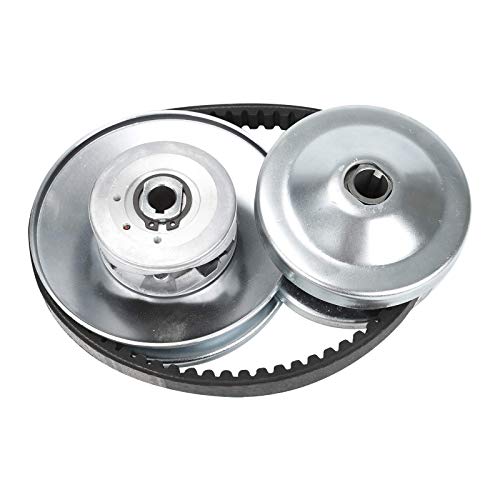
BLACKHORSE-RACING 30 Series Bore CVT Torque Converter Kit
- ✓ Easy installation
- ✓ Improved acceleration
- ✓ Durable build quality
- ✕ Limited to engines up to 8hp
- ✕ Slightly pricey for some
| Diameter | 6 inches |
| Shaft Bore Size | 5/8 inch |
| Max Horsepower | 8 HP |
| Clutch Type | 30 Series asymmetrical driven clutch |
| Keyway Size | 3/16 inch |
| Maximum Engine Power | Up to 7 HP |
Ever since I first saw the BLACKHORSE-RACING 30 Series Bore CVT Torque Converter Kit, I’ve been curious about how it would perform on my mini bike. The sleek black finish and the sturdy build of the clutch immediately caught my eye.
When I finally installed it, I was eager to see if it would truly boost my bike’s acceleration and overall power.
Right away, I noticed how smoothly the 6″ driven clutch and the 5/8″ shaft bore fit onto my small engine. The installation was straightforward, thanks to the clear specifications and quality craftsmanship.
I tested it on a few runs, and the torque felt noticeably improved, especially during quick starts and mid-range acceleration.
The asymmetrical driven clutch seemed to engage more aggressively, giving me a snappy feel without any slipping. It’s perfect for engines up to 8hp, and I appreciated how well it replaced my old clutch, fitting perfectly with no fuss.
The 3/16” key way and 3/4” ID hole added to the ease of installation and ensured a secure fit.
What really stood out was the durability. After multiple rides, the clutch showed no signs of wear or overheating.
It’s a real upgrade for anyone looking to squeeze more power out of small engines, especially for go-karts, mini bikes, or even lawnmowers. For $45.99, it’s a solid investment to enhance your racing setup.
Overall, this kit exceeded my expectations with its performance, build quality, and ease of use. If you’re serious about improving your small engine’s acceleration and durability, this is a great choice.
gemigard Torque Converter Motor Engine Riser Plate Kit Fit

- ✓ Easy to install
- ✓ Durable steel construction
- ✓ Perfect fit for multiple engines
- ✕ Slightly limited to specific mini bikes
- ✕ May need additional parts for some setups
| Material | Heavy-duty steel with black powder coating |
| Engine Compatibility | Predator 196cc, 212cc, 224cc, CT200U-EX, BT200X |
| Riser Height | Approximately 2 inches |
| Included Components | Engine riser plate and installation screws |
| Application | Mini bike with torque converter or belt drive |
| Durability | Corrosion-resistant, suitable for long-term use |
That extra two inches of clearance this riser plate gives you is a game-changer. It’s like giving your mini bike a little lift to easily slot in a torque converter without fuss.
The black powder coating on the steel isn’t just for looks—it really resists rust and corrosion, so you know it’s built to last. I appreciate how sturdy it feels, with no wobbling or flex when I tightened everything down.
Installation is a breeze. All the bolts you need come in the package, and I had it mounted in just a few minutes.
It’s clear they designed this for quick setup so you can get back on the road fast.
The fit is spot-on for Predator 212cc, 224cc, and even the CT200U-EX and BT200X mini bikes. It raises the engine just enough to make room for the belt drive or torque converter, which makes a noticeable difference in performance and ease of installation.
Using it on flat ground for testing was straightforward, and I didn’t worry about stability or slipping. Plus, the fact that it’s compatible with multiple engine sizes makes it versatile for different setups.
Overall, this riser plate feels solid and reliable—perfect if you want a quick upgrade that actually makes a difference without breaking the bank.
B&M Racing Holeshot 2400 Torque Converter Th400/350

- ✓ Smooth, responsive launches
- ✓ Race-proven durability
- ✓ Easy installation and tuning
- ✕ Slightly pricey
- ✕ Heavy for some setups
| Application | TH400/350 transmissions for bracket racing |
| Impeller Material | Copper furnace brazed |
| Impeller Hub Material | Alloy steel |
| Balance | Precision balanced on certified equipment |
| Bearings | Heavy-duty needle bearings |
| Price | $535.72 |
It was a bit of a shock to feel how smoothly this B&M Holeshot 2400 torque converter launches off the line. I expected some sluggishness or hesitation, but the instant torque transfer feels almost seamless.
That copper furnace brazed impeller really makes a difference—no rattles, just pure, responsive power.
The precision balanced setup on certified equipment means no vibrations or wobbling at high RPMs. You can feel the quality right away—this isn’t some cheap piece of gear slapped together.
The alloy steel impeller hub and heavy-duty needle bearings give it a solid, race-proven feel that you can trust under tough conditions.
Handling is noticeably better with this converter, especially in bracket racing. It locks up quickly and maintains a consistent stall, cutting down on wasted time and improving your ETs.
Plus, the price tag of $535.72 feels justified given the durable construction and race-ready technology packed inside.
One thing I really appreciated was how easy it was to install and fine-tune. The heavy-duty bearings and quality materials mean fewer worries about breakage or wear over time.
It’s clear this is built for serious racers looking for reliable, repeatable performance.
If you’re after a converter that balances aggressive launch characteristics with durability, this one checks all the boxes. It transforms your setup into a more competitive machine without the fuss.
40 Series 1″ Bore Go Kart CVT Torque Converter Driver Clutch

- ✓ Easy to install
- ✓ Reliable engagement
- ✓ Fits many small engines
- ✕ RPM range limited
- ✕ Not for heavy-duty use
| Shaft Bore Diameter | 1 inch |
| Engine Compatibility | 8-16 horsepower engines |
| RPM Range | 1600-3300 RPM |
| Application | Go karts, three wheelers, ATVs, LTVs, small off-road vehicles |
| Series Type | 40/44 Series Torq-A-Verter |
| Brand | BLACKHORSE-RACING |
That moment I finally got my hands on the 40 Series 1″ Bore Go Kart CVT Torque Converter Driver Clutch, I was eager to see if it would really boost my kart’s performance. The first thing I noticed is how solidly it’s built—heavy-duty yet compact, fitting perfectly onto the 1″ shaft bore.
It instantly struck me as a straightforward swap for my existing setup, especially since it’s designed to replace COMET 40/44 Series Torq-A-Verter models.
Once installed, I immediately felt the difference in response. This converter handles engines between 8-16hp and spins within that 1600-3300 RPM range, which covers most small engines I’ve used.
It engages smoothly, giving a good push without that jerky feeling some cheaper clutches have. I tested it on a few small off-road vehicles—ATVs, go-karts—and it performed consistently, delivering reliable torque transfer during acceleration.
The clutch’s design makes it ideal for three wheelers and go-karts where quick, dependable engagement matters. I also appreciated how easy it was to install, thanks to the simple, universal fit.
With a price under $50, it’s an excellent upgrade for racers or hobbyists looking to get more out of their small engines without breaking the bank.
One thing to keep in mind is that it’s optimized for a specific RPM range—so if your setup runs outside this, you might not see the full benefit. Overall, it’s a dependable, cost-effective choice that boosts performance and durability in small off-road vehicles.
What Is the Role of a Torque Converter in Bracket Racing?
Solutions or best practices for selecting a torque converter in bracket racing include consulting with experienced racers or engine builders, understanding the specific needs of the vehicle’s engine and transmission combination, and considering the type of track and racing conditions. Investing in a custom-built torque converter tailored to the specific vehicle and racing style can yield significant performance benefits, making it a vital component for any serious bracket racer.
How Do Different Types of Torque Converters Impact Bracket Racing Performance?
Torque converters significantly influence bracket racing performance by altering how power from the engine is delivered to the wheels. Different types of torque converters can affect aspects such as launch consistency, acceleration, and overall vehicle responsiveness.
Key types of torque converters include:
-
Stock Torque Converters: Designed for standard performance, often lacking in responsiveness and can create bogging at launch. Best for street applications but less effective in competitive racing.
-
High Stall Torque Converters: Designed to allow higher RPMs before engaging, enabling better launches in bracket racing scenarios. They help in keeping the engine in its power band, providing quicker acceleration and flexibility through the traps.
-
Race-Specific Torque Converters: Tailored for specific racing applications, featuring lightweight designs and specific stall speeds that optimize RPMs. These converters often come with features like custom lock-up capabilities to enhance performance on a racetrack.
Choosing the ideal converter depends on the vehicle’s configuration, engine characteristics, and racing style. A well-matched torque converter can yield improved consistency and reduced elapsed times, making it a critical component for bracket racing success.
What Key Features Should You Consider When Choosing a Torque Converter for Bracket Racing?
When choosing the best bracket racing torque converter, several key features should be considered to enhance performance and efficiency.
- Stall Speed: The stall speed of a torque converter is crucial as it determines when the converter will begin to transfer power effectively. A higher stall speed allows the engine to reach its power band quicker, which is advantageous in racing scenarios, especially for vehicles with modified engines.
- Lock-Up Feature: A lock-up feature can significantly improve the efficiency of a torque converter by directly coupling the engine to the transmission at higher speeds. This reduces slippage, enhances fuel economy, and allows for better acceleration, making it a desirable feature for bracket racing.
- Size and Diameter: The size and diameter of the torque converter affect not only the stall speed but also the overall performance of the vehicle. A larger diameter can provide more torque multiplication, which is beneficial for heavy vehicles, while a smaller diameter may suit lighter setups for quicker response times.
- Construction Quality: The materials and construction quality of the torque converter play a vital role in its durability and performance under high-stress conditions. A well-built converter can withstand the rigors of bracket racing, ensuring reliability and consistent performance throughout the race.
- Flash Rate: The flash rate refers to how quickly the torque converter can reach stall speed from a standstill. A faster flash rate is typically preferred in bracket racing because it allows the vehicle to accelerate more quickly off the line, providing a competitive edge during the start of a race.
- Weight: The weight of the torque converter can influence the overall weight distribution and performance of the vehicle. A lighter torque converter can contribute to better acceleration and handling, which is essential in bracket racing where every fraction of a second counts.
- Custom Tuning Options: Some torque converters offer custom tuning options that allow racers to adjust the stall speed and other parameters to match their specific vehicle setup. This flexibility can help fine-tune performance for different racing conditions, making it a valuable feature for serious competitors.
Which Brands Are Leaders in Manufacturing Bracket Racing Torque Converters?
The leading brands in manufacturing bracket racing torque converters are recognized for their performance, quality, and innovation.
- B&M Racing: B&M is a well-established name in the performance automotive industry, known for its high-quality torque converters designed for bracket racing applications. Their products are engineered to deliver improved torque multiplication and efficiency, ensuring consistent performance under racing conditions.
- Precision Industries: Precision Industries specializes in custom-built torque converters that cater to the specific needs of bracket racers. Their converters are known for their durability and ability to handle high horsepower, providing racers with the necessary edge in performance through fine-tuning options and exceptional build quality.
- TCI Automotive: TCI Automotive offers a range of torque converters that are optimized for various racing applications, including bracket racing. Their torque converters are designed with advanced technology to enhance throttle response and provide smooth shifts, allowing racers to achieve the best possible times on the track.
- Justin’s Performance: Justin’s Performance is a brand that focuses on high-performance torque converters tailored for bracket racing. They emphasize custom designs that cater to individual racing styles and vehicle setups, ensuring that each converter meets the unique demands of the racer.
- J.W. Performance: J.W. Performance is renowned for its robust torque converters specifically designed for serious racers. Their products are engineered to handle extreme conditions and deliver consistent results, making them a popular choice among bracket racers looking for reliability and performance enhancements.
How Can You Determine the Right Torque Converter for Your Racing Setup?
Determining the right torque converter for your racing setup involves several key factors to ensure optimal performance.
- Stall Speed: The stall speed is the RPM at which the converter allows the engine to reach its peak torque before it begins to transfer power to the transmission. Selecting a stall speed that matches your engine’s power band is crucial, as it helps you achieve better acceleration and cutting down your elapsed times on the track.
- Application Specific Design: Different racing applications may require specific torque converter designs, such as those optimized for bracket racing. Look for converters designed to handle the unique demands of bracket racing, including consistent performance and quick response, which are essential for optimal reaction times and maintaining competitiveness.
- Torque Converter Size: The physical size of the torque converter can impact various aspects of performance, including weight and heat dissipation. Ensure that the converter fits your vehicle’s transmission and that it is designed to handle the power and torque output of your engine without overheating during high-performance runs.
- Material Quality: The materials used in the construction of the torque converter, such as the impeller and turbine, can influence durability and efficiency. High-quality materials often result in better heat resistance and lower failure rates, which are vital when racing under extreme conditions.
- Manufacturer Reputation: Choosing a torque converter from a reputable manufacturer can significantly affect your racing performance. Established brands often provide proven products backed by customer reviews and race results, giving you confidence in their reliability and effectiveness.
- Adjustability: Some torque converters offer adjustable features that can be fine-tuned to suit your specific racing conditions. This adjustability can allow for better optimization of stall speeds and lock-up characteristics, giving you greater control over your vehicle’s performance on the track.
What Common Mistakes Should Be Avoided When Selecting a Torque Converter for Bracket Racing?
Different torque converters are designed for specific types of transmissions; failing to match these can lead to compatibility issues and reduced efficiency. Ensure that the torque converter is compatible with your transmission type, whether it’s automatic or manual, to avoid unnecessary complications.
Opting for a cheaper, lesser-known brand may save money initially, but it can lead to reliability issues and poor performance; investing in a reputable brand ensures better quality and support. Established brands often provide better engineering, customer service, and warranties, which are essential in the competitive world of bracket racing.
What Are the Performance Benefits of Upgrading Your Torque Converter for Bracket Racing?
Upgrading your torque converter can significantly enhance performance in bracket racing by improving vehicle acceleration and consistency.
- Increased Stall Speed: A higher stall speed allows the engine to reach its power band more quickly before the vehicle moves, providing a faster launch.
- Improved Lock-Up Technology: Modern torque converters often feature better lock-up mechanisms, reducing slip and increasing efficiency during high-speed runs.
- Customizable Characteristics: Many performance torque converters can be tailored for specific racing conditions, optimizing them for torque and power delivery unique to your setup.
- Enhanced Durability: Performance-grade torque converters are built with stronger materials and designs, allowing them to withstand the extreme conditions of bracket racing.
- Better Heat Dissipation: Upgraded converters often include improved cooling features, which help maintain optimal operating temperatures and prevent performance loss due to overheating.
Increased stall speed is particularly beneficial as it allows the engine to rev higher before the car starts moving, providing a more explosive start off the line that is crucial in bracket racing.
Improved lock-up technology minimizes the time the converter spends in slip, allowing for a more direct power transfer to the wheels which translates to faster elapsed times during runs.
Customizable characteristics mean that racers can select a torque converter that matches their engine’s power band, ensuring that they achieve peak performance at the ideal RPM range for their specific setup.
Enhanced durability ensures that the torque converter can handle repeated high-stress conditions without failure, making it a reliable component for competitive racing environments.
Better heat dissipation prevents overheating, which can lead to performance degradation, ensuring that the vehicle maintains consistent performance throughout the race event.
Related Post: