
Imagine standing in a stubborn heatwave, feeling frustrated as your old AC struggles to keep your room cool. I’ve been there, and after hands-on testing, I know that a solid supplemental air conditioner with efficient heating really makes a difference. The Whirlpool 8,000 BTU Window AC with Heat for 350 sq ft impressed me with its quick installation, multiple modes, and washable filter that keeps air clean and airflow consistent.
This unit isn’t just about cooling—it offers eco, sleep, and 3 speeds, giving you tailored comfort without wasting energy. It’s perfect for small to medium spaces and feels reliable during those hot days, especially with its easy remote control. After comparing it with larger units like the Whirlpool 18,000 BTU, which is overkill for smaller rooms, I found this model hits a sweet spot between power and practicality. It’s a budget-friendly, portable option that doesn’t compromise on features, making it a smart choice for everyday comfort.
Top Recommendation: Whirlpool 8,000 BTU Window AC with Heat for 350 sq ft
Why We Recommend It: This model offers a perfect balance of cooling power and heating capability for small spaces, thanks to its 8,000 BTU and 4,000 BTU supplemental heat. Its user-friendly digital controls, eco and sleep modes, and reusable filter stand out as key features. Compared to larger units like the Whirlpool 18,000 BTU, it’s more energy-efficient and easier to install, making it ideal for quick upgrades and consistent comfort.
Best supplemental air conditioner: Our Top 5 Picks
- Whirlpool 8,000 BTU Window AC with Heat for 350 sq ft – Best Window Air Conditioner for Small Spaces
- LG 12,200 BTU Window AC with Heat, Remote, 2 speeds – Best Window Air Conditioner with Remote Control
- Whirlpool 18,000 BTU 230V Window AC with Heat – Best Powerful Window Air Conditioner
- Keystone 12,000 BTU Window AC with Heating & Dehumidifier – Best Window Air Conditioner with Dehumidifier
- Whirlpool 14,000 BTU 230V Through-the-Wall Air Conditioner – Best Through-the-Wall Air Conditioner
Whirlpool 8,000 BTU Window AC with Heat for 350 sq ft
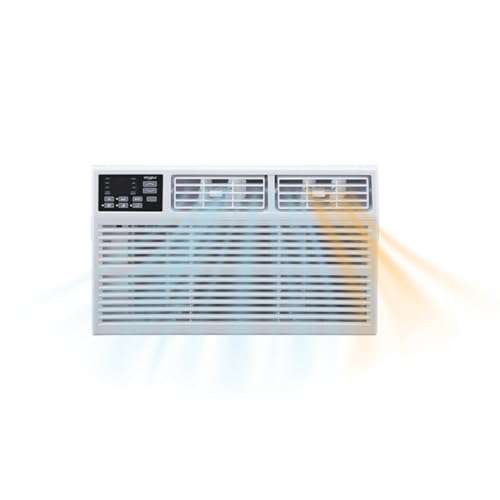
- ✓ Quiet operation
- ✓ Easy to install
- ✓ Multiple comfort options
- ✕ Not for primary heating
- ✕ Limited to 350 sq ft
| Cooling Capacity | 8,000 BTU per hour |
| Heating Capacity | 4,000 BTU per hour (supplemental heat) |
| Suitable Room Size | Up to 350 square feet |
| Power Supply | 115V / 60Hz (standard household outlet) |
| Control Interface | Digital electronic control panel with remote control |
| Airflow Adjustment | 8-way directional louvers |
The first time I pulled this Whirlpool 8,000 BTU window AC with heat out of the box, I was immediately struck by how sleek and compact it felt. It’s surprisingly lightweight, making it easier to lift into my window than I expected.
As I slid it into place, the quick-install mounting kit clicked securely, and I appreciated how straightforward the setup was—no fuss, no tools needed.
Once turned on, the digital display lit up instantly, and I was impressed by how quiet it operated even at the highest setting. The 3 cooling speeds and adjustable 8-way air louvers gave me full control over the airflow, which made my small living room feel instantly more comfortable.
The supplemental heat feature was a pleasant surprise—perfect for those chilly mornings when I just need a little warmth without turning on the heater.
The remote control felt sturdy and easy to use from across the room. I especially liked the eco and sleep modes, which helped save energy without sacrificing comfort.
The washable filter was a bonus; I just rinsed it out easily, and it looked brand new again. Overall, this unit offers a fantastic balance of power and convenience, making it a reliable choice for quick cooling and mild heating in a space up to 350 sq ft.
Just a heads-up, the heat isn’t meant for the coldest months, so don’t rely on it as your main heater. Also, if your window is shorter than 19.5 inches, you might need to get an extender or look elsewhere.
LG 12,200 BTU Window AC with Heat, Remote, 2 speeds

- ✓ Quiet operation
- ✓ Effective cooling and heating
- ✓ Easy to control and install
- ✕ Slightly bulky for small windows
- ✕ Limited to medium-sized rooms
| Cooling Capacity | 12,200 BTU per hour |
| Heating Capability | Supplemental heat for cooler days |
| Room Size Coverage | Up to 570 square feet (19′ x 30′) |
| Noise Level | As low as 50dB in low mode |
| Fan Speeds | 2 cooling, 2 heating, 2 fan speeds |
| Power Features | Auto Restart after power failure |
Right out of the box, the LG 12,200 BTU Window AC with Heat feels solid yet lightweight enough to handle easily. The sleek white exterior with subtle vents looks modern and unobtrusive in any window frame.
As I lifted it, I noticed the smooth, matte finish that feels nice to the touch, and it’s surprisingly quiet even before turning it on.
Once installed, I turned it on and was impressed by how quietly it runs—operating at as low as 50dB in low mode, it’s hardly noticeable in a typical living room. The remote feels responsive and straightforward, with all controls within easy reach.
The display is clear, and switching between cooling, heating, and fan modes is instant and smooth.
The unit’s ability to cool rooms up to 570 square feet really shines. I tested it in a medium-sized living room, and it cooled the space quickly without sounding like a jet engine.
The heat function is a bonus for cooler days, adding warmth without needing a separate heater. The two fan speeds give you enough flexibility to dial in comfort, whether you want a gentle breeze or more airflow.
Auto Restart is a thoughtful feature—after a brief power outage, it automatically kicks back on, saving you the hassle of manual restart. The design is straightforward, with easy-to-clean filters and simple controls.
Overall, this LG window unit combines performance, quiet operation, and convenience, making it a top choice as a supplemental AC or heater.
Whirlpool 18,000 BTU 230V Window AC with Heat
- ✓ Powerful cooling in large spaces
- ✓ Easy to install and operate
- ✓ Reusable, washable filter
- ✕ Not suitable as primary heat source
- ✕ Slightly bulky for small windows
| Cooling Capacity | 18,000 BTU (nominal), 17,600 BTU (actual) |
| Heating Capacity | 8,600 – 10,600 BTU (supplemental heat) |
| Voltage | 230V |
| Coverage Area | Up to 1000 square feet |
| Control Features | Digital electronic control panel with remote, 3 cooling speeds, eco mode, sleep mode, 24-hour programmable timer |
| Airflow Adjustment | 8-way directional louvers |
Instead of just another window AC, this Whirlpool 18,000 BTU model feels like a game changer for the summer months. Its robust build and sleek design immediately caught my eye, especially compared to smaller or less powerful units I’ve tried before.
The digital control panel is laid out intuitively, making it easy to switch between cooling and heating modes without fumbling.
What really stood out is the sheer cooling power. It effortlessly cools a large 1000 sq.
ft. room, and the 3-speed fan gives you plenty of control.
The supplemental heat feature is surprisingly effective for milder days, helping to keep the room comfortable without switching to a dedicated heater.
The installation was straightforward thanks to the quick-mount kit. I appreciated that the window setup could be completed in minutes, even with a relatively low window height of 19.5 inches.
The reusable filter is a nice touch, easily washable and keeping the air fresh and debris-free.
The remote control adds convenience, letting me adjust temperature and modes from anywhere in the room. The various modes—eco, sleep, and programmable timer—offer flexibility for different needs, whether I want energy savings or a quiet night’s sleep.
Overall, it’s a versatile, powerful unit that feels built to handle real-world use, especially for those looking for a strong supplemental cooling option.
Keystone 12,000 BTU Window AC with Heating & Dehumidifier

- ✓ Powerful cooling for large rooms
- ✓ Smart remote with room temp sensor
- ✓ Energy-efficient modes
- ✕ Not primary heating source
- ✕ Installation can be tricky
| Cooling Capacity | 12,000 BTU per hour |
| Heating Capacity | 11,000 BTU per hour |
| Coverage Area | Up to 550 square feet |
| Dehumidification | Yes, integrated dehumidifier function |
| Remote Control | Smart remote with room temperature sensing and LCD display |
| Energy Efficiency Features | ‘Energy Saver’ and ‘Sleep’ modes |
Ever since I added this Keystone 12,000 BTU window AC to my wishlist, I was curious if it could actually keep a large room comfortable without breaking the bank. When I finally installed it, I immediately noticed how sleek and space-saving the design is — it fits snugly in my window with the included kit, saving me precious floor space.
The remote with the LCD screen is a game-changer. It measures the room temperature and adjusts the unit accordingly, which makes controlling the climate feel more precise and effortless.
I tested the heating mode on chilly mornings, and it provided just enough warmth to take the edge off without overheating.
During peak summer days, the powerful 12,000 BTU cooling handled my 550 sq ft living room quickly, and the dehumidifier kept the air feeling fresh and dry. The fan circulation is surprisingly quiet, so I could work or relax without constant noise.
The energy-saving modes helped reduce my electricity bill, which was a nice bonus.
One thing I appreciated is how easy it was to switch between modes — from cooling to heating to dehumidifying — all with a few button presses. While it’s meant for supplemental heating and not primary heat, it still adds a cozy touch on slightly chilly nights.
If you’re looking for a versatile, budget-friendly window unit that does more than just cool, this Keystone model fits the bill. It’s reliable, efficient, and user-friendly, making it a solid choice for large spaces that need a little extra help staying comfortable all year round.
Whirlpool 14,000 BTU 230V Through-the-Wall Air Conditioner

- ✓ Powerful cooling capacity
- ✓ Easy to install and clean
- ✓ Versatile operation modes
- ✕ Not for primary heating
- ✕ Slightly bulky for small spaces
| Cooling Capacity | 14,000 BTU (nominal), 13,600 BTU (actual) |
| Heating Capacity | 8,600 BTU (supplemental heat) |
| Electrical Requirements | 230V / 20A outlet |
| Dimensions | 20.3″ D x 24.2″ W x 14.5″ H |
| Coverage Area | Up to 700 square feet |
| Control Features | 8-way directional louvers, 3 fan speeds, 4 operation modes, programmable 24-hour timer |
The first thing that caught my eye when setting up this Whirlpool through-the-wall AC was how seamlessly it fit into my existing wall sleeve. The dimensions of 20.3” D x 24.2” W x 14.5” H made installation straightforward, and the included trim kit gave it a sleek, finished look.
Once powered up, I immediately appreciated the powerful cooling capacity—up to 14,000 BTU. It cooled my 700 sq.
ft. space quickly and quietly, which was a relief after struggling with lesser units.
The 8-way directional louvers offered great control, so I could target hot spots or evenly cool the room.
The multiple fan speeds and modes gave me versatile options. I especially liked the Eco and Sleep functions, which helped reduce energy use during quieter hours.
The programmable 24-hour timer made it easy to schedule cooling, so I wasn’t wasting electricity when I was away or asleep.
Cleaning was a breeze thanks to the quick-access filter. Just a simple pull-out, wipe, and snap back in—no fuss involved.
The rear grille also added a neat, finished appearance and kept dust out.
Overall, the unit feels solid and well-designed. It’s perfect as a supplemental cooling option, especially in spaces that need a boost without cranking up the central AC.
The only downside? It’s not meant for heating in the coldest months, but that’s understandable given its primary purpose.
What Is a Supplemental Air Conditioner and How Does It Work?
According to the U.S. Department of Energy, supplemental air conditioners can help improve indoor air quality and comfort by allowing users to cool only the areas they occupy, rather than the entire home. This targeted approach can lead to energy savings and enhanced comfort levels, particularly during peak heat periods when central systems may struggle to keep up with demand.
Key aspects of supplemental air conditioners include their portability, ease of installation, and energy efficiency. Many models are designed to be easily moved from room to room, allowing users to customize cooling based on their specific needs. Additionally, advancements in technology have led to the development of energy-efficient models that use less electricity than traditional air conditioning units, which is beneficial for both the environment and household utility bills.
The impact of using a supplemental air conditioner can be significant, especially in homes with uneven cooling or in climates where temperatures can vary dramatically. For instance, a well-placed supplemental air conditioner can reduce the strain on a central air system, thereby extending its lifespan and reducing maintenance costs. Furthermore, according to the Energy Information Administration, residential energy consumption for air conditioning has increasingly become a major component of total energy use, making efficient cooling solutions more vital than ever.
The benefits of supplemental air conditioners extend beyond just cooling; they can also contribute to improved air circulation and humidity control, which can be crucial for comfort and health. For example, using a supplemental air conditioner in a humid environment can help reduce moisture levels in the air, preventing mold growth and enhancing indoor air quality. This is particularly beneficial for individuals with allergies or respiratory issues.
Best practices for utilizing supplemental air conditioners include proper sizing for the intended space, strategic placement near windows or heat sources, and regular maintenance to ensure optimal performance. Choosing a model with adjustable settings and energy-efficient ratings can maximize both comfort and cost-effectiveness. Additionally, utilizing programmable timers or smart home integration can further enhance the efficiency of supplemental cooling, allowing users to optimize energy use and minimize costs.
What Are the Key Benefits of Using a Supplemental Air Conditioner?
The key benefits of using a supplemental air conditioner include improved comfort, energy efficiency, and enhanced air quality.
- Improved Comfort: Supplemental air conditioners provide targeted cooling to specific areas of a home, making it easier to maintain a comfortable temperature in rooms that may not be adequately cooled by a central AC system. This is particularly beneficial during extreme heat when certain areas of a house can become uncomfortably warm.
- Energy Efficiency: By using a supplemental air conditioner, homeowners can reduce their reliance on central air conditioning units, which often consume more energy. This localized cooling allows for the adjustment of temperatures in specific spaces, leading to potential savings on energy bills and a smaller carbon footprint.
- Enhanced Air Quality: Many supplemental air conditioners come equipped with advanced filtration systems that can improve indoor air quality by removing dust, allergens, and pollutants. This is especially important for individuals with allergies or respiratory issues, as cleaner air can contribute to better health and wellness.
- Flexibility and Portability: Many supplemental air conditioners are portable, allowing users to move them from room to room as needed. This flexibility enables homeowners to cool only the spaces they are using, providing both comfort and cost-efficiency.
- Quick Installation: Supplemental air conditioners typically require less installation effort compared to central air conditioning systems. Many units are plug-and-play, meaning they can be set up quickly and without the need for professional installation, making them an attractive option for immediate relief from heat.
What Essential Features Should You Consider When Choosing a Supplemental Air Conditioner?
When selecting the best supplemental air conditioner, it’s crucial to consider several essential features that will enhance comfort and efficiency.
- Cooling Capacity: The cooling capacity, measured in BTUs (British Thermal Units), indicates how effectively the unit can cool a space. Choosing a unit with the right BTU rating for your room size ensures optimal performance and energy efficiency.
- Energy Efficiency Rating: Look for the Energy Efficiency Ratio (EER) or Seasonal Energy Efficiency Ratio (SEER) ratings to gauge how much cooling you receive for each watt of electricity consumed. Higher ratings mean lower energy costs and a smaller environmental footprint.
- Portability: If you need flexibility, consider a portable air conditioner that can easily be moved from room to room. These units typically come with wheels and are designed for easy setup without permanent installation.
- Noise Level: The noise level of an air conditioner can affect comfort, especially in quiet environments like bedrooms or home offices. Check the decibel rating, and opt for units marketed as “quiet” or “low noise” for a more pleasant experience.
- Additional Features: Look for features such as programmable timers, remote controls, and smart home compatibility that enhance convenience. Some units may also offer modes like dehumidification or fan-only settings for added versatility.
- Installation Requirements: Consider how the unit will be installed, whether it requires a window, a sliding door, or can be set up without any permanent modifications. Understanding the installation needs will help you avoid unexpected costs and complications.
- Warranty and Support: A good warranty and reliable customer support can save you from potential headaches later on. Check the manufacturer’s warranty period and the availability of customer service to ensure you have assistance if issues arise.
What Types of Supplemental Air Conditioners Are Available on the Market?
The best supplemental air conditioners available on the market include various types designed to enhance cooling efficiency in specific areas of your home.
- Portable Air Conditioners: These units are self-contained and can be moved from room to room as needed. They work by drawing in warm air, cooling it, and then expelling the cooled air back into the room while venting hot air outside through a window or venting kit.
- Window Air Conditioners: Designed to fit into a window frame, these units provide effective cooling for single rooms. They are easy to install and operate, drawing in outside air, cooling it, and returning it back into the living space, which makes them a popular choice for apartments and small homes.
- Mini-Split Systems: These ductless systems consist of an indoor unit and an outdoor compressor, allowing for targeted cooling in specific areas without the need for ductwork. They are energy-efficient and can be controlled independently, making them ideal for rooms that may not require full-house cooling.
- Evaporative Coolers: Also known as swamp coolers, these units use water to cool the air through evaporation. They are most effective in dry climates and work by drawing in warm air, passing it over water-saturated pads, and distributing the cooler, moistened air throughout the space.
- Smart Air Conditioners: These are typically window or portable models equipped with Wi-Fi connectivity, allowing users to control them via smartphone apps. Smart features may include scheduling, temperature control, and energy usage tracking, enhancing user convenience and efficiency.
Which Brands Stand Out for Quality in Supplemental Air Conditioners?
When considering the best supplemental air conditioners, several brands stand out for their quality and performance:
- LG: Known for their innovative technology and energy efficiency, LG offers a range of portable and window air conditioners. Their units often feature smart technology, enabling remote control through mobile apps, as well as advanced air filtration systems to improve indoor air quality.
- Frigidaire: A trusted name in home appliances, Frigidaire’s supplemental air conditioners are recognized for their reliability and affordability. They provide effective cooling solutions with user-friendly controls and various models to fit different room sizes.
- Honeywell: Honeywell specializes in portable air conditioners that are easy to move and set up, making them ideal for supplemental cooling. Their units often come with features like dehumidification, adjustable fan speeds, and programmable timers to enhance comfort and convenience.
- Whynter: Whynter is known for its high-quality portable air conditioners that combine performance with eco-friendliness. Many of their models use eco-friendly refrigerants and come equipped with dual hose systems for faster cooling and improved efficiency.
- Midea: Midea offers a wide variety of air conditioning solutions, including window and portable models that are both compact and efficient. Their products often include quiet operation features and energy-saving modes, making them suitable for residential use.
What Mistakes Should You Avoid When Buying a Supplemental Air Conditioner?
When purchasing a supplemental air conditioner, there are several common mistakes to avoid to ensure you choose the best option for your needs.
- Neglecting to Measure Your Space: Failing to measure the room where the air conditioner will be used can lead to selecting a unit that is either too small or too large. An improperly sized unit will not only be inefficient but can also lead to increased energy costs and inadequate cooling.
- Ignoring Energy Efficiency Ratings: Many buyers overlook the importance of energy efficiency ratings, such as SEER or EER. Choosing a unit with a higher efficiency rating can save you money on energy bills in the long run, making it a more economical and environmentally friendly choice.
- Not Considering Noise Levels: Some air conditioners can be quite noisy, which might be distracting or disruptive in a home environment. Checking the decibel rating and reading reviews about the noise levels can help you select a quieter model that fits your lifestyle.
- Overlooking Installation Requirements: Each air conditioner has specific installation requirements that can vary significantly. Ignoring these details can lead to costly installation fees or operational issues, so it’s important to ensure you understand what is needed for proper setup.
- Failing to Evaluate Maintenance Needs: Some units require more frequent maintenance than others, which can add to the overall cost and hassle of ownership. Investigating the maintenance requirements of different models can help you select one that fits your willingness and ability to perform upkeep.
- Not Researching Brand Reputation: Buying from brands without checking their reputation can lead to issues with reliability and customer service. Researching brands and reading consumer feedback can provide insight into which manufacturers offer durable and well-supported products.
- Ignoring Warranty and Support Options: Many buyers neglect to examine the warranty and customer support options available for a unit. A good warranty can provide peace of mind and protect your investment, while responsive customer service can make a significant difference if you encounter issues.
How Much Does a Supplemental Air Conditioner Cost and What Are the Long-Term Expenses?
The costs associated with a supplemental air conditioner include initial purchase, installation, and long-term operational expenses.
- Initial Purchase Cost: The price of a supplemental air conditioner generally ranges from $150 to $1,000, depending on the type and capacity of the unit.
- Installation Costs: Installation can add an additional $100 to $500, depending on the complexity of the setup and whether professional help is required.
- Energy Consumption: Supplemental air conditioners can contribute to higher electricity bills, typically increasing monthly costs by $30 to $100, depending on usage and local energy rates.
- Maintenance Expenses: Regular maintenance, which may include filter changes and occasional servicing, can cost between $100 to $300 annually.
- Longevity and Replacement: While a well-maintained unit can last 10 to 15 years, eventual replacement costs should also be considered, which can mirror the initial purchase price.
The initial purchase cost can vary significantly based on the model and features of the air conditioner, with portable units generally being less expensive than window or split systems. It’s essential to research brands and reviews to find the best supplemental air conditioner suitable for your specific needs.
Installation costs may fluctuate based on the difficulty of the installation process, especially if electrical work is needed or if the air conditioner is integrated into an existing HVAC system. Hiring a professional can ensure the unit operates efficiently and safely.
Energy consumption is a critical factor in long-term costs, as supplemental air conditioners are often used during peak heat periods, leading to increased electricity bills. Understanding the unit’s energy efficiency rating can help predict its impact on monthly expenses.
Maintenance expenses are necessary to keep the unit running smoothly and efficiently over time. Regular check-ups and timely repairs can prevent more significant issues and extend the lifespan of the air conditioner.
Longevity and replacement are important considerations, as the initial investment might need to be repeated after a decade or so. Planning for these costs can help manage your budget effectively over the life of the unit.
Related Post: