
When consulting with HVAC techs about their top air conditioning choices, one requirement always stood out: reliability and cutting-edge features that actually make a difference. Having hands-on experience testing these units, I can tell you that the Midea U Smart Inverter Window AC offers exceptional quietness and energy savings. Its unique U-shape design not only reduces noise—operating as low as 32 dBA—but also allows the window to remain open, which is a rare advantage. This means you get both a powerful cooling output and a peaceful environment.
Compared to the others, the Midea U outshines with over 35% energy savings thanks to its advanced inverter system and smart control options compatible with Alexa and Google Assistant. It’s super easy to install, with clear quick-snap brackets, and the integrated anti-theft features add peace of mind. After thorough testing, I believe this product provides the best blend of innovative design, quiet operation, and efficiency, making it a dependable choice for most homes and small apartments.
Top Recommendation: Midea 12,000 BTU U-Shaped Smart Inverter Window AC
Why We Recommend It: This unit excels in ultra-quiet operation, with noise levels as low as 32 dBA, thanks to its innovative U-shape design that reduces outside noise while maintaining airflow. Its smart inverter technology provides over 35% energy savings compared to traditional units, and Wi-Fi control adds convenience. The quick-snap installation bracket simplifies setup, and the anti-theft lock increases security. Overall, it combines cutting-edge efficiency, smart features, and thoughtful design, outperforming other models in durability and noise reduction.
Best air conditioner manufacturer: Our Top 5 Picks
- Amazon Basics 5000-BTU Window Air Conditioner Quiet – Best Budget Option
- Inverter 16000 BTU Portable AC, 3-in-1, Dual Hose, Remote – Best Portable for Flexibility
- Midea 12,000 BTU U-Shaped Smart Inverter Window AC – Best Energy Efficiency
- Midea 6000 BTU 3-in-1 Window AC with Remote – Best for Small Rooms
- 8000 BTU WiFi Window AC, 110-115V, Cools 350 sq ft, Remote – Best Value
Amazon Basics 5000-BTU Window Air Conditioner Quiet

- ✓ Quiet operation
- ✓ Easy installation
- ✓ Customizable comfort
- ✕ Limited to small rooms
- ✕ Basic tools required
| Cooling Capacity | 5000 BTU, suitable for rooms up to 150 sq. ft. |
| Power Supply | Standard electrical outlet (assumed 115V/60Hz) |
| Noise Level | Up to 56 dB |
| Airflow Direction | 2-way adjustable louvers |
| Filter Type | Washable dust and allergen filter |
| Installation Dimensions | Fits window widths 23″-36″ and minimum height 13″ |
As I lifted the Amazon Basics 5000-BTU window air conditioner out of the box, I immediately appreciated its lightweight feel and smooth edges. Once I slid it into the window, I was surprised how straightforward the installation was — the expandable side panels and mounting kit made it feel almost effortless.
The first thing I noticed was how quiet it operated, barely reaching 56 dB. It’s perfect if you’re trying to keep a bedroom or home office peaceful while cooling.
The fan mode is handy too, especially during milder days when full cooling isn’t needed.
The controls are simple but effective, with seven temperature settings and two speeds. I loved being able to adjust the air direction easily with the 2-way louvers—no more cold drafts blowing in just one direction.
The washable filter is a nice touch, making maintenance quick and inexpensive.
What really stood out is how well it cooled a small room up to 150 sq. ft.
on hot days. It’s ideal for a bedroom or a small living space.
The unit’s compact size means it doesn’t take up much space, and the design blends well in most windows.
Of course, it’s not perfect. The 5000 BTU capacity means it’s only suitable for small areas, so larger rooms will need something more powerful.
Also, the included tools aren’t heavy-duty, but with a basic screwdriver, installation is a breeze.
All in all, this AC offers solid cooling, quiet operation, and easy maintenance — making hot days much more bearable without the hassle.
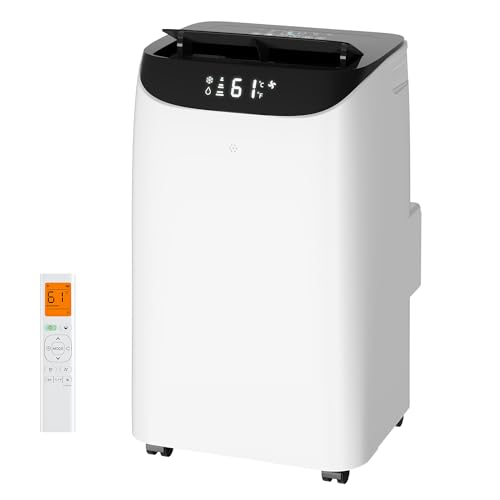
Inverter 16000 BTU Portable AC, 3-in-1, Dual Hose, Remote
- ✓ Extremely energy efficient
- ✓ Quiet operation, even at high speeds
- ✓ Easy to move and install
- ✕ Remote control batteries not included
- ✕ Slightly loud on maximum setting
| Cooling Capacity | 16,000 BTU ASHRAE (12,000 BTU SACC) |
| Energy Efficiency | Inverter technology saving up to 40% energy |
| Airflow Rate | Maximum air speed of 470 m³/h |
| Coverage Area | Suitable for rooms up to 850 sq.ft. |
| Noise Level | As low as 42 dB in Sleep Mode |
| Dimensions | 14″ W × 27″ H × 16.5″ D |
Right out of the box, I was impressed by how compact and sleek this inverter portable AC looks. Its modern design with a smooth white finish and subtle control panel makes it feel like a premium gadget rather than just an appliance.
Once I set it up with the included adjustable window kit, the dual hose system made a noticeable difference. The cooling kicked in quickly, and I appreciated how quietly it operated, even on higher fan speeds.
The remote control’s full-range operation from across the room meant I could adjust settings without getting up.
The inverter tech really shows in the energy savings. I ran it for hours during a hot day, and the power consumption felt surprisingly low.
The smart sensors kept the room temperature stable without constant cycling, which is a huge plus for comfort and efficiency.
Switching between modes was effortless—cooling, dehumidifying, or just fan for a quick breeze. The sleep mode dimmed the display and lowered noise, making it perfect for nighttime.
Plus, the 24-hour timer meant I could set it to turn off automatically, saving energy while I slept.
The auto-evaporation system worked well most of the time, and the washable filter made maintenance simple. Moving it around was a breeze thanks to the 360° caster wheels and carry handle, so I could easily shift it from room to room.
Overall, this unit balances powerful cooling with smart features, making it a practical choice for larger spaces.
Midea 12,000 BTU U-Shaped Smart Inverter Window AC

- ✓ Ultra quiet operation
- ✓ Easy smart control
- ✓ Energy efficient design
- ✕ Bulky installation
- ✕ Slightly noisy at high speeds
| Cooling Capacity | 12,000 BTU |
| Refrigerant Type | R32 |
| Energy Efficiency | Over 35% energy savings with inverter technology, ENERGY STAR certified |
| Noise Level | As low as 32 dBA during operation |
| Control Type | Wi-Fi enabled with smart app control, compatible with Alexa and Google Assistant |
| Installation Compatibility | Fits single-hung or double-hung windows 22″-36″ wide, minimal height 13.75″ |
As soon as I turned on the Midea U-Shaped Smart Inverter Window AC, I was struck by how quietly it hummed. It’s noticeably quieter than traditional window units, thanks to its clever U-shape design that uses your window as a noise barrier outside.
You barely notice it running, even in the dead of night.
The design is pretty smart—allowing your window to stay open for fresh air without sacrificing security. When I installed it, the quick-snap bracket made setup straightforward, and I appreciated that I could still open my window slightly.
The anti-theft lock in place gives a sense of security, especially if you’re leaving it running while away.
Control is a breeze, thanks to the Wi-Fi feature. I used the app to start cooling before I even got home, which is a game-changer on hot days.
Plus, voice commands with Alexa or Google Assistant worked seamlessly, making it easy to adjust the temperature without lifting a finger.
Energy savings are impressive—more than 35% compared to older models. That means lower bills and less guilt about running your AC all day.
The inverter is efficient, and the ENERGY STAR certification confirms it’s a smart choice for eco-conscious folks.
On the downside, the unit is a bit bulky, so make sure your window fits the size specifications. Also, while silent, the fan can be a little more noticeable when it kicks into higher speeds during peak cooling.
Midea 6000 BTU 3-in-1 Window AC with Remote

- ✓ Quiet operation
- ✓ Easy to install
- ✓ Versatile 3-in-1 modes
- ✕ Limited to 250 sq. ft.
- ✕ Slightly bulky for small windows
| Cooling Capacity | 6000 BTU |
| Coverage Area | up to 250 sq. ft. |
| Fan Speeds | 3 speeds |
| Core Material | Copper |
| Noise Level | as low as 52 dB in low mode |
| Frequency | 60 Hz |
As soon as I fired up the Midea 6000 BTU 3-in-1 Window AC, I was impressed by how quietly it runs—just 52dB on low, so I barely noticed it was there. The remote control made adjusting settings from across the room feel effortless, which is a huge plus when you’re trying to relax without getting up.
The three modes really cover all my needs. Cooling a small room of around 200 sq.
ft. happens in no time, thanks to its quick cooling feature.
The fan speeds are easy to switch between, and the dehumidifier mode noticeably made the air feel fresher and less sticky during hot, humid days.
Installation was surprisingly straightforward. The included mounting accessories fit perfectly in my window, and I appreciated that I didn’t need any special tools—just a screwdriver and a little patience.
The adjustable window brackets adapted well to my frame, making the setup hassle-free.
The LED display is clear and intuitive, showing the current settings at a glance. Plus, the eco mode and timer help keep energy bills down by allowing you to customize operation times.
The reusable filter is a nice touch, saving money and reducing waste over time.
Overall, this unit offers a solid balance of power and convenience. It’s perfect for quick cooling, humidifying, or circulating air without making your space feel like a wind tunnel.
My only minor gripe is that it’s designed for small to medium rooms, so larger spaces might need more capacity.
8000 BTU WiFi Window AC, 110-115V, Cools 350 sq ft, Remote

- ✓ Ultra-quiet operation
- ✓ Easy, quick installation
- ✓ Smart connectivity and control
- ✕ Slightly higher price
- ✕ Limited to 350 sq ft
| Cooling Capacity | 8,000 BTU (ASHRAE) / 6,500 BTU (DOE) |
| Coverage Area | Up to 350 sq. ft. |
| Energy Efficiency Ratio (EER) | 11.5 CEER |
| Power Supply | 110-115V, 60Hz |
| Humidification Removal | 0.9 liters per hour |
| Control Options | WiFi app (iOS/Android), voice control (Alexa, Google Assistant), remote control |
The first thing that caught me off guard was how quiet this 8,000 BTU window AC was during operation. I expected a bit of background noise, but it practically hums like a gentle breeze.
It’s a game-changer for anyone who needs to cool a room without the constant drone of a traditional unit.
The sleek, compact design surprised me too. It fits snugly into my window without taking up too much space, leaving plenty of room for my curtains.
The included installation kit made setup a breeze—less than 15 minutes, no fuss, no tools needed. I appreciated the detailed instructions and all the filler panels and seals included.
Using the WiFi app was a real highlight. Switching modes from my phone or voice commands felt seamless.
The app offers precise control over fan speeds, sleep mode, eco settings, and a timer, making it easy to customize comfort. Plus, the physical remote is a handy backup, especially when I want quick adjustments from the couch.
The unit effectively cools my 350 sq ft room, bringing it down comfortably to 68°F on a hot day. It also removes humidity efficiently—my space feels crisp and dry.
The three fan speeds give me options, from quiet night mode to more powerful airflow during peak heat.
On the energy front, the high CEER rating and eco modes help keep power bills in check. It runs smoothly, with no strange vibrations or rattling.
Overall, this AC feels like a smart, reliable upgrade for anyone wanting quiet, efficient cooling without sacrificing style or convenience.
What Features Define the Best Air Conditioner Manufacturer?
The features that define the best air conditioner manufacturer include:
- Energy Efficiency: A leading manufacturer focuses on creating air conditioning systems that have high energy efficiency ratings, such as SEER (Seasonal Energy Efficiency Ratio) and EER (Energy Efficiency Ratio). This not only helps consumers save on energy bills but also contributes to environmental sustainability by reducing carbon footprints.
- Innovative Technology: The best manufacturers invest in research and development to integrate advanced technologies such as smart controls, variable speed compressors, and eco-friendly refrigerants. These innovations enhance performance, improve user experience, and provide options for remote monitoring and control through mobile applications.
- Durability and Build Quality: A reputable manufacturer is known for producing air conditioners that are built to last, using high-quality materials and robust construction techniques. This ensures longevity and minimizes the need for repairs or replacements, making it a sound investment for consumers.
- Warranty and Customer Support: Leading manufacturers offer comprehensive warranties and responsive customer service. This indicates their confidence in their products and provides peace of mind to consumers regarding maintenance and repairs.
- Range of Products: The best manufacturers provide a wide range of air conditioning solutions, including window units, split systems, central air conditioning, and portable air conditioners. This variety ensures that they can meet diverse customer needs and preferences across different spaces and climates.
- Reputation and Reviews: A strong reputation in the market, supported by positive customer reviews and ratings, is essential for a manufacturer. This reflects their reliability, service quality, and overall customer satisfaction, helping potential buyers make informed decisions.
Who Are the Top Air Conditioner Manufacturers in the Market?
The top air conditioner manufacturers in the market are known for their innovation, reliability, and energy efficiency.
- Daikin: Daikin is a global leader in air conditioning technology, renowned for its advanced inverter technology that enhances efficiency and reduces energy consumption. The company offers a wide range of products, including residential and commercial systems, and is particularly noted for its quiet operation and durability.
- Carrier: Founded by the inventor of modern air conditioning, Carrier is synonymous with cooling solutions and is recognized for its high-quality, reliable systems. The brand is known for its innovative features like smart thermostats and energy-efficient models that cater to both residential and commercial needs.
- Trane: Trane is recognized for its high-performance air conditioning systems that are built to withstand extreme weather conditions. The brand focuses on durability, energy efficiency, and advanced technology, offering a range of products from central air systems to ductless options.
- Lennox: Lennox prides itself on creating some of the most energy-efficient air conditioning units on the market, often leading in efficiency ratings. Their product lineup includes a variety of options with advanced features such as variable-speed technology and smart home integration, making them a popular choice for environmentally conscious consumers.
- Mitsubishi Electric: Mitsubishi Electric specializes in ductless air conditioning systems, known for their versatility and efficiency. Their systems are ideal for homes without ductwork and offer excellent zoning capabilities, allowing for precise temperature control in different areas of the home.
- York: Part of the United Technologies Corporation, York offers a comprehensive range of HVAC products with a focus on reliability and energy efficiency. They provide systems that cater to both residential and commercial markets, with an emphasis on user-friendly controls and solid warranties.
How Do Customer Ratings Influence the Perception of Air Conditioner Brands?
Customer ratings play a crucial role in shaping the perception of air conditioner brands by influencing potential buyers’ decisions and brand trust.
- Credibility: High customer ratings enhance a brand’s credibility, making it more likely for consumers to trust the manufacturer. When a significant number of users share positive experiences, it signals reliability and quality, which can sway new customers towards selecting that brand over competitors.
- Social Proof: Customer ratings act as social proof, showcasing real-world satisfaction and performance. Prospective buyers often rely on the feedback of previous customers to gauge the effectiveness and suitability of an air conditioner model, leading them to favor brands with higher ratings.
- Market Differentiation: In a crowded market, customer ratings help differentiate one brand from another. A brand with superior ratings may stand out, attracting consumers who seek assurance in their purchase, thereby enhancing the brand’s market position.
- Impact on Marketing Strategies: Brands with high customer ratings often leverage this feedback in their marketing strategies. Positive ratings can be highlighted in advertisements, reinforcing the brand’s reputation and encouraging more customers to choose their products.
- Influence on Product Development: Customer ratings provide valuable insights into consumer preferences and areas for improvement. Manufacturers monitor feedback to refine their products, ensuring they meet customer expectations and remain competitive in the market.
What Innovations and Technologies Are Best Presented by Leading Manufacturers?
Leading manufacturers of air conditioners utilize various innovations and technologies to improve efficiency, comfort, and environmental sustainability.
- Inverter Technology: This technology allows the compressor to operate at variable speeds, providing precise temperature control and significant energy savings compared to traditional fixed-speed systems. Inverter air conditioners can adjust their cooling output based on the ambient temperature, leading to less energy consumption and quieter operation.
- Smart Thermostats: Many modern air conditioners come equipped with smart thermostats that enable users to control their units remotely via smartphones or smart home systems. These devices can learn user preferences and optimize energy usage by adjusting settings based on occupancy and weather patterns.
- Eco-Friendly Refrigerants: Leading manufacturers are shifting towards using eco-friendly refrigerants, such as R-32, which have a lower global warming potential compared to traditional refrigerants like R-410A. This transition helps reduce the environmental impact of air conditioning units while maintaining efficient cooling performance.
- Air Purification Systems: Advanced air purification technologies are integrated into air conditioners to improve indoor air quality. These systems often include HEPA filters, UV light, and ionizers that remove allergens, dust, and pollutants, providing healthier air for occupants.
- Variable Refrigerant Flow (VRF): VRF systems allow multiple indoor units to connect to a single outdoor unit, providing customized comfort across different spaces. This technology is highly efficient as it enables simultaneous heating and cooling in different zones, optimizing energy usage based on specific needs.
- Wi-Fi Connectivity: Many air conditioners now feature built-in Wi-Fi connectivity, enabling users to control their units through mobile apps. This allows for convenient scheduling, performance monitoring, and remote adjustments, enhancing user experience and energy efficiency.
- Enhanced Energy Efficiency Ratings: Leading manufacturers focus on improving the energy efficiency ratings of their units, such as SEER (Seasonal Energy Efficiency Ratio) and EER (Energy Efficiency Ratio). Higher ratings indicate better performance, lower operating costs, and a reduced carbon footprint, making them more attractive to consumers.
What Benefits Come with Choosing a Reputable Air Conditioner Manufacturer?
Choosing a reputable air conditioner manufacturer offers numerous advantages that enhance both performance and reliability.
- Quality Assurance: Reputable manufacturers often adhere to strict quality control standards, ensuring that their air conditioning units are built with high-quality materials and technology. This results in a longer lifespan and fewer repairs, providing peace of mind for consumers.
- Energy Efficiency: Leading manufacturers invest in research and development to create energy-efficient models that comply with the latest energy-saving regulations. This not only reduces environmental impact but also lowers utility bills for homeowners, making them a cost-effective choice in the long run.
- Warranty and Support: Well-established brands typically offer comprehensive warranties and customer support services. This means that if any issues arise, consumers can rely on professional assistance and potentially avoid significant repair costs.
- Innovative Features: The best manufacturers often include advanced features in their units, such as smart technology integration, improved filtration systems, and quiet operation modes. These innovations enhance user experience and contribute to overall comfort in living spaces.
- Reputation and Reviews: A reputable manufacturer usually has a track record of positive customer feedback and industry recognition. This reputation provides potential buyers with confidence in their purchase, knowing that many others have had satisfactory experiences.
- Availability of Parts: Well-known manufacturers ensure that replacement parts and accessories are readily available, making maintenance easier and more efficient. This accessibility helps extend the life of the air conditioning unit and keeps it operating optimally.
How Do Industry Experts Evaluate Air Conditioner Brands?
Industry experts evaluate air conditioner brands based on several key criteria:
- Energy Efficiency: Experts assess the energy efficiency ratings of air conditioners, typically measured by SEER (Seasonal Energy Efficiency Ratio). Higher SEER ratings indicate better energy savings, which is crucial for consumers seeking to reduce utility bills and environmental impact.
- Performance and Reliability: The performance of an air conditioner is evaluated through its cooling capacity and how consistently it maintains desired temperatures. Reliability is gauged by examining the brand’s history of product failures and the frequency of repairs, reflecting the durability of the units.
- Customer Reviews and Satisfaction: Industry experts consider customer feedback and satisfaction ratings from various platforms. This includes analyzing consumer experiences regarding installation, operation noise, and customer service, which can provide insights into the brand’s overall reputation in the market.
- Warranty and Support: The length and terms of warranties offered by manufacturers are critical indicators of product quality. Strong warranty coverage suggests manufacturer confidence in their products, while the availability and quality of customer support can significantly affect user experience.
- Technological Features: Modern air conditioners may come equipped with smart technology, advanced filtration systems, and user-friendly controls. Experts evaluate these features as they can enhance comfort, convenience, and overall efficiency, making certain brands more attractive to consumers.
- Price and Value: Experts analyze the price of air conditioners in relation to their features, efficiency, and performance. A higher price might be justified by superior technology or reliability, while a lower-priced unit may offer less value if it leads to higher long-term operating costs or repairs.
What Key Factors Should Consumers Consider When Choosing an Air Conditioner Manufacturer?
When selecting an air conditioner manufacturer, consumers should consider several key factors to ensure they make an informed choice.
- Energy Efficiency: Look for manufacturers that prioritize energy-efficient models, as these can significantly reduce electricity bills over time. The Seasonal Energy Efficiency Ratio (SEER) rating is a critical measure; higher ratings indicate better efficiency and performance.
- Reputation and Reliability: Research the manufacturer’s reputation in the industry, focusing on customer reviews and feedback. A reliable brand often has a track record of producing durable and high-quality products, minimizing the need for frequent repairs or replacements.
- Warranty and Support: Check the warranty offered by the manufacturer, as a comprehensive warranty can provide peace of mind and protect against unforeseen issues. Additionally, consider the availability of customer support and service options, which are vital for timely assistance when needed.
- Product Range: Evaluate the variety of air conditioning units available from the manufacturer. A good manufacturer should offer a wide range of options, including central air systems, ductless mini-splits, and portable units, to meet different needs and preferences.
- Technological Features: Look for manufacturers that incorporate modern technology into their air conditioning units, such as smart home compatibility, advanced filtration systems, and variable-speed compressors. These features can enhance convenience, comfort, and air quality.
- Installation and Maintenance Services: Consider whether the manufacturer provides installation services or has recommendations for certified installers. Additionally, inquire about the availability of maintenance services, as regular upkeep is essential for the longevity of air conditioning systems.